
N. Korea sends missile soaring over Japan in escalation
Advertisement
Read this article for free:
or
Already have an account? Log in here »
We need your support!
Local journalism needs your support!
As we navigate through unprecedented times, our journalists are working harder than ever to bring you the latest local updates to keep you safe and informed.
Now, more than ever, we need your support.
Starting at $15.99 plus taxes every four weeks you can access your Brandon Sun online and full access to all content as it appears on our website.
Subscribe Nowor call circulation directly at (204) 727-0527.
Your pledge helps to ensure we provide the news that matters most to your community!
To continue reading, please subscribe:
Add Brandon Sun access to your Free Press subscription for only an additional
$1 for the first 4 weeks*
*Your next subscription payment will increase by $1.00 and you will be charged $20.00 plus GST for four weeks. After four weeks, your payment will increase to $24.00 plus GST every four weeks.
Read unlimited articles for free today:
or
Already have an account? Log in here »
Hey there, time traveller!
This article was published 03/10/2022 (1234 days ago), so information in it may no longer be current.
SEOUL, South Korea (AP) — North Korea on Tuesday fired an intermediate-range ballistic missile over Japan for the first time in five years, forcing Japan to issue evacuation notices and suspend trains, as the North escalates tests of weapons designed to strike regional U.S. allies.
It was the most significant missile test by North Korea since January, when it fired an Hwasong-12 intermediate-range missile capable of reaching the U.S. territory of Guam. Japan and South Korea both called security meetings to discuss the launch.
The Japanese prime minister’s office said at least one missile fired from North Korea flew over Japan and was believed to have landed into the Pacific Ocean.
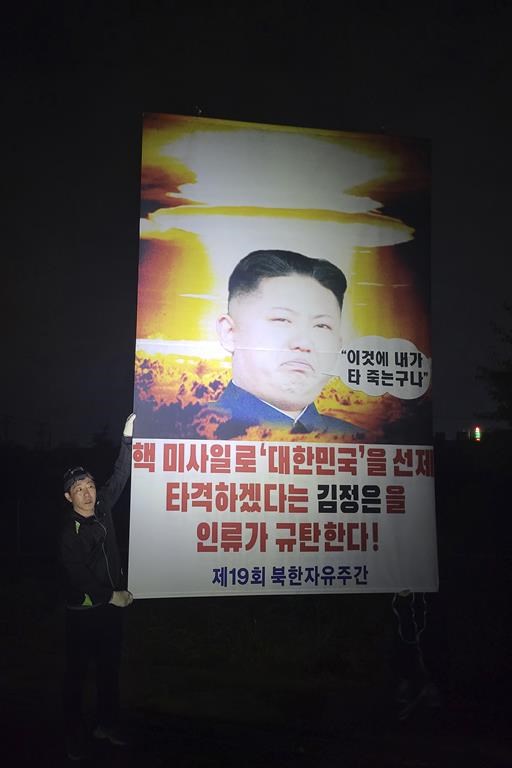
Japanese authorities alerted residents in northeastern regions to evacuate to shelters, in the first “J-alert” alert since 2017 when North Korea fired a Hwasong-12 missile over Japan in its previous provocative run of weapons tests.
Trains were suspended in the Hokkaido and Aomori regions until the government issued a subsequent notice that the North Korean missile appeared to have landed into the Pacific.
Japanese Prime Minister Fumio Kishida told reporters that “the firing, which followed a recent series of launches by North Korea, is a reckless act and I strongly condemn it.” He said he would convene the National Security Council to discuss the situation.
Japanese Chief Cabinet Secretary Hirokazu Matsuno said no damage was immediately reported from the missile that flew 22 minutes and landed in waters outside the country’s exclusive economic zone.
South Korea’s Joint Chiefs of Staff said it detected the missile being fired from the inland north in North Korea. It said the South Korean military raised its surveillance posture and maintained its readiness in close coordination with the United States.
South Korea President Yoon Suk Yeol said the missile’s range is 4,000 kilometers (2,485 miles), which places Guam within striking distance.

Yoon said he called a National Security Council meeting to discuss the launch and that the North’s “reckless nuclear provocations” would meet the stern response of the South and the broader international community.
The launch is the fifth round of weapons tests by North Korean in the past 10 days in what was seen as an apparent response to bilateral military drills between South Korea and the United States and other training among the allies including Japan last week.
The missiles fired during the past four rounds of launches were short-range and fell in the waters between the Korean Peninsula and Japan. Those missiles are capable of hitting targets in South Korea.
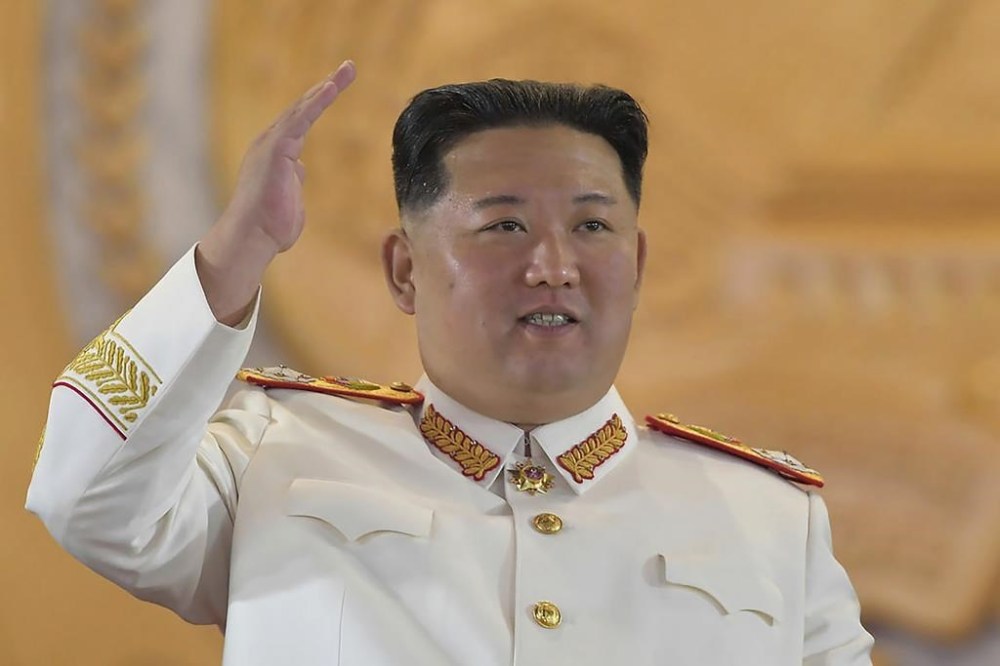
North Korea has test-fired about 40 missiles over about 20 different launch events this year as its leader Kim Jong Un vows to expand his nuclear arsenal and refuses to return to nuclear diplomacy with the United States.
Some experts say Kim eventually would try to use his enlarged arsenal to pressure Washington to accept his country as a nuclear state, a recognition that he thinks is necessary to win the lifting of international sanctions and other concessions.
___
Yamaguchi reported from Tokyo.
___
More AP Asia-Pacific coverage is available at https://apnews.com/hub/asia-pacific