
Top UN court rejects Iranian bid to free assets frozen by US
Advertisement
Read this article for free:
or
Already have an account? Log in here »
We need your support!
Local journalism needs your support!
As we navigate through unprecedented times, our journalists are working harder than ever to bring you the latest local updates to keep you safe and informed.
Now, more than ever, we need your support.
Starting at $15.99 plus taxes every four weeks you can access your Brandon Sun online and full access to all content as it appears on our website.
Subscribe Nowor call circulation directly at (204) 727-0527.
Your pledge helps to ensure we provide the news that matters most to your community!
To continue reading, please subscribe:
Add Brandon Sun access to your Free Press subscription for only an additional
$1 for the first 4 weeks*
- Enjoy unlimited reading on brandonsun.com
- Read the Brandon Sun E-Edition, our digital replica newspaper
*Your next Free Press subscription payment will increase by $1.00 and you will be charged $20.95 plus GST for four weeks. After four weeks, your payment will increase to $24.95 plus GST every four weeks.
Read unlimited articles for free today:
or
Already have an account? Log in here »
Hey there, time traveller!
This article was published 30/03/2023 (1269 days ago), so information in it may no longer be current.
THE HAGUE, Netherlands (AP) — The United Nations’ top court on Thursday rejected Tehran’s legal bid to free up some $2 billion in Iranian central bank assets frozen by U.S. authorities to be paid in compensation to victims of a 1983 bombing in Lebanon and other attacks linked to Iran.
In a 10-5 majority ruling, the International Court of Justice said it did not have jurisdiction to rule on the Iranian claim linked to the central Markazi Bank.
The world court’s vice-president, Kirill Gevorgian, said the majority “upholds the objection to jurisdiction raised by the United States of America relating to the claims of the Islamic Republic of Iran” related to the bank.
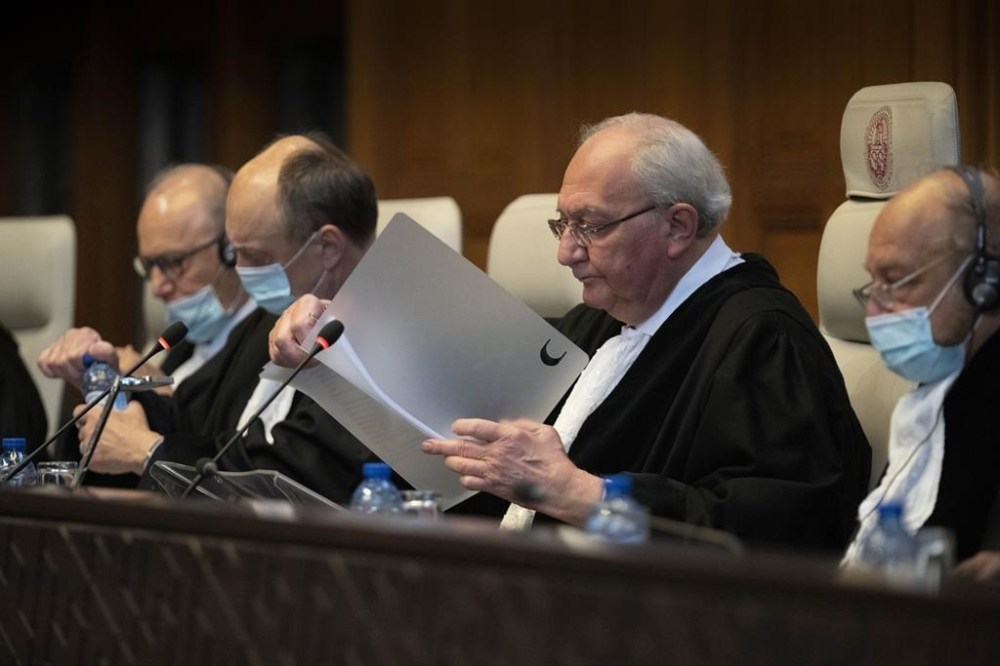
In a complex, 67-page judgment, the world court also found that some other U.S. moves to seize assets of Iran and Iranians in the United States breached a 1955 treaty between the countries and said they should negotiate compensation. If they fail to reach a number, they will have to return to the Hague-based court for a ruling.
But the largest part of the case focused on Bank Markazi, and its frozen assets of $1.75 billion in bonds, plus accumulated interest, that are held in a Citibank account in New York. The court said that it did not have jurisdiction based on the 1955 Treaty of Amity because the protections it offers do not extend to central banks.
Both countries largely voiced satisfaction at Thursday’s decision.
In Washington, Deputy State Department spokesman Vedant Patel said that while the U.S. was disappointed with some aspects of the ruling it was pleased on the whole.
“Broadly we believe that today’s decision is a major blow to Iran’s case,” Patel told journalists.
An Iranian foreign ministry statement lauded the decision as “an indication of the strength and reliability of (Iran’s) demand,” the official IRNA news agency reported on Thursday.
It said Tehran would use “all diplomatic, legal and judiciary means” to pursue its demands.
At hearings last year, Iran cast the asset freeze as an attempt to destabilize the Tehran government and a violation of international law.
Iran took its claim to the world court in 2016 after the U.S. Supreme Court ruled that money belonging to Iran’s central bank could be used as compensation for the 241 American troops who died in the 1983 bombing, which was believed to be linked to Tehran.
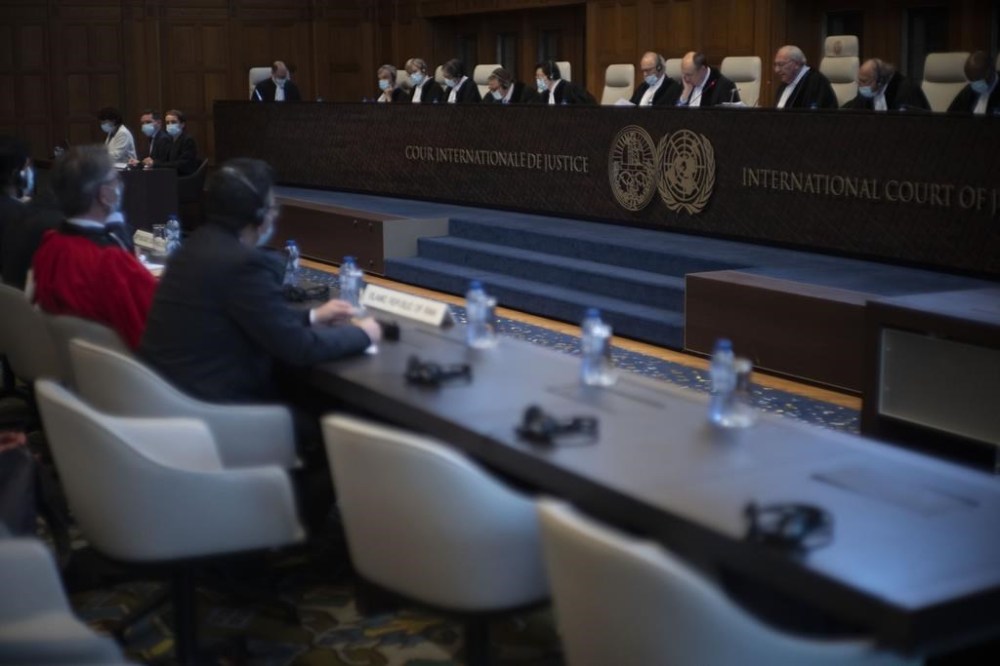
After the bombing of the a U.S. military base in Lebanon, a second blast nearby killed 58 French soldiers. Iran has denied involvement, but a U.S. District Court judge found Tehran responsible in 2003. The judge’s ruling said Iran’s ambassador to Syria at the time called “a member of the Iranian Revolutionary Guard and instructed him to instigate the Marine barracks bombing.”
At last year’s hearings, U.S. legal team leader Richard Visek told judges they should invoke, for the first time, a legal principle known as “unclean hands,” under which a nation can’t bring a case because of its own criminal actions linked to the case.
However, the court’s ruling Thursday rejected that defense.
Iran argued the asset freeze was a breach of the 1955 Treaty of Amity, which promised friendship and cooperation between the two countries. The U.S. and Iran have had no diplomatic relations since militant students took over the U.S. Embassy in Tehran in 1979.
The judges accepted U.S. lawyers’ contentions that the frozen central bank assets were state holdings not covered by the treaty, which Washington terminated in 2018 in response to an order by the International Court of Justice in a separate case to lift some sanctions against Iran.
The court’s judgments are final and legally binding.