
Lone suspect in 1980 Paris synagogue bombing goes on trial
Advertisement
Read this article for free:
or
Already have an account? Log in here »
We need your support!
Local journalism needs your support!
As we navigate through unprecedented times, our journalists are working harder than ever to bring you the latest local updates to keep you safe and informed.
Now, more than ever, we need your support.
Starting at $15.99 plus taxes every four weeks you can access your Brandon Sun online and full access to all content as it appears on our website.
Subscribe Nowor call circulation directly at (204) 727-0527.
Your pledge helps to ensure we provide the news that matters most to your community!
To continue reading, please subscribe:
Add Brandon Sun access to your Free Press subscription for only an additional
$1 for the first 4 weeks*
- Enjoy unlimited reading on brandonsun.com
- Read the Brandon Sun E-Edition, our digital replica newspaper
*Your next Free Press subscription payment will increase by $1.00 and you will be charged $20.95 plus GST for four weeks. After four weeks, your payment will increase to $24.95 plus GST every four weeks.
Read unlimited articles for free today:
or
Already have an account? Log in here »
Hey there, time traveller!
This article was published 03/04/2023 (1259 days ago), so information in it may no longer be current.
PARIS (AP) — A Lebanese-Canadian academic who is the lone suspect in a 1980 bombing outside a Paris synagogue went on trial in absentia Monday, nearly 43 years after four people were killed and 46 wounded in the unclaimed attack.
French authorities identified Hassan Diab as a suspect in 1999. They accuse him of planting the bomb on the evening of Oct. 3, 1980, outside the synagogue where 320 worshipers had gathered to mark the end of a Jewish holiday.
Diab, 69, has denied involvement in the attack and said he was at a university in Beirut at the time of the western Paris bombing. His supporters and lawyers in France and Canada claim Diab has been wrongly pursued by French judicial authorities as a victim of mistaken identity.
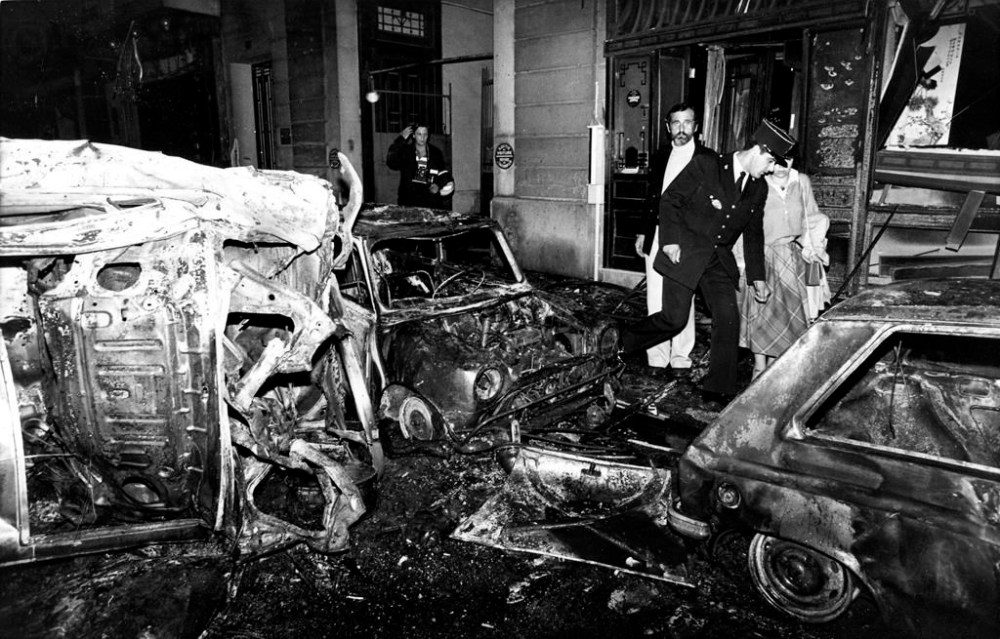
French investigators attributed the synagogue attack to the Popular Front for the Liberation of Palestine-Special Operations. Canada authorized Diab’s extradition to France at the end of 2014. He spent three years in pretrial detention but anti-terrorism judges then ordered him freed from French custody due to a lack of evidence, and he returned to Canada.
France’s court of appeal ruled in January 2021 that Diab must stand trial on terrorism-related charges. If convicted, he could receive a life sentence. A verdict is expected by April 21. He lives in Ottawa.
Survivors of the attack and victims’ families attended the first day of proceedings in Paris Monday. Prosecutor Benjamin Chambre said that Diab’s absence is proof of “great cowardice in his behavior.”
“It’s a grave abomination for justice and for the victims 43 years after the events,” Chambre added. Diab’s lawyer William Bourdon said his client had “never fled” anything.
For survivors, the long path to trial may be justice delayed but at least it’s not justice denied, their lawyers told The Associated Press. The victims’ attorneys say the trial will serve as deterrent for future terrorist acts and antisemitic sentiments.
“It’s a positive development that the trial is taking place, even if he (the suspect) will not be there and even if he is acquitted,” said Bernard Cahen, a lawyer for two families who lost loved ones.
David Père, a lawyer for a then-14-year-old victim who was celebrating his bar mitzvah at the time of the attack, said the “path of justice must be followed,” even after more than four decades of investigation and legal drama. There is a suspect in the attack, and Père said his client wants to hear what Diab has to say in court, even if only through his lawyers.
“A terrorist attack is something that haunts you every day of your life,” Père said. “A trial is a result (of an attack) not a revenge for it.”