
Top UN court rejects most of Ukraine’s terror financing and discrimination case against Russia
Advertisement
Read this article for free:
or
Already have an account? Log in here »
We need your support!
Local journalism needs your support!
As we navigate through unprecedented times, our journalists are working harder than ever to bring you the latest local updates to keep you safe and informed.
Now, more than ever, we need your support.
Starting at $15.99 plus taxes every four weeks you can access your Brandon Sun online and full access to all content as it appears on our website.
Subscribe Nowor call circulation directly at (204) 727-0527.
Your pledge helps to ensure we provide the news that matters most to your community!
To continue reading, please subscribe:
Add Brandon Sun access to your Free Press subscription for only an additional
$1 for the first 4 weeks*
- Enjoy unlimited reading on brandonsun.com
- Read the Brandon Sun E-Edition, our digital replica newspaper
*Your next Free Press subscription payment will increase by $1.00 and you will be charged $20.95 plus GST for four weeks. After four weeks, your payment will increase to $24.95 plus GST every four weeks.
Read unlimited articles for free today:
or
Already have an account? Log in here »
Hey there, time traveller!
This article was published 31/01/2024 (956 days ago), so information in it may no longer be current.
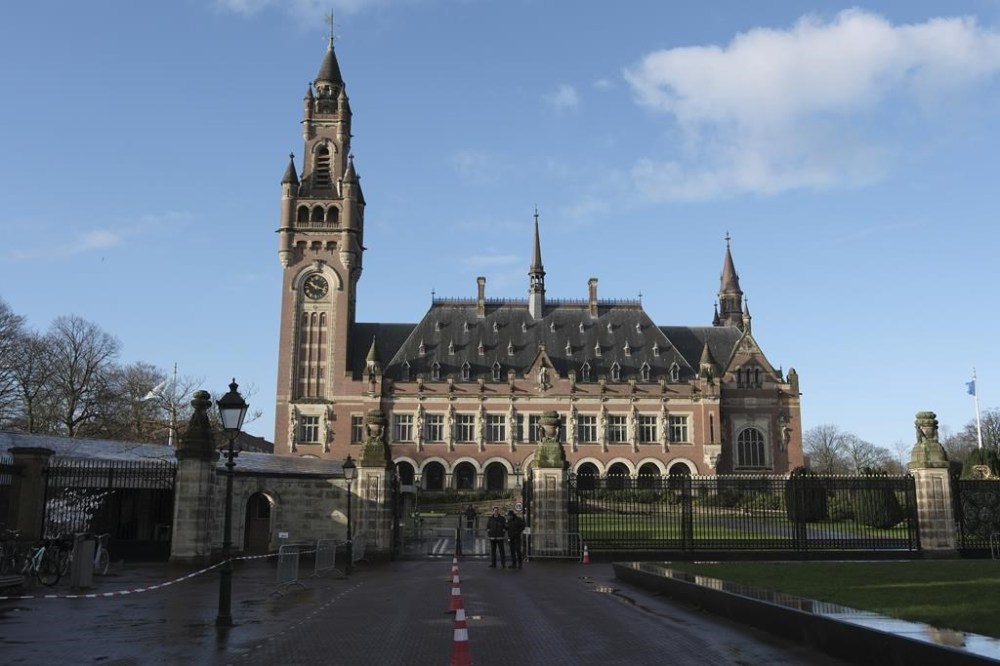
THE HAGUE, Netherlands (AP) — The United Nations’ top court on Wednesday rejected large parts of a case filed by Ukraine alleging that Russia bankrolled separatist rebels in the country’s east a decade ago and has discriminated against Crimea’s multiethnic community since its annexation of the peninsula.
The International Court of Justice ruled Moscow violated articles of two treaties — one on terrorism financing and another on eradicating racial discrimination — but it rejected far more of Kyiv’s claims under the treaties.
It rejected Ukraine’s request for Moscow to pay reparations for attacks in eastern Ukraine blamed on pro-Russia Ukrainian rebels, including the July 17, 2014, downing of Malaysia Airlines Flight 17 that killed all 298 passengers and crew.
Russia has denied any involvement in the downing of the jetliner. A Dutch domestic court convicted two Russians and a pro-Moscow Ukrainian in November 2022 for their roles in the attack and sentenced them in their absence to life imprisonment. The Netherlands and Ukraine also have sued Russia at the European Court of Human Rights over MH17.
In another rebuke for Moscow, the world court ruled that Russia had violated one of the court’s orders by launching its full-scale invasion in Ukraine nearly two years ago.
The leader of Ukraine’s legal team, Anton Korynevych, called the ruling “a really important day because this is a judgment which says that the Russian Federation violated international law, in particular both conventions under which we made our application.”
The legally binding final ruling was the first of two expected decisions from the International Court of Justice linked to the decade-long conflict between Russia and Ukraine that exploded into all-out war almost two years ago.
At hearings last year, a lawyer for Ukraine, David Zionts, said the pro-Russia forces in eastern Ukraine “attacked civilians as part of a campaign of intimidation and terror. Russian money and weapons fueled this campaign.”
The court, however, ruled that sending arms and other equipment didn’t constitute terrorism funding according to the 1999 treaty.
“The alleged supply of weapons to various armed groups operating in Ukraine and the alleged organization of training for members of those groups fall outside the material scope” of the treaty, the court’s president Joan E. Donoghue.
Another lawyer for Ukraine, Harold Koh, said during last year’s hearings that in the Crimean Peninsula, Russia “sought to replace the multiethnic community that had characterized Crimea before Russia’s intervention with discriminatory Russian nationalism.”
Lawyers for Russia urged the world court to throw out the case, arguing that the actions of pro-Moscow rebels in eastern Ukraine did not amount to terrorism.
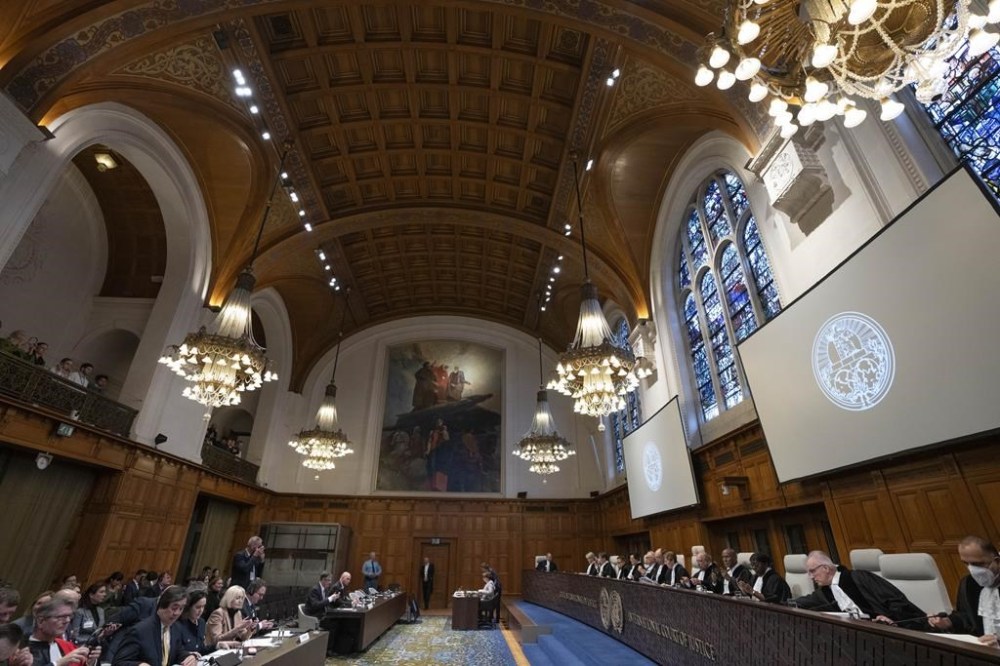
The court found that Russia failed to investigate allegations by Ukraine of alleged terrorist acts, but rejected all other claims by Kyiv of breaches of the Convention for the Suppression of the Financing of Terrorism.
It also ruled that Moscow breached the Convention on the Elimination of Racial Discrimination by limiting school education in the Ukrainian language and by maintaining a ban on a Tartar representative assembly called the Mejlis.
The court is scheduled to rule Friday on Russia’s objections to its jurisdiction in another case filed by Ukraine shortly after Russian troops invaded on Feb. 24, 2022. It alleges Moscow launched its attack based on trumped-up genocide allegations. The court already has issued an interim order for Russia to halt the invasion, which Moscow has flouted.
The International Court of Justice in recent weeks also heard a case brought by South Africa accusing Israel of committing genocide in Gaza. Judges issued provisional measures last week calling on Israel to do all it can to prevent death, destruction and any acts of genocide in the conflict.
___
Follow AP’s coverage of the war in Ukraine: https://apnews.com/hub/russia-ukraine