
Defense for woman accused of killing police officer boyfriend tries to show she was framed
Advertisement
Read this article for free:
or
Already have an account? Log in here »
We need your support!
Local journalism needs your support!
As we navigate through unprecedented times, our journalists are working harder than ever to bring you the latest local updates to keep you safe and informed.
Now, more than ever, we need your support.
Starting at $15.99 plus taxes every four weeks you can access your Brandon Sun online and full access to all content as it appears on our website.
Subscribe Nowor call circulation directly at (204) 727-0527.
Your pledge helps to ensure we provide the news that matters most to your community!
To continue reading, please subscribe:
Add Brandon Sun access to your Free Press subscription for only an additional
$1 for the first 4 weeks*
*Your next subscription payment will increase by $1.00 and you will be charged $20.00 plus GST for four weeks. After four weeks, your payment will increase to $24.00 plus GST every four weeks.
Read unlimited articles for free today:
or
Already have an account? Log in here »
Hey there, time traveller!
This article was published 21/06/2024 (661 days ago), so information in it may no longer be current.
BOSTON – Attorneys for a woman accused of striking her Boston police officer boyfriend with her SUV and leaving him for dead in a snowbank outside another officer’s home began presenting their case Friday that she was framed by police, with a snowplow driver who said he didn’t see a body.
Snowplow driver Brian Loughran, who was on his regular route during a storm early on Jan. 29, 2022, was the first witness called by defense attorneys for Karen Read after prosecutors rested.
Read has pleaded not guilty to second-degree murder and other charges in the January 2022 death of Officer John O’Keefe. The 16-year Boston police veteran was found unresponsive outside Brian Albert’s home in Canton and was later pronounced dead at a hospital. An autopsy found O’Keefe died of hypothermia and blunt force trauma.
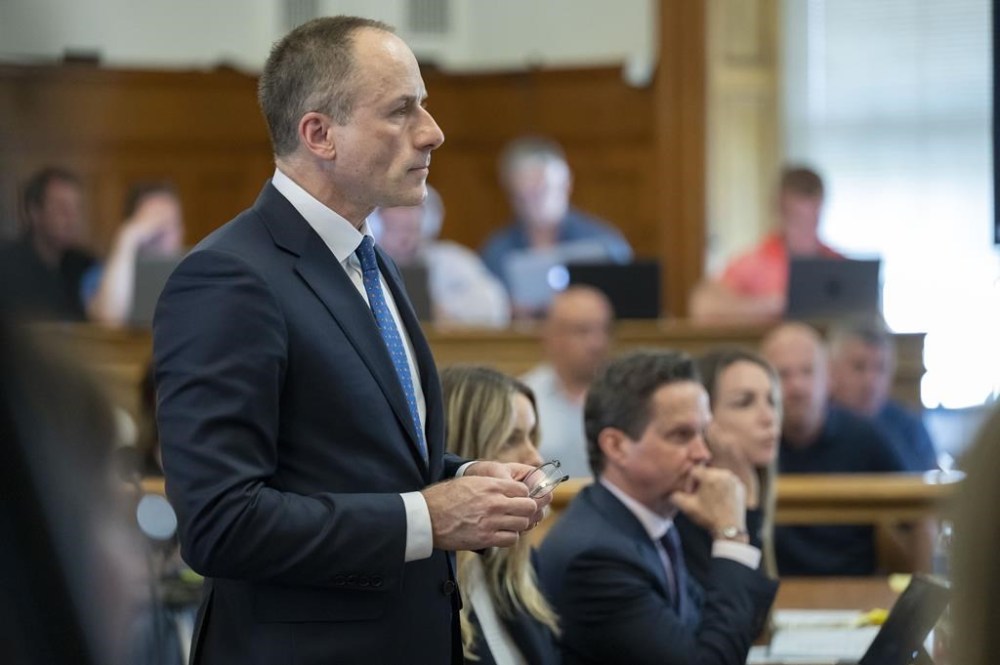
Prosecutors allege Read and O’Keefe had been drinking and fighting before she dropped him off at Albert’s home shortly before 12:30 a.m. They say she hit him with her SUV while making a three-point turn and then drove away.
Read’s lawyers say O’Keefe was beaten up in the house and was bitten by Albert’s dog, then brought outside. They say investigators focused on Read because she was a “convenient outsider” who saved them from having to consider other suspects, including Albert and other law enforcement officers who were at the party.
Loughran testified that he passed by the house around 2:45 a.m. and that he could see “a very large portion, almost to the front steps” of the lawn and “saw nothing.” When he drove by again about 30 minutes later, he said, he again he saw nothing on the lawn but did see a car parked in the road in front of the house. He said he knew Albert and his family, so he was “being courteous” and decided not to report as violating snowstorm parking restrictions.
When Loughran returned around 5:30 a.m, the street was blocked and first responders were there, he said.
Prosecutor Adam Lally questioned Loughran’s times, suggesting he passed by much earlier, at midnight and 2 a.m., as well as his description of the vehicle. Loughran also told Lally he hit a basketball hoop during his route, but couldn’t recall the time.
Prosecutors are relying on several first responders who testified that Read repeatedly yelled that she hit O’Keefe as well as evidence that Read was legally intoxicated or close to it eight hours later, that her SUV had a broken taillight and that pieces of a broken light were found near O’Keefe.
Several witnesses testified the couple had a stormy relationship that had begun to sour. Prosecutors presented angry texts between the couple hours before O’Keefe died. They also played voice messages from Read to O’Keefe that were left after she allegedly struck him, including one left minutes afterward saying, “John I (expletive) hate you.”
Massachusetts State Trooper Joseph Paul testified that an analysis of safety system data from Read’s SUV indicated her vehicle slowed in reverse — going from 24.2 mph to 23.6 mph (39 to 38 kph) — which was consistent with a “pedestrian strike.” He also said O’Keefe’s injuries were consistent with being struck by a vehicle.
Dr. Irini Scordi-Bello, a medical examiner who conducted the autopsy, said O’Keefe had multiple skull fractures. “Any blunt object” could have struck him and caused his injuries, she said. They “could be” consistent with a fall to the ground, she added.
Scordi-Bello said she saw no signs of a “significant altercation,” but she also said it’s possible that some of the injuries to his face could have been caused by a punch.
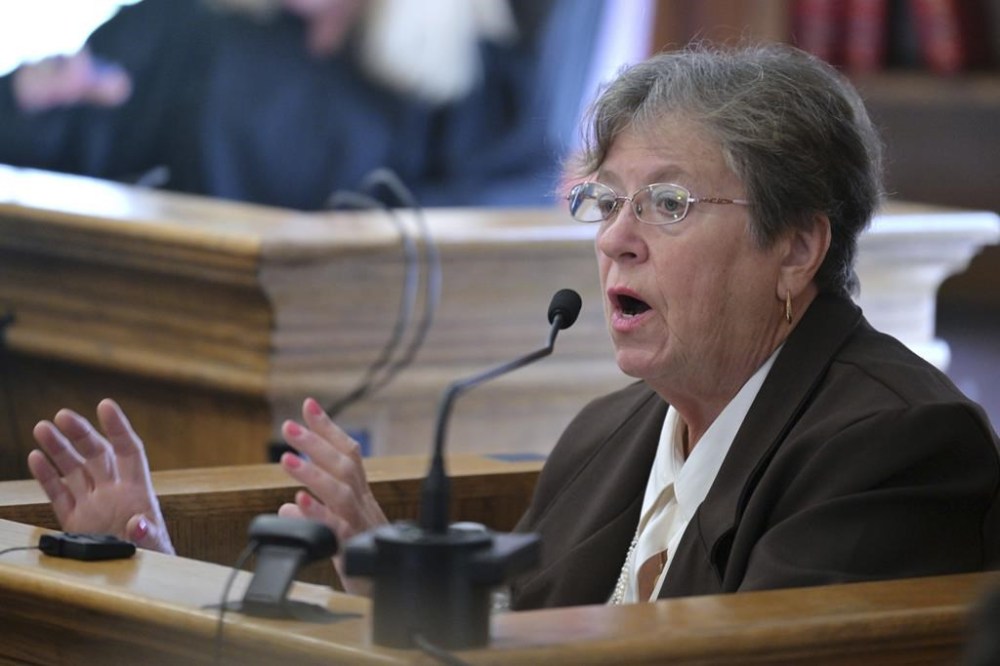
Asked by the defense Friday if O’Keefe’s injuries were “inconsistent” with being struck by Read’s SUV at 24 mph, Scordi-Bello said, “I would say it’s likely and unlikely at the same time depending on the position of the body and the vehicle in question.”
Scordi-Bello said she did not know what caused cuts, some showing patterns, found on O’Keefe’s arm. But Dr. Marie Russell, a recently retired emergency room doctor and forensic pathologist, testified Friday that the injuries were consistent with an animal attack, possibly a large dog. Under cross-examination, she said she was aware that clothing swabs of O’Keefe’s had tested negative for canine DNA.
Defense attorneys have repeatedly raised doubts about the police investigation, including that Albert’s house was never searched for signs of a fight involving O’Keefe and the crime scene was not secured. They highlighted that police collected blood evidence in plastic drinking cups.
The defense also has shown myriad conflicts of interest among police who were handling the case. Many people at the house party knew the investigators, including the lead investigator, State Trooper Michael Proctor, who acknowledged sending offensive texts about Read to friends, family and fellow troopers during the investigation.
They also accused several witnesses of changing their story and pointed out that at least two people at the party — including Albert — got rid of their cellphones during the investigation.
“There is no case against me,” Read said told reporters Tuesday outside the court. She went on to add: “After eight weeks, it’s smoke and mirrors and it’s going through my private life and trying to contrive a motive that was never there.”