
Center-right party wins most votes in Greenland’s parliamentary election as Trump seeks control
Advertisement
Read this article for free:
or
Already have an account? Log in here »
We need your support!
Local journalism needs your support!
As we navigate through unprecedented times, our journalists are working harder than ever to bring you the latest local updates to keep you safe and informed.
Now, more than ever, we need your support.
Starting at $15.99 plus taxes every four weeks you can access your Brandon Sun online and full access to all content as it appears on our website.
Subscribe Nowor call circulation directly at (204) 727-0527.
Your pledge helps to ensure we provide the news that matters most to your community!
To continue reading, please subscribe:
Add Brandon Sun access to your Free Press subscription for only an additional
$1 for the first 4 weeks*
*Your next subscription payment will increase by $1.00 and you will be charged $20.00 plus GST for four weeks. After four weeks, your payment will increase to $24.00 plus GST every four weeks.
Read unlimited articles for free today:
or
Already have an account? Log in here »
Hey there, time traveller!
This article was published 12/03/2025 (379 days ago), so information in it may no longer be current.
NUUK, Greenland (AP) — The center-right Demokraatit Party won the most votes in Greenland’s parliamentary elections, a surprise result as the territory went to the polls in the shadow of President Donald Trump’s stated goal of taking control of the island one way or another.
Both Demokraatit — the Democrats — and the second place party, Naleraq — “Point of Orientation” — favor independence from Denmark, but they have differences on the pace of change.
Demokraatit’s upset victory over parties that have governed the territory for years indicates that many in Greenland care just as much about healthcare, education, cultural heritage and other social policies.
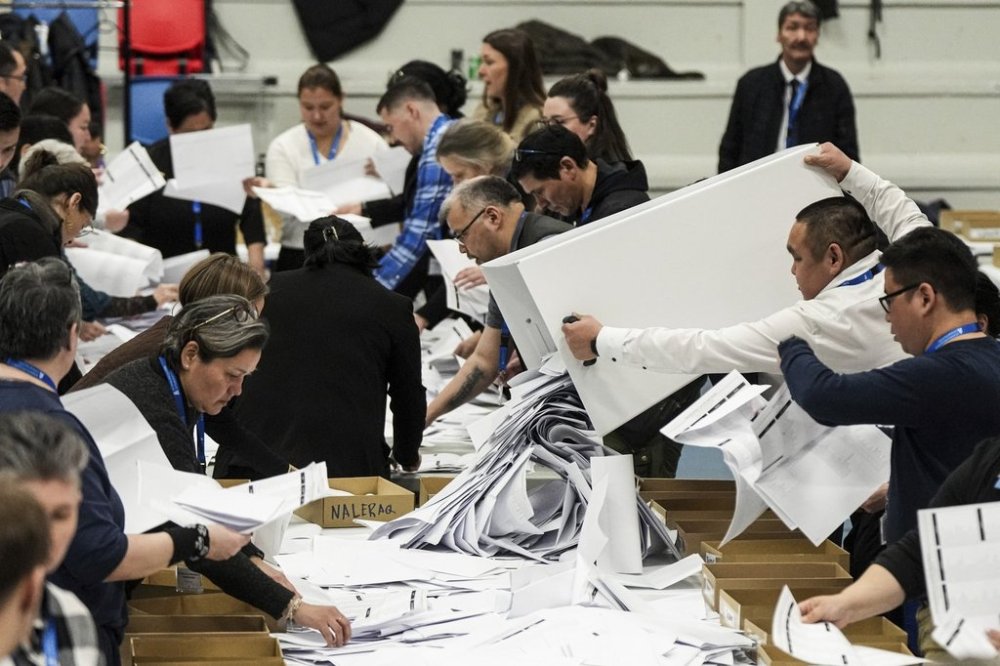
The unanticipated results came after huge crowds streamed into the polling station in the capital, Nuuk, throughout the day, warmed by sunny skies. Exhausted voting officials closed the polls well after the planned 8 p.m. local time on Tuesday to make sure everyone in line got a chance to cast their ballot.
Prime Minister Mute Bourup Egede in February called elections a bit early, saying the country needed to be united during a “serious time” that is unlike anything Greenland has ever experienced.
Trump has been outspoken about his desire to control Greenland, telling a joint session of Congress last week that he thought the U.S. was going to get it “one way or the other.”
Greenland, a self-governing region of Denmark, straddles strategic air and sea routes in the North Atlantic and has rich deposits of the rare earth minerals needed to make everything from mobile phones to renewable energy technology.
Egede’s Inuit Ataqatigiit (United Inuit) had been widely expected to win the contest, followed by Siumut — two parties which had dominated Greenland’s politics in recent years.
A break from Denmark wasn’t on the ballot, but it was on everyone’s mind. The island of 56,000 people has been on a path toward independence since at least 2009, and the 31 lawmakers elected will shape the island’s future as it debates whether the time has come to declare independence.
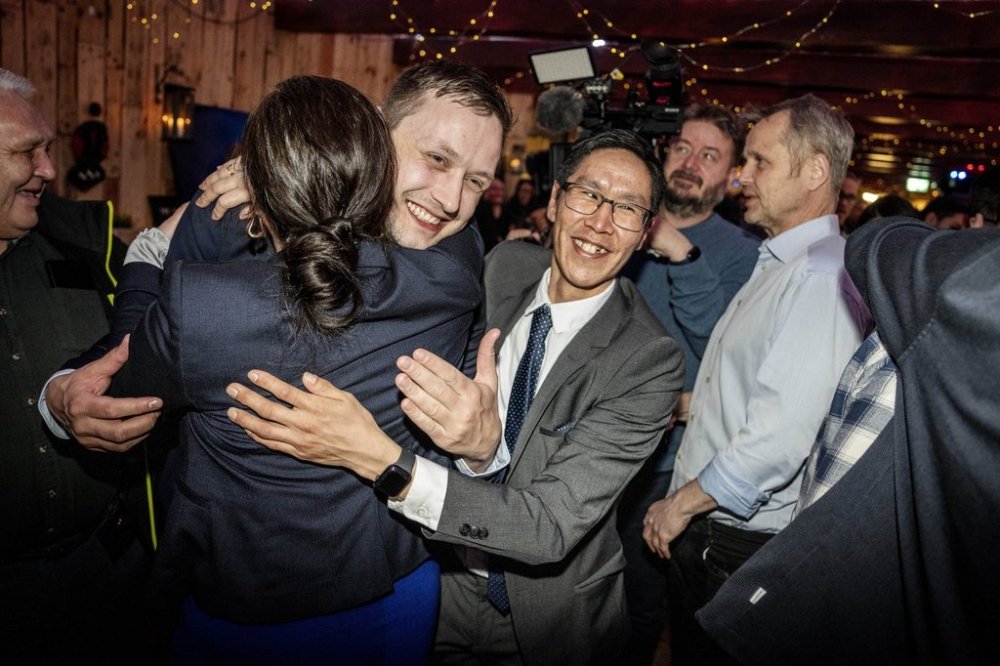
Four of the five main parties in the race sought independence, but disagreed on when and how.
Naleraq is the most aggressively pro-independence, while Demokraatit favors a more moderate pace of change.
“What approach to independence will win the day will ultimately depend on if Demokraatit decides to form a coalition government, and if so, with which party,” said Dwayne Menezes, managing director of the Polar Research and Policy Initiative.