
Judge bars Trump from denying federal funds to ‘sanctuary’ cities that limit immigration cooperation
Advertisement
Read this article for free:
or
Already have an account? Log in here »
We need your support!
Local journalism needs your support!
As we navigate through unprecedented times, our journalists are working harder than ever to bring you the latest local updates to keep you safe and informed.
Now, more than ever, we need your support.
Starting at $15.99 plus taxes every four weeks you can access your Brandon Sun online and full access to all content as it appears on our website.
Subscribe Nowor call circulation directly at (204) 727-0527.
Your pledge helps to ensure we provide the news that matters most to your community!
To continue reading, please subscribe:
Add Brandon Sun access to your Free Press subscription for only an additional
$1 for the first 4 weeks*
*Your next subscription payment will increase by $1.00 and you will be charged $20.00 plus GST for four weeks. After four weeks, your payment will increase to $24.00 plus GST every four weeks.
Read unlimited articles for free today:
or
Already have an account? Log in here »
Hey there, time traveller!
This article was published 24/04/2025 (336 days ago), so information in it may no longer be current.
SAN FRANCISCO (AP) — A federal judge in California on Thursday barred the Trump administration from denying or conditioning the use of federal funds to “sanctuary” jurisdictions, saying that portions of President Donald Trump’s executive orders were unconstitutional.
U.S. District Judge William Orrick issued the injunction sought by San Francisco and more than a dozen other municipalities that limit cooperation with federal immigration efforts.
Orrick wrote that defendants are prohibited “from directly or indirectly taking any action to withhold, freeze, or condition federal funds” and the administration must provide written notice of his order to all federal departments and agencies by Monday.
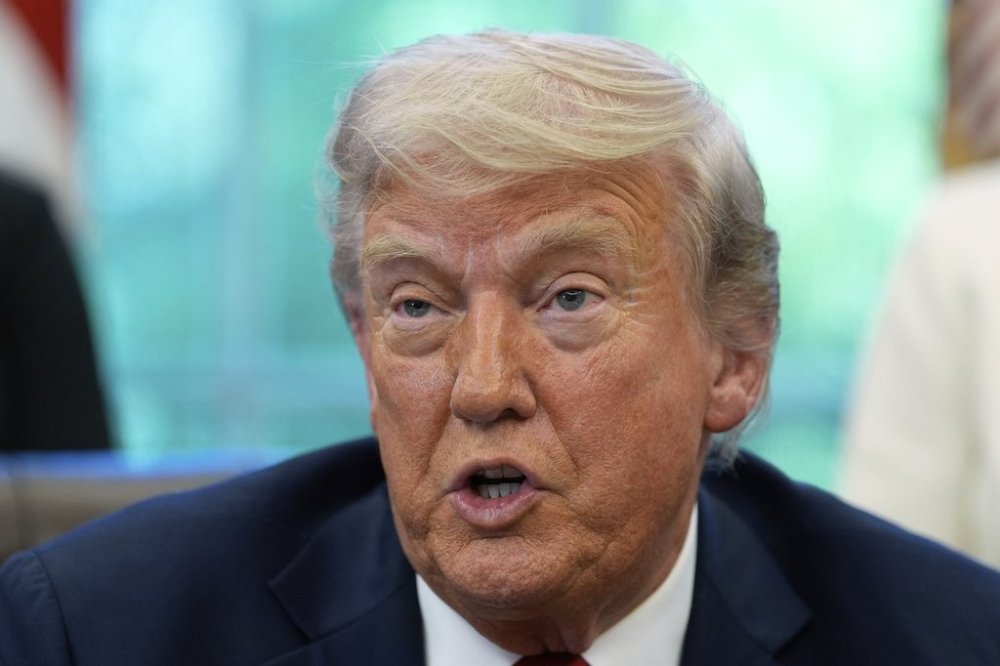
One executive order issued by Trump directs Attorney General Pam Bondi and Homeland Security Secretary Kristi Noem to withhold federal money to sanctuary jurisdictions. The second order directs every federal agency to ensure that payments to state and local governments do not “abet so-called ‘sanctuary’ policies that seek to shield illegal aliens from deportation.”
At a hearing Wednesday, Justice Department lawyers argued that it was much too early for the judge to grant an injunction when the government had not taken any action to withhold specific amounts or to lay out conditions on specific grants.
But Orrick, who was nominated by President Barack Obama, said this was essentially what government lawyers argued during Trump’s first term when the Republican issued a similar order.
“Their well-founded fear of enforcement is even stronger than it was in 2017,” Orrick wrote, citing the executive orders as well as directives from Bondi, other federal agencies and Justice Department lawsuits filed against Chicago and New York.
San Francisco successfully challenged the 2017 Trump order and the 9th U.S. Circuit Court of Appeals agreed with the lower court that the president exceeded his authority when he signed an executive order threatening to cut funding for “sanctuary cities.”
There is no strict definition for sanctuary policies or sanctuary cities, but the terms generally describe limited cooperation with Immigration and Customs Enforcement. ICE enforces immigration laws nationwide but seeks state and local help in alerting federal authorities of immigrants wanted for deportation and holding that person until federal officers take custody.
Leaders of sanctuary jurisdictions say their communities are safer because immigrants feel they can communicate with local police without fear of deportation. It is also a way for municipalities to focus their dollars on crime locally, they say.
Besides San Francisco and Santa Clara County, which includes a third plaintiff, the city of San José, there are 13 other plaintiffs in the lawsuit, which include Seattle and King County, Washington; Portland, Oregon; Minneapolis and St. Paul, Minnesota; New Haven, Connecticut; and Santa Fe, New Mexico.