
Trump threatens sanctions against buyers of Iranian oil after US-Iran nuclear talks are postponed
Advertisement
Read this article for free:
or
Already have an account? Log in here »
We need your support!
Local journalism needs your support!
As we navigate through unprecedented times, our journalists are working harder than ever to bring you the latest local updates to keep you safe and informed.
Now, more than ever, we need your support.
Starting at $15.99 plus taxes every four weeks you can access your Brandon Sun online and full access to all content as it appears on our website.
Subscribe Nowor call circulation directly at (204) 727-0527.
Your pledge helps to ensure we provide the news that matters most to your community!
To continue reading, please subscribe:
Add Brandon Sun access to your Free Press subscription for only an additional
$1 for the first 4 weeks*
- Enjoy unlimited reading on brandonsun.com
- Read the Brandon Sun E-Edition, our digital replica newspaper
*Your next Free Press subscription payment will increase by $1.00 and you will be charged $20.95 plus GST for four weeks. After four weeks, your payment will increase to $24.95 plus GST every four weeks.
Read unlimited articles for free today:
or
Already have an account? Log in here »
Hey there, time traveller!
This article was published 01/05/2025 (405 days ago), so information in it may no longer be current.
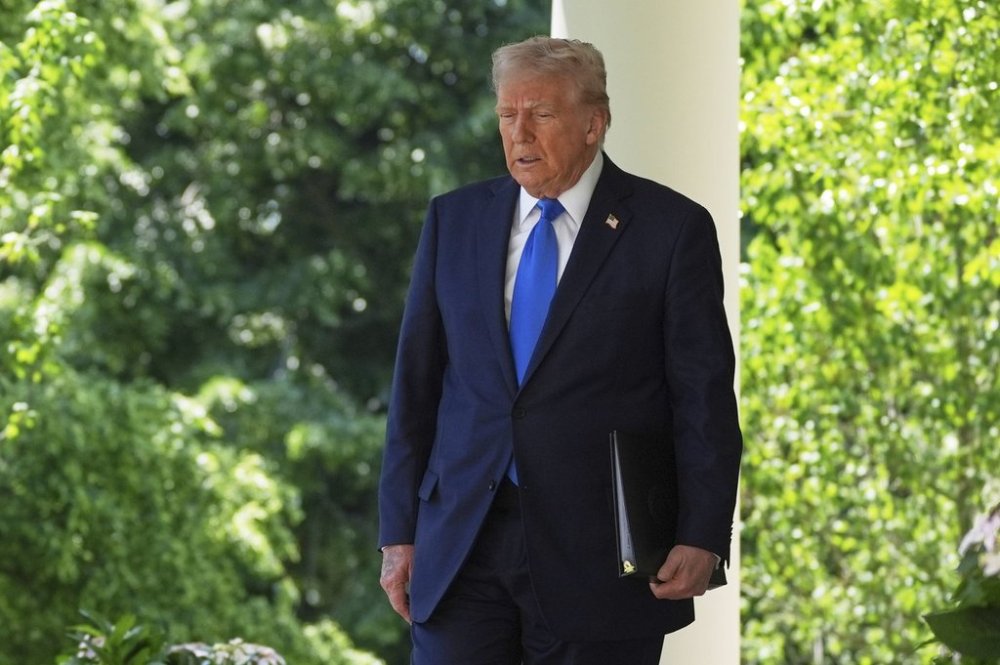
DUBAI, United Arab Emirates (AP) — President Donald Trump on Thursday threatened sanctions on anyone who buys Iranian oil, a warning that came after planned talks over Tehran’s rapidly advancing nuclear program were postponed.
Trump wrote on social media, “All purchases of Iranian Oil, or Petrochemical products, must stop, NOW!” He said any country or person who buys those products from Iran will not be able to do business with the United States “in any way, shape, or form.”
It was unclear how Trump would implement such a ban as he threatened to levy secondary sanctions on nations that import Iranian oil. But his statement risked further escalating tensions with China — Iran’s leading customer — at a time when the relationship is severely strained over the U.S. president’s tariffs.
Based on tanker tracking data, the U.S. Energy Information Administration concluded in a report published last October that “China took nearly 90% of Iran’s crude oil and condensate exports in 2023.” Trump has separately placed 145% tariffs on China as a way to raise federal revenues and rebalance global trade.
Trump’s social media threat came after Oman announced planned nuclear negotiations for this coming weekend had been postponed. Omani Foreign Minister Badr al-Busaidi made the announcement in a post on the social platform X.
“For logistical reasons we are rescheduling the US Iran meeting provisionally planned for Saturday May 3rd,” he wrote. “New dates will be announced when mutually agreed.”
Al-Busaidi, who has mediated the talks through three rounds so far, did not elaborate.
Iran’s Foreign Minister Abbas Araghchi also blamed “logistical and technical reasons” for the postponement.
“On Iran’s part, there is no change in our determination to secure a negotiated solution,” he wrote on X. “We are more determined than ever to achieve a just and balanced deal: guaranteeing an end to sanctions, and creating confidence that Iran’s nuclear program will forever remain peaceful while ensuring that Iranian rights are fully respected.”
Meanwhile, a person familiar with the U.S. negotiators said America “had never confirmed its participation” in a fourth round of talks in Rome. However, the person said the U.S. expected the talks to occur “in the near future.” The person spoke on condition of anonymity to discuss the closed-door negotiations.
Rome will see the Vatican begin its conclave next week to pick a new pope after the death of Pope Francis. Two other rounds of U.S.-Iran talks have been held in Muscat, the capital of Oman.
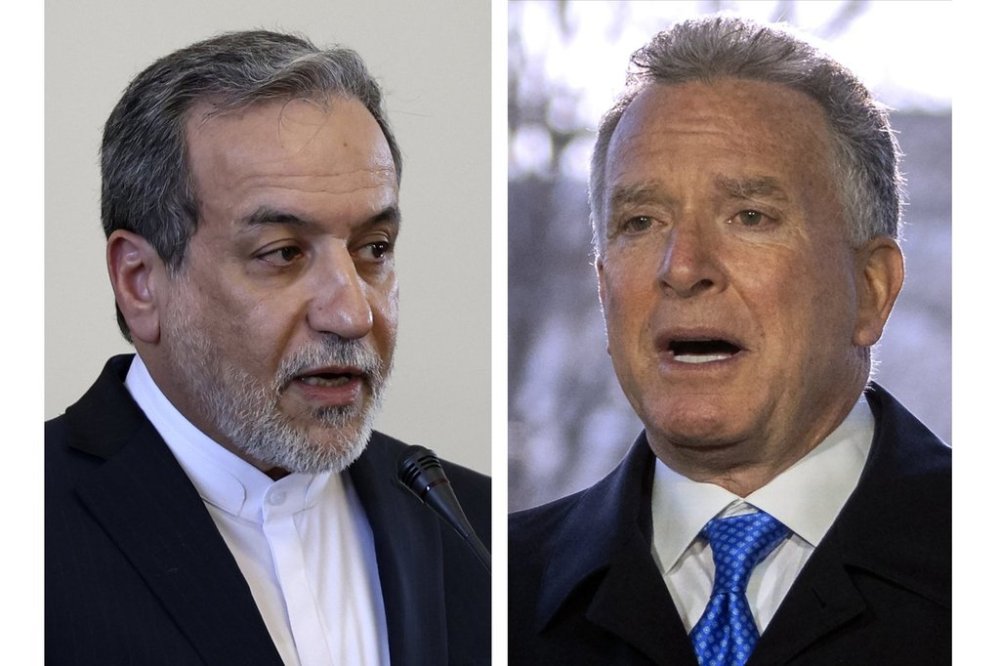
The talks seek to limit Iran’s nuclear program in exchange for the lifting of some of the crushing economic sanctions the U.S. has imposed on the Islamic Republic closing in on a half-century of enmity. The negotiations have been led by Araghchi and U.S. Mideast envoy Steve Witkoff.
Trump has repeatedly threatened to unleash airstrikes targeting Iran’s program if a deal isn’t reached. Iranian officials increasingly warn that they could pursue a nuclear weapon with their stockpile of uranium enriched to near weapons-grade levels.
The U.S. president with his threat on social media would be going after Iran’s major economic resource. It produced an average of 2.9 million barrels a day in 2023 of crude oil, according to the Energy Information Administration.
Iran’s 2015 nuclear deal with world powers did limit Tehran’s program. However, Trump unilaterally withdrew from it in 2018, setting in motion years of attacks and tensions. The wider Middle East also remains on edge over the Israel-Hamas war in the Gaza Strip.
Meanwhile, the U.S. continues an airstrike campaign, called “Operation Rough Rider,” that has been targeting Yemen’s Houthi rebels, who long have been backed by Iran. U.S. Defense Secretary Pete Hegseth early Thursday warned Iran over the rebels.
“Message to IRAN: We see your LETHAL support to The Houthis. We know exactly what you are doing,” he wrote. “You know very well what the U.S. Military is capable of — and you were warned. You will pay the CONSEQUENCE at the time and place of our choosing.”
Last Saturday’s round of talks, which included experts drilling down into the details of a possible deal, also took place as an explosion rocked an Iranian port, killing at least 70 people and injuring more than 1,000 others.
___
Associated Press writers Amir Vahdat in Tehran, Iran, and Matthew Lee and Josh Boak in Washington contributed to this report.