
Harvard researcher charged with smuggling frog embryos is released from federal custody on bail
Advertisement
Read this article for free:
or
Already have an account? Log in here »
We need your support!
Local journalism needs your support!
As we navigate through unprecedented times, our journalists are working harder than ever to bring you the latest local updates to keep you safe and informed.
Now, more than ever, we need your support.
Starting at $15.99 plus taxes every four weeks you can access your Brandon Sun online and full access to all content as it appears on our website.
Subscribe Nowor call circulation directly at (204) 727-0527.
Your pledge helps to ensure we provide the news that matters most to your community!
To continue reading, please subscribe:
Add Brandon Sun access to your Free Press subscription for only an additional
$1 for the first 4 weeks*
*Your next subscription payment will increase by $1.00 and you will be charged $20.00 plus GST for four weeks. After four weeks, your payment will increase to $24.00 plus GST every four weeks.
Read unlimited articles for free today:
or
Already have an account? Log in here »
Hey there, time traveller!
This article was published 12/06/2025 (287 days ago), so information in it may no longer be current.
BOSTON (AP) — A Russian-born scientist and Harvard University researcher charged with smuggling frog embryos in the U.S. shared hugs and laughs with supporters after a judge released her from federal custody on Thursday.
“I just want to thank everybody,” Kseniia Petrova said outside the federal building in Boston shortly after her release.
She wore a T-shirt that said, “Hakuna Matata,” a popular phrase from “The Lion King” that means “no worries.”
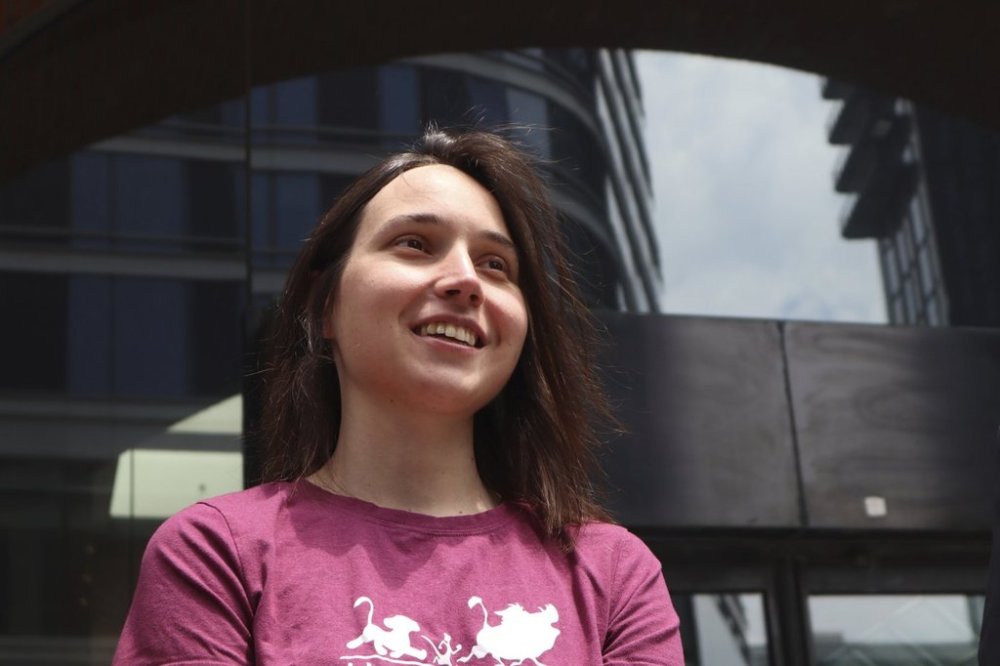
“A lot of people started contacting me and sending me letters, and it was a huge support without which I won’t be able to survive,” she said.
“I never really felt alone any minute when I was in custody, and it’s really helped me very much,” Petrova added.
Petrova, 30, who was brought into court wearing an orange jumpsuit, had been in federal custody since February.
Lawyers on both sides came to an agreement on conditions for Petrova’s release, which included limiting her travel. Authorities are still holding onto her passport. Petrova must return to court next week for a probable cause hearing on the smuggling charge.
“I hear it’s sunny. Goodbye,” Magistrate Judge Judith Dein said after approving the agreement.
Greg Romanovsky, Petrova’s attorney, said his client hasn’t “decided whether she wants to stay in the United States yet.”
“She has offers from different countries around the world, countries that are eager to support the important research that she’s doing. She’s weighing her options at the moment, and she’s very grateful to be out,” he said.
Petrova was returning from a vacation earlier this year in France, where she had stopped at a lab specializing in splicing superfine sections of frog embryos and obtained a package of samples for research. She was questioned about the samples while passing through a U.S. Customs and Border Protection checkpoint at Boston Logan International Airport.
After an interrogation, Petrova was told her visa was being canceled.
Petrova was briefly detained by immigration officials in Vermont, where she filed a petition seeking her release. She was later sent to a U.S. Immigration and Customs Enforcement facility in Louisiana.
The Department of Homeland Security had said in a statement on the social media platform X that Petrova was detained after “lying to federal officers about carrying substances into the country.” They allege that messages on her phone “revealed she planned to smuggle the materials through customs without declaring them.”
She told The Associated Press in an interview in April that she did not realize the items needed to be declared and was not trying to sneak anything into the country.
In May, Petrova was charged with smuggling in Massachusetts as a federal judge in Vermont set the hearing date on her petition. That judge later ruled that the immigration officers’ actions were unlawful, that Petrova didn’t present a danger, and that the embryos were nonliving, nonhazardous and “posed a threat to no one.”
The judge released Petrova from ICE custody, but she remained in the custody of the U.S. Marshals Service on the smuggling charge before her release Thursday.
Colleagues and academics have testified on Petrova’s behalf, saying she is doing valuable research to advance cures for cancer.
___
McCormack reported from Concord, New Hampshire.