
Senate rejects effort to restrain Trump on Iran as GOP backs his strikes on nuclear sites
Advertisement
Read this article for free:
or
Already have an account? Log in here »
We need your support!
Local journalism needs your support!
As we navigate through unprecedented times, our journalists are working harder than ever to bring you the latest local updates to keep you safe and informed.
Now, more than ever, we need your support.
Starting at $15.99 plus taxes every four weeks you can access your Brandon Sun online and full access to all content as it appears on our website.
Subscribe Nowor call circulation directly at (204) 727-0527.
Your pledge helps to ensure we provide the news that matters most to your community!
To continue reading, please subscribe:
Add Brandon Sun access to your Free Press subscription for only an additional
$1 for the first 4 weeks*
- Enjoy unlimited reading on brandonsun.com
- Read the Brandon Sun E-Edition, our digital replica newspaper
*Your next Free Press subscription payment will increase by $1.00 and you will be charged $20.95 plus GST for four weeks. After four weeks, your payment will increase to $24.95 plus GST every four weeks.
Read unlimited articles for free today:
or
Already have an account? Log in here »
Hey there, time traveller!
This article was published 27/06/2025 (377 days ago), so information in it may no longer be current.
WASHINGTON (AP) — Democratic efforts in the Senate to prevent President Donald Trump from further escalating with Iran fell short Friday, with Republicans blocking a resolution that marked Congress’ first attempt to reassert its war powers following U.S. strikes on Iranian nuclear sites.
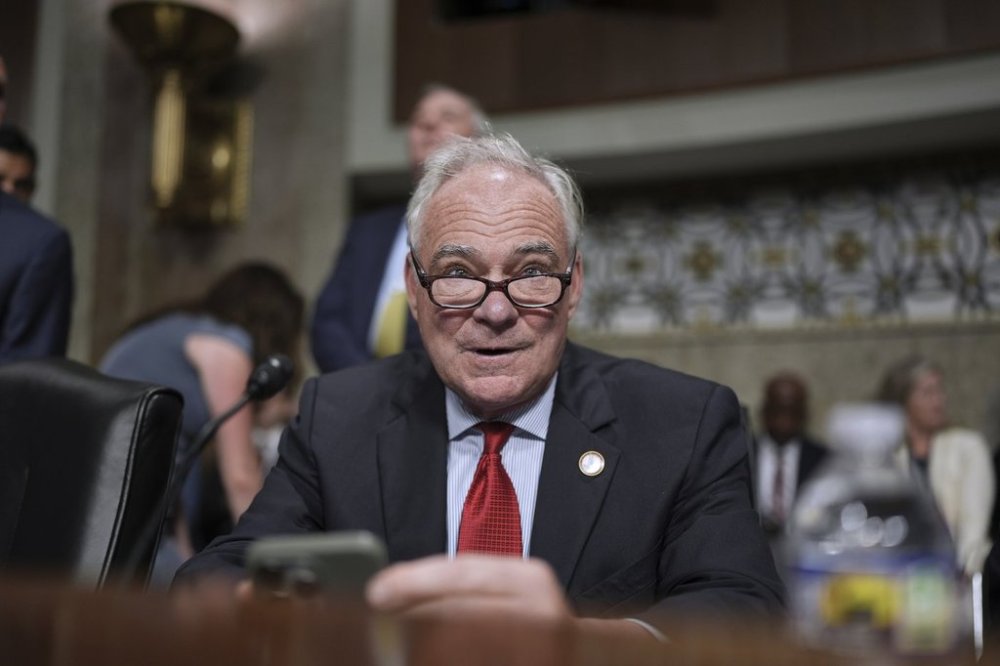
The resolution, authored by Sen. Tim Kaine of Virginia, aimed to affirm that Trump should seek authorization from Congress before launching more military action against Iran. Asked Friday if he would bomb Iranian nuclear sites again if he deemed necessary, Trump said, “Sure, without question.”
The measure was defeated in a 53-47 vote in the Republican-held Senate. One Democrat, Sen. John Fetterman of Pennsylvania, joined Republicans in opposition, while Sen. Rand Paul of Kentucky was the only Republican to vote in favor.
Most Republicans have said Iran posed an imminent threat that required decisive action from Trump, and they backed his decision to bomb three Iranian nuclear sites last weekend without seeking congressional approval.
“Of course, we can debate the scope and strategy of our military engagements,” said Sen. Bill Hagerty, R-Tenn. “But we must not shackle our president in the middle of a crisis when lives are on the line.”
Democrats cast doubt on that justification, arguing the president should have come to Congress first. They also said the president did not update them adequately, with Congress’ first briefings taking place Thursday.
“The idea is this: We shouldn’t send our sons and daughters into war unless there’s a political consensus that this is a good idea, this is a national interest,” Kaine said in a Thursday interview with The Associated Press. The resolution, Kaine said, wasn’t aimed at restricting the president’s ability to defend against a threat, but that “if it’s offense, let’s really make sure we’re making the right decision.”
In a statement following Friday’s vote, Kaine said he was “disappointed that many of my colleagues are not willing to stand up and say Congress” should be a part of a decision to go to war.
Democrats’ argument for backing the resolution centered on the War Powers Resolution, passed in the early 1970s, which requires the president “in every possible instance” to “consult with Congress before introducing United States Armed Forces.”
Speaking on the Senate floor ahead of Friday’s vote, Paul said he would back the resolution, saying that “despite the tactical success of our strikes, they may end up proving to be a strategic failure.”
“It is unclear if this intervention will fully curtail Iran’s nuclear aspirations,” said Paul.
Trump is just the latest in a line of presidents to test the limits of the resolution — though he’s done so at a time when he’s often bristling at the nation’s checks and balances.
Trump on Monday sent a letter to Congress — as required by the War Powers Resolution — that said strikes on Iran over the weekend were “limited in scope and purpose” and “designed to minimize casualties, deter future attacks and limit the risk of escalation.”
But following classified briefings with top White House officials this week, some lawmakers remain skeptical about how imminent the threat truly was.
“There was no imminent threat to the United States,” said Rep. Jim Himes, the top Democrat on the House Intelligence Committee, after Friday’s classified briefings.
“There’s always an Iranian threat to the world. But, I have not seen anything to suggest that the threat from the Iranians was radically different last Saturday than it was two Saturdays ago,” Himes said.
Despite Democratic skepticism, nearly all Republicans applauded Trump’s decision to strike Iran. And for GOP senators, supporting the resolution would have meant rebuking the president at the same time they’re working to pass his major legislative package.
Kaine proposed a similar resolution in 2020 aimed at limiting Trump’s authority to launch military operations against Iran. Among the eight Republicans who joined Democrats in approving the resolution was Indiana Sen. Todd Young.
After Thursday’s classified briefing for the Senate, Young said he was “confident that Iran was prepared to pose a significant threat” and that, given Trump’s stated goal of no further escalation, “I do not believe this resolution is necessary at this time.”
“Should the Administration’s posture change or events dictate the consideration of additional American military action, Congress should be consulted so we can best support those efforts and weigh in on behalf of our constituents,” Young said in a statement.
Trump has said that a ceasefire between Israel and Iran is now in place. But he and Ayatollah Ali Khamenei have verbally sparred in recent days, with the ayatollah warning the U.S. not to launch future strikes on Iran.
White House officials have said they expect to restart talks soon with Iran, though nothing has been scheduled.
___
Associated Press reporter Leah Askarinam contributed to this report.