
Tennessee death row inmate can be executed without deactivating implanted defibrillator, court rules
Advertisement
Read this article for free:
or
Already have an account? Log in here »
We need your support!
Local journalism needs your support!
As we navigate through unprecedented times, our journalists are working harder than ever to bring you the latest local updates to keep you safe and informed.
Now, more than ever, we need your support.
Starting at $15.99 plus taxes every four weeks you can access your Brandon Sun online and full access to all content as it appears on our website.
Subscribe Nowor call circulation directly at (204) 727-0527.
Your pledge helps to ensure we provide the news that matters most to your community!
To continue reading, please subscribe:
Add Brandon Sun access to your Free Press subscription for only an additional
$1 for the first 4 weeks*
*Your next subscription payment will increase by $1.00 and you will be charged $20.00 plus GST for four weeks. After four weeks, your payment will increase to $24.00 plus GST every four weeks.
Read unlimited articles for free today:
or
Already have an account? Log in here »
Hey there, time traveller!
This article was published 31/07/2025 (241 days ago), so information in it may no longer be current.
NASHVILLE, Tenn. (AP) — A Tennessee death row inmate can be executed without deactivating his implanted defibrillator, the state’s high court ruled on Thursday.
The ruling overturns a lower court’s order and paves the way for Byron Black to be executed on Tuesday morning, as scheduled.
The Tennessee Supreme Court found that requiring that the device be deactivated “amounted to a stay of execution,” which is not within the lower court’s power.
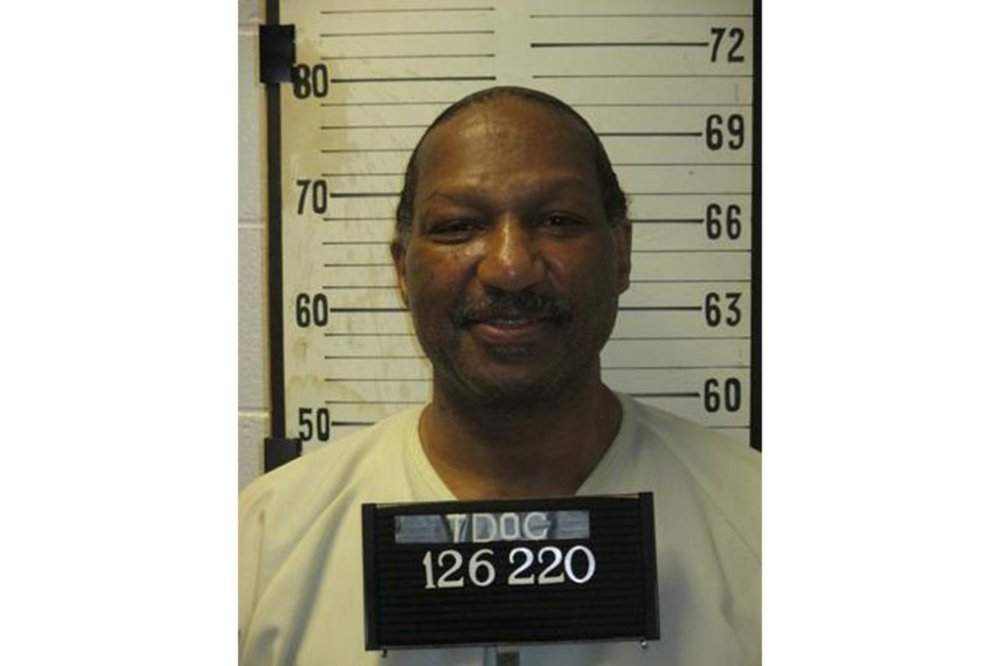
At issue is how Black’s heart-regulating device will perform when the state attempts to execute him with a lethal injection of the barbiturate pentobarbital. Davidson County Chancery Court Judge Russell Perkins previously found that the implanted cardioverter-defibrillator is likely to continuously shock Black’s heart, causing unnecessary pain and prolonging the execution. He ordered the state to deactivate the device shortly before the execution.
The order kept in mind the possibility that Black could win a last-minute reprieve. Deactivating it too far in advance might mean Black could die just before a ruling that would have saved him.
Lawyers for the Tennessee Attorney General’s office at first said they would need to transport Black to Nashville General Hospital for the deactivation because the doctors there were not willing to come to the execution chamber. On Wednesday, the state changed course, admitting that the hospital was unwilling to take part in the procedure, regardless of location. Most medical professionals consider any participation in executions to be a violation of medical ethics.
The state Supreme Court’s ruling did not address the issue of whether Black’s defibrillator will continuously shock his heart or whether that would cause unnecessary suffering, in violation of the state and federal constitutions. The ruling left open the possibility that the state could deactivate the device, if they can do so in a way that does not interfere with the execution.
Black was convicted in the 1988 shooting deaths of his girlfriend Angela Clay, 29, and her two daughters, Latoya Clay, 9, and Lakeisha Clay, 6. Prosecutors said he was in a jealous rage when he shot the three at their home. At the time, Black was on work-release while serving time for shooting Clay’s estranged husband.
Courts have rejected attempts to overturn Black’s murder convictions and death sentence, and have denied efforts to find him intellectually disabled and ineligible for the death penalty, Tennessee Attorney General Jonathan Skrmetti said in a statement.
“Our office will continue fighting to seek justice for the Clay family and to hold Black accountable for his horrific crimes,” Skrmetti said.
After the ruling, Black’s attorneys filed a motion for a stay of execution with the state Supreme Court. It says Black deserves a stay for the limited time needed for his attorneys and the state to resolve the defibrillator issue or for the state Supreme Court to consider Black’s request for the device to be disabled.
Black’s motion to deactivate his defibrillator was filed within a larger lawsuit within a general challenge he and other death row inmates filed against the state’s new execution protocol. The trial isn’t until 2026.
___
Reporter Jonathan Mattise contributed to this story.