
Utah Supreme Court blocks execution of prisoner with dementia who chose to die by firing squad
Advertisement
Read this article for free:
or
Already have an account? Log in here »
We need your support!
Local journalism needs your support!
As we navigate through unprecedented times, our journalists are working harder than ever to bring you the latest local updates to keep you safe and informed.
Now, more than ever, we need your support.
Starting at $15.99 plus taxes every four weeks you can access your Brandon Sun online and full access to all content as it appears on our website.
Subscribe Nowor call circulation directly at (204) 727-0527.
Your pledge helps to ensure we provide the news that matters most to your community!
To continue reading, please subscribe:
Add Brandon Sun access to your Free Press subscription for only an additional
$1 for the first 4 weeks*
*Your next subscription payment will increase by $1.00 and you will be charged $20.00 plus GST for four weeks. After four weeks, your payment will increase to $24.00 plus GST every four weeks.
Read unlimited articles for free today:
or
Already have an account? Log in here »
Hey there, time traveller!
This article was published 29/08/2025 (209 days ago), so information in it may no longer be current.
The impending execution of a man by firing squad in Utah was blocked by the state’s Supreme Court on Friday after his attorneys argued he should be spared because he has dementia.
Ralph Leroy Menzies, 67, was set to be executed Sept. 5 for abducting and killing Utah mother of three Maurine Hunsaker in 1986. When given a choice decades ago, Menzies selected a firing squad as his method of execution. He would have become only the sixth U.S. prisoner executed by firing squad since 1977.
Lawyers for Menzies had launched a new push beginning in early 2024 to free him of his death sentence, arguing that the dementia their client had developed during his 37 years on death row is so severe that he uses a wheelchair, is dependent on oxygen and can’t understand why he is facing execution.
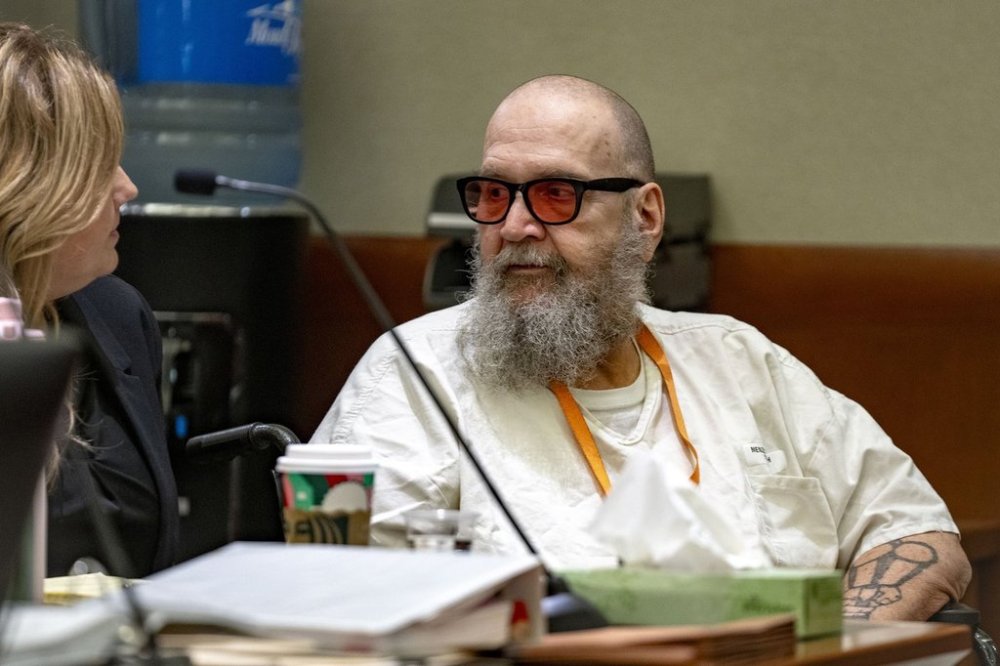
The Utah Supreme Court said Menzies adequately alleged a substantial change of circumstances and raised a significant question on his fitness to be executed, concluding a lower court must reevaluate Menzies’ competency.
“We acknowledge that this uncertainty has caused the family of Maurine Hunsaker immense suffering, and it is not our desire to prolong that suffering. But we are bound by the rule of law,” the court said in the order.
A defense attorney for Menzies said his dementia had significantly worsened since he last had a competency evaluation more than a year ago.
“We look forward to presenting our case in the trial court,” attorney Lindsey Layer said.
The Associated Press left phone and email messages Friday with a spokesperson for the Utah Attorney General’s Office seeking comment on the ruling.
Menzies is not the first person to receive a dementia diagnosis while awaiting execution.
The U.S. Supreme Court in 2019 blocked the execution of a man with dementia in Alabama, ruling Vernon Madison was protected against execution under a constitutional prohibition against cruel and unusual punishment. Madison, who killed a police officer in 1985, died in prison in 2020.
That case followed earlier Supreme Court rulings barring executions of people with severe mental illness. If a defendant cannot understand why they are dying, the Supreme Court said, then an execution is not carrying out the retribution that society is seeking.
Medical experts brought in by prosecutors during hearings into his competency said Menzies still has the mental capacity to understand his situation. Experts brought in by the defense said he does not.
Hunsaker was abducted from a store Feb. 23, 1986. She later called her husband to say she had been robbed and kidnapped but that she would be released by her abductor that night.
Two days later, a hiker found her body at a picnic area about 16 miles (25 kilometers) away in Big Cottonwood Canyon. Hunsaker had been strangled, her throat slashed.
Utah’s last execution played out by lethal injection a year ago. The state hasn’t used a firing squad since the 2010 execution of Ronnie Lee Gardner. Earlier this year, South Carolina executed two prisoners by firing squad.