
Landslide win for Kast gives Chile its most right-wing president in decades
Advertisement
Read this article for free:
or
Already have an account? Log in here »
We need your support!
Local journalism needs your support!
As we navigate through unprecedented times, our journalists are working harder than ever to bring you the latest local updates to keep you safe and informed.
Now, more than ever, we need your support.
Starting at $15.99 plus taxes every four weeks you can access your Brandon Sun online and full access to all content as it appears on our website.
Subscribe Nowor call circulation directly at (204) 727-0527.
Your pledge helps to ensure we provide the news that matters most to your community!
To continue reading, please subscribe:
Add Brandon Sun access to your Free Press subscription for only an additional
$1 for the first 4 weeks*
- Enjoy unlimited reading on brandonsun.com
- Read the Brandon Sun E-Edition, our digital replica newspaper
*Your next Free Press subscription payment will increase by $1.00 and you will be charged $20.95 plus GST for four weeks. After four weeks, your payment will increase to $24.95 plus GST every four weeks.
Read unlimited articles for free today:
or
Already have an account? Log in here »
Hey there, time traveller!
This article was published 14/12/2025 (274 days ago), so information in it may no longer be current.
SANTIAGO, Chile (AP) — Chile’s ultra-conservative former lawmaker José Antonio Kast secured a stunning victory in the presidential election Sunday, defeating the candidate of the center-left governing coalition and setting the stage for the country’s most right-wing government in 35 years of democracy.
Kast won 58.2% of the votes as Chileans overwhelmingly embraced his pledge to crack down on increased crime, deport hundreds of thousands of immigrants without legal status and revive the sluggish economy of one of Latin America’s most stable and prosperous nations. Kast’s supporters erupted into cheers in the street as results trickled in, shouting his name and honking horns.
His challenger, communist candidate Jeannette Jara, clinched 41.8% of the vote.
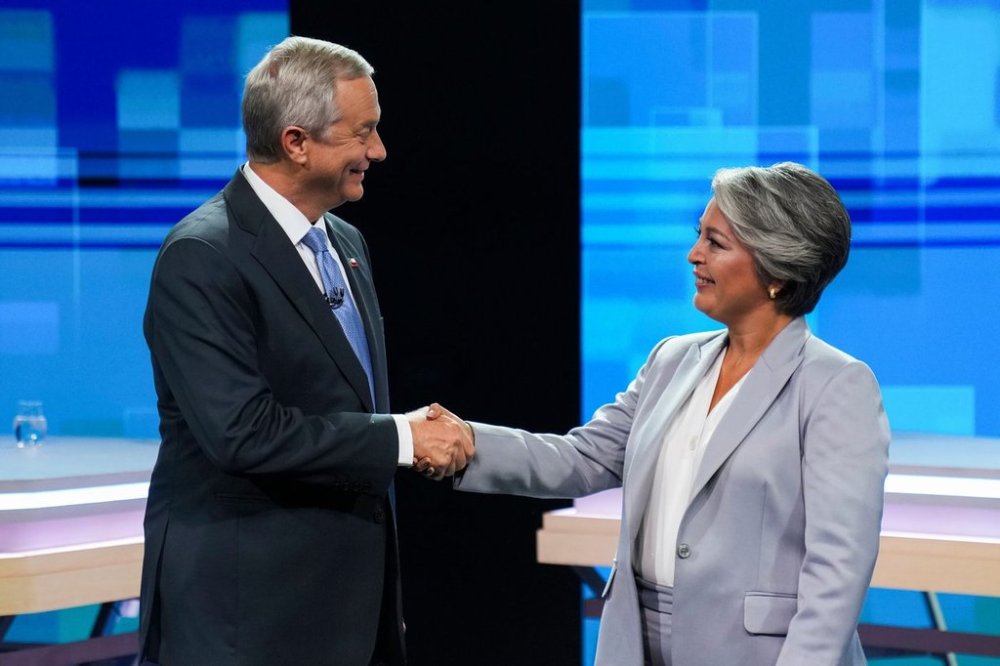
“Chile needs order — order in the streets, in the state, in the priorities that have been lost,” Kast bellowed in a lengthy victory speech that included his tough-on-crime talking points but lacked his usual vitriol. When his supporters interrupted him to boo Jara, he cut them off and snapped, “Respect!” — an about-face from his persona on the campaign trail.
Kast hailed his decisive margin of victory on Sunday, saying it provided him with a “broad mandate” that was also “a tremendous responsibility.”
“We are inviting you on a journey to recover values for a proper and healthy life,” he said. “It won’t be easy. It requires everyone’s commitment.”
Speaking at a public square in Chile’s capital of Santiago, Jara, who served as labor minister in the center-left government of President Gabriel Boric, encouraged her supporters not to be deterred by the outcome.
“It is in defeat that we learn the most,” Jara said shortly after calling Kast to concede the election and congratulate him on his successful campaign.
A regional trend gains traction
Chileans are not alone in their demand for radical change.
Kast’s election represents the latest in a string of votes that have turfed out incumbent governments across Latin America, vaulting right-wing leaders to power from Argentina to Bolivia as U.S. President Donald Trump looks to assert American dominance in the Western Hemisphere, in many cases punishing rivals and rewarding allies.
Argentina’s President Javier Milei, a radical libertarian closely aligned with Trump, was first to congratulate Kast on his victory.

“The left recedes,” he wrote on social media with a map of all the South American countries that had recently veered to the right.
The Trump administration was also quick to praise Kast. “Under his leadership, we are confident Chile will advance shared priorities to include strengthening public security, ending illegal immigration and revitalizing our commercial relationship,” U.S. Secretary of State Marco Rubio said.
A highly polarized election
The victory for Kast signaled a new era for Chile, representing the first radical right-wing president since the country returned to democracy in 1990, following the bloody dictatorship of Gen. Augusto Pinochet. Centrist parties on the right and the left have largely alternated power in the decades since.
On the surface, the two candidates in this tense presidential runoff could not have been more different, fundamentally disagreeing on weighty matters of the economy, social issues and the very purpose of government.
A lifelong member of Chile’s Communist Party who pioneered popular social welfare measures in Boric’s government and hails from a working-class family that protested against Pinochet’s 1973-1990 military dictatorship, Jara was a dramatic foil to her rival.
Kast, in contrast, is a devout Catholic and father of nine whose German-born father was a registered member of Adolf Hitler’s Nazi party and whose brother served as a minister in the dictatorship.
Kast’s moral conservatism, including fierce opposition to same-sex marriage and abortion without exception, has drawn parallels to Brazil’s now-incarcerated ex-President Jair Bolsonaro and was rejected by many in the increasingly socially liberal country during his past two failed presidential bids.
But throughout Boric’s tenure, fears about uncontrolled illegal migration and unprecedented organized crime roiled the country, dominating this election and fueling support for a hard-line approach to insecurity.
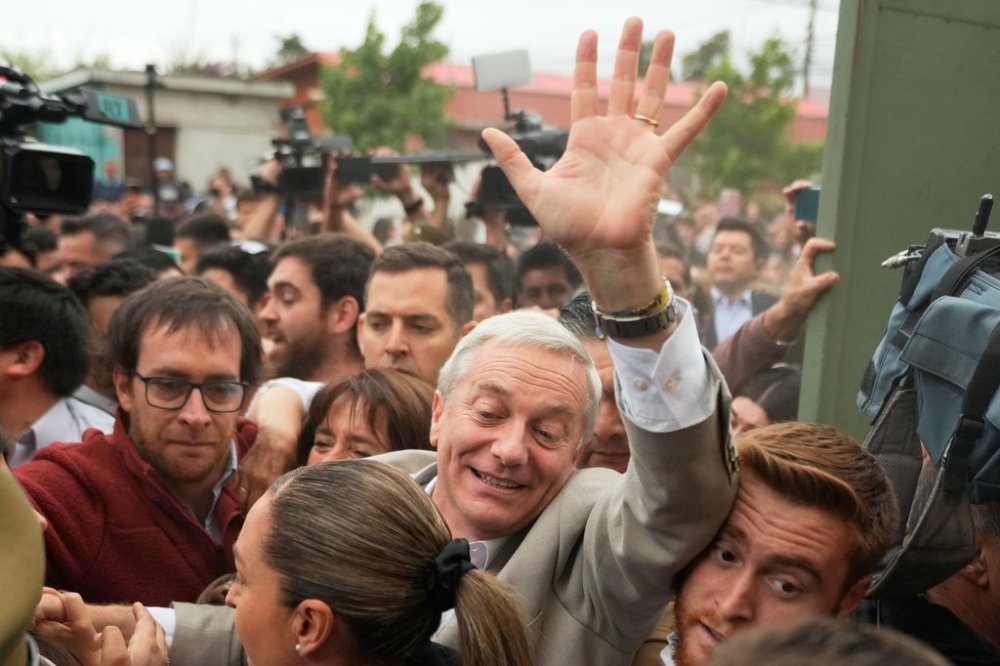
Today his supporters run the gamut, including business people enthused about his free-market instincts, middle-class families scared of venturing out at night for fear of carjackings and extreme right-wing activists who glorify the military dictatorship.
Among those attending Kast’s victory speech late Sunday were young Chileans raising framed photos of Pinochet.
Kast will be under pressure to deliver on promises
Voters elected Kast to cure the double plague of organized crime, which he blames on clandestine migration, and an economic slump.
To address the former, Kast says he’ll draw inspiration from El Salvador’s President Nayib Bukele, whose notorious 40,000-capacity mega-jail he toured last year. He wants to build more maximum-security prisons in Chile and implement harsh measures in detention centers like severing gang members’ contact with the outside world.
He proposes expanding the powers of the army and police and boosting protections for officers who use force.
On the issue of migration, he has mirrored Trump in his calls for deportations of hundreds of thousands of immigrants who entered Chile illegally and the construction of a massive barrier on the country’s northern border complete with 3-meter (9.8-feet) -deep ditches.
On the economy, he vows to slash $6 billion in spending over just 18 months by shrinking the public payroll and dismantling ministries but without eliminating social benefits — something economists criticize as unrealistic.
By reducing corporate taxes and cutting red tape, he says he’ll take the nation back to the golden age of rapid economic growth that made Chile the poster child of Latin America in the 1990s.
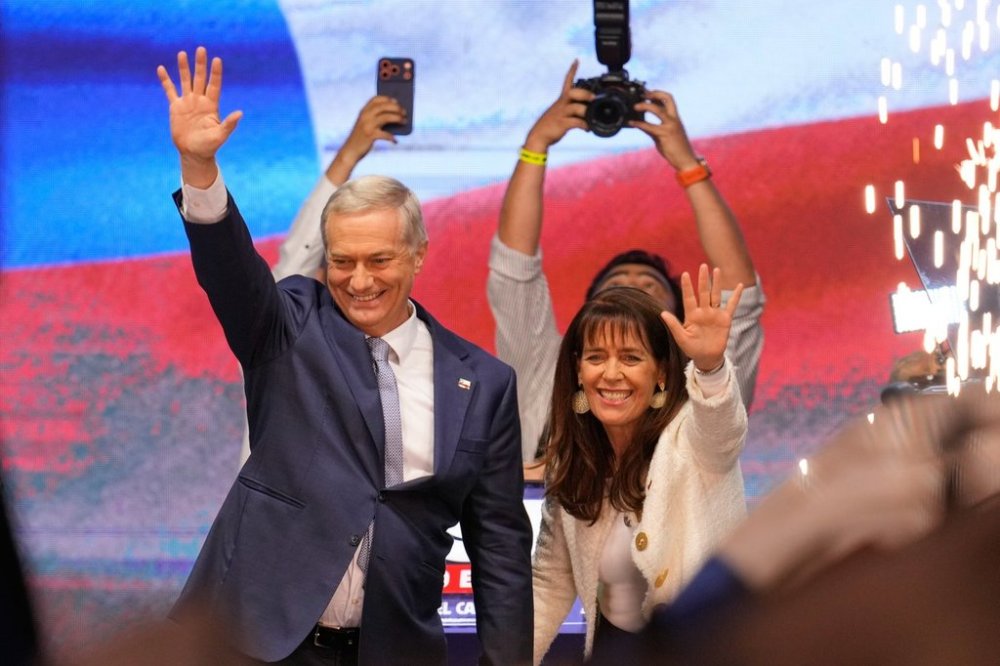
At rallies, his fans cheer wildly at these promises for a “mano dura” crackdown, or iron fist, to restore order to a country that long saw itself as an oasis in a turbulent region.
But it’s less clear whether his agenda will command support on the street and in Congress once the implications sink in.
Kast’s Republican Party lacks a majority in both houses of Congress, meaning that to get things done, he’ll need to negotiate with traditional center-right forces that could bristle at those proposals.
If Kast plays his cards right and makes political compromises, said Chilean political analyst Patricio Navia, he might be able to avoid the fate of Boric, who stormed to power in 2021 on radical ambitions to overhaul Chile’s market-led economy and will leave office on March 11 having largely failed to implement his hard-left program.
“If he governs as a moderate right-wing president, he’ll find support,” Navia said. “But can Kast control his radical instincts? That’s the big question.”