
4 people convicted of conspiracy in US trial tied to 2021 assassination of Haiti’s president
Advertisement
Read this article for free:
or
Already have an account? Log in here »
We need your support!
Local journalism needs your support!
As we navigate through unprecedented times, our journalists are working harder than ever to bring you the latest local updates to keep you safe and informed.
Now, more than ever, we need your support.
Starting at $15.99 plus taxes every four weeks you can access your Brandon Sun online and full access to all content as it appears on our website.
Subscribe Nowor call circulation directly at (204) 727-0527.
Your pledge helps to ensure we provide the news that matters most to your community!
To continue reading, please subscribe:
Add Brandon Sun access to your Free Press subscription for only an additional
$1 for the first 4 weeks*
- Enjoy unlimited reading on brandonsun.com
- Read the Brandon Sun E-Edition, our digital replica newspaper
*Your next Free Press subscription payment will increase by $1.00 and you will be charged $20.95 plus GST for four weeks. After four weeks, your payment will increase to $24.95 plus GST every four weeks.
Read unlimited articles for free today:
or
Already have an account? Log in here »
MIAMI (AP) — A Florida jury on Friday convicted four men of conspiracy in the 2021 assassination of Haitian President Jovenel Moïse, whose death led to extraordinary turmoil in the Caribbean nation.
South Florida served as a central location for planning and financing the plot to oust Moïse and replace him with someone of the conspirators’ choosing, U.S. prosecutors alleged.
Arcangel Pretel Ortiz, Antonio Intriago, Walter Veintemilla and James Solages were found guilty of conspiring to kill or kidnap Haiti’s elected leader and providing material support for the plot. They were also convicted of violating the U.S. Neutrality Act and could face possible life sentences.
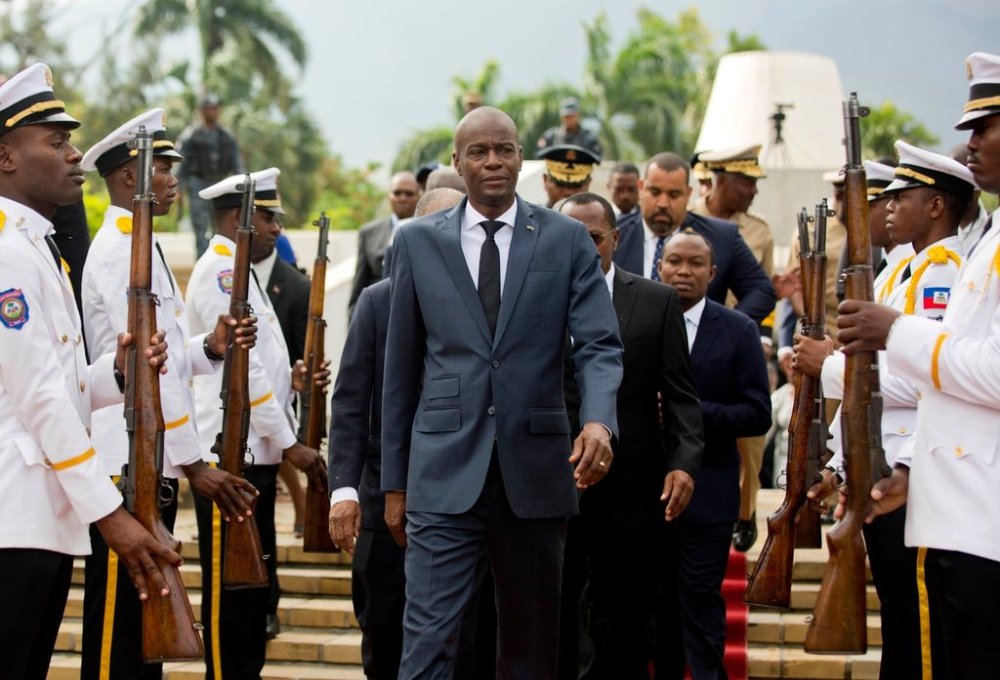
Prosecutors argued that the men had their own leader in mind and had hoped to enrich themselves with a new government.
Moïse was killed on July 7, 2021, when about two dozen foreign mercenaries, mostly from Colombia, attacked his home near Port-au-Prince. Moïse’s wife, Martine, was wounded during the attack and flown to the U.S. for treatment. In Haiti, meanwhile, gang leaders have grown increasingly violent and empowered.
Martine Moïse was the first witness at trial, which began in March in Miami’s federal court, describing through a Creole interpreter how she awoke to the sounds of gunfire after midnight. She told jurors that she turned to her husband in bed next to her to ask what was going on.
“Honey, we are dead,” Jovenel Moïse replied, according to his wife’s testimony.
Ortiz and Intriago were principals of Counter Terrorist Unit Federal Academy and Counter Terrorist Unit Security, collectively known as CTU, and Veintemilla was a principal of Worldwide Capital Lending Group. Both companies were based in South Florida.
Christian Sanon is a dual Haitian-American citizen whom investigators say was initially favored by the conspirators to replace Moïse. Solages was a CTU representative in Haiti who coordinated with Sanon and others, officials said. Sanon will face trial at a later date.
Defense attorneys argued at trial that the investigation into the assassination was a mess and that the four were manipulated into taking blame for an internal coup. They said the men believed they had a legitimate warrant signed by a Haitian judge and that they were liberating Haiti from Moïse, who had overstayed his term as president.
At least five others have pleaded guilty in the conspiracy and are serving life sentences.
Separately, 20 people, including 17 Colombian soldiers, face charges in Haiti. Gang violence, death threats and a crumbling judicial system have stalled an ongoing investigation.