
Federal judge says New Hampshire must make it easier to prove citizenship when registering to vote
Advertisement
Read this article for free:
or
Already have an account? Log in here »
We need your support!
Local journalism needs your support!
As we navigate through unprecedented times, our journalists are working harder than ever to bring you the latest local updates to keep you safe and informed.
Now, more than ever, we need your support.
Starting at $15.99 plus taxes every four weeks you can access your Brandon Sun online and full access to all content as it appears on our website.
Subscribe Nowor call circulation directly at (204) 727-0527.
Your pledge helps to ensure we provide the news that matters most to your community!
To continue reading, please subscribe:
Add Brandon Sun access to your Free Press subscription for only an additional
$1 for the first 4 weeks*
- Enjoy unlimited reading on brandonsun.com
- Read the Brandon Sun E-Edition, our digital replica newspaper
*Your next Free Press subscription payment will increase by $1.00 and you will be charged $20.95 plus GST for four weeks. After four weeks, your payment will increase to $24.95 plus GST every four weeks.
Read unlimited articles for free today:
or
Already have an account? Log in here »
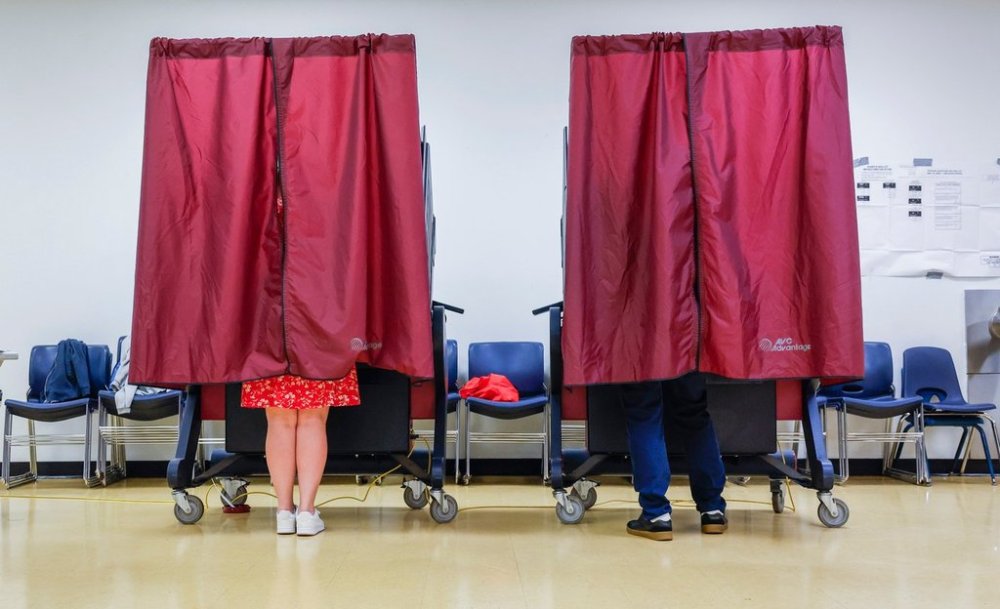
CONCORD, N.H. (AP) — A federal judge has said that New Hampshire must make voter registration easier by allowing applicants to attest to their U.S. citizenship if they don’t have the documents to prove it.
The case was seen as the first major legal test of an election reform that has been pushed nationally by President Donald Trump and has gained favor among many Republicans, though U.S. District Court Judge Samantha Elliot said she was not deciding whether requiring proof of citizenship itself is constitutional. Her ruling late Thursday night on a narrower question of New Hampshire law was significant, however, because it underscored the potential perils of implementing strict requirements for voters to document their U.S. citizenship so they can cast a ballot.
Elliot found that changes in 2024 to the state voter registration law unconstitutionally removed one method of proof — namely, a voter’s sworn affidavit attesting to citizenship.
“The evidence shows that this is the only method of proof available to a significant number of New Hampshire voters,” she wrote.
The changes took effect last year, after former Gov. Chris Sununu, a Republican, signed the bill two years ago. The attorney general’s office said it plans to appeal the judge’s ruling, calling the citizenship requirements a “common-sense approach to voter registration and election administration designed to protect the integrity of our elections.”
The ruling was a win for the American Civil Liberties Union of New Hampshire and other plaintiffs who argued that the changes that took effect last year were burdensome and unnecessary.
“New Hampshire’s elections have always been safe, secure, and accurate — and this law could have unconstitutionally and needlessly prevented thousands of eligible voters from casting a ballot,” said Henry Klementowicz, deputy legal director of the ACLU of New Hampshire.
The lawsuit, filed on behalf of the Coalition for Open Democracy, the League of Women Voters of New Hampshire, the Forward Foundation and five voters, called the state’s voter registration law one of the most restrictive in the nation. During town elections last fall, some voters had trouble gathering passports, birth certificates or other proof of citizenship.
New Hampshire is not the only state with a proof-of-citizenship law for voters. Arizona, South Dakota, Utah and Wyoming have similar laws already in effect, according to the Brennan Center for Justice. Florida passed a law this year requiring documentary proof of citizenship to vote, but it won’t take effect until next year.
A similar law in Kansas, which required proof of citizenship for state and federal elections, was found in 2018 to violate both the U.S. Constitution and the National Voter Registration Act after it prevented more than 31,000 citizens from registering to vote.
Arizona established a two-tiered system after the U.S. Supreme Court ruled in 2013 that the state could not require citizenship documentation for federal elections. In August 2024, the court allowed some parts of the state’s proof-of-citizenship law to be enforced as the legal fight continued in lower courts.
The ruling comes as Trump is trying to push a proof-of-citizenship bill, the SAVE America Act, through Congress. Voting rights advocates say such a federal requirement could disenfranchise millions of people. A 2025 University of Maryland study estimated that 21.3 million Americans who are eligible to vote do not have or have easy access to documents to prove their citizenship, including nearly 10% of Democrats, 7% of Republicans and 14% of people unaffiliated with either major party.