
Army temporarily halts Apache helicopter training missions after Texas crash that killed 2
Advertisement
Read this article for free:
or
Already have an account? Log in here »
We need your support!
Local journalism needs your support!
As we navigate through unprecedented times, our journalists are working harder than ever to bring you the latest local updates to keep you safe and informed.
Now, more than ever, we need your support.
Starting at $15.99 plus taxes every four weeks you can access your Brandon Sun online and full access to all content as it appears on our website.
Subscribe Nowor call circulation directly at (204) 727-0527.
Your pledge helps to ensure we provide the news that matters most to your community!
To continue reading, please subscribe:
Add Brandon Sun access to your Free Press subscription for only an additional
$1 for the first 4 weeks*
- Enjoy unlimited reading on brandonsun.com
- Read the Brandon Sun E-Edition, our digital replica newspaper
*Your next Free Press subscription payment will increase by $1.00 and you will be charged $20.95 plus GST for four weeks. After four weeks, your payment will increase to $24.95 plus GST every four weeks.
Read unlimited articles for free today:
or
Already have an account? Log in here »
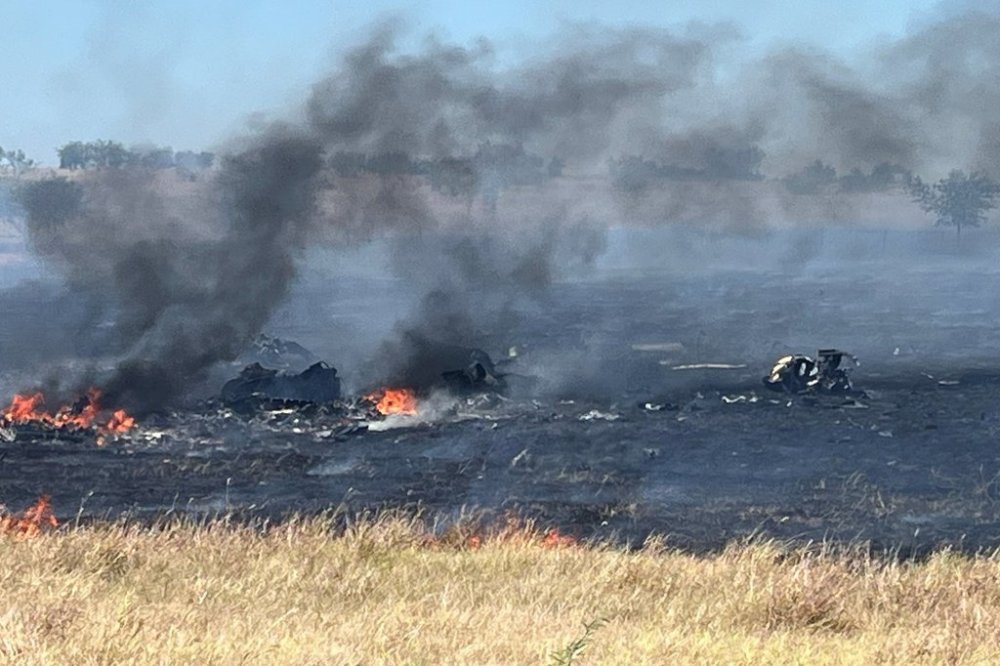
The U.S. Army temporarily halted all Apache helicopter training missions Friday after a fatal crash in Texas earlier this week killed two soldiers.
No cause of the Wednesday crash has been released because the investigation has just begun. A safety investigation team from the Army Combat Readiness Center in Fort Rucker, Alabama, is trying to determine what happened, the Army said.
“The stand-down will remain in effect until we have a better understanding of the root cause of the accident,” the Army said in its statement Friday.
The military has taken similar action after past crashes. Three years ago, the Army grounded all aviation units until they completed some additional training after 12 soldiers died in separate crashes in Alaska and Kentucky.
The Army made no mention of stopping the combat missions that Apache helicopters are regularly flying in the war in Iran. These helicopters have been employed around the Strait of Hormuz as part of the measures to maintain open navigation channels. One Apache crashed after running into an Iranian drone.
Chief Warrant Officer 2 Deontre T. Huey, 34, of Killeen, Texas, and Warrant Officer Seth L. Olmstead, 25, of Belton, Texas, were killed in the Texas crash, the Army said. They were the only two people on board when the helicopter crashed in a grassy field near Salado, about 30 miles (48 kilometers) from Fort Hood.
Huey entered the Army in 2014 and Olmstead entered in 2023. They were assigned to Bravo Company, 1st Battalion, 227th Aviation Regiment, 1st Air Cavalry Brigade, 1st Cavalry Division.
“Our hearts and deepest condolences are with the families of the Soldiers we lost Wednesday,” said Lt. Gen. Kevin D. Admiral, III Armored Corps and Fort Hood commanding general. “The Army is a family, and a tragedy like this is felt throughout our formations and our community.”
Aviation safety expert John Cox said it’s encouraging to see the Army take this step because “you’re guessing until you get some hard answers” and this move signals the Army is making safety a priority.
“I am very much glad to see them doing that. It says that they’re being proactive,” said Cox, who is CEO of Safety Operating Systems and a longtime pilot.
The National Transportation Safety Board criticized the Army’s safety culture sharply during the investigation of last year’s collision between a Black Hawk helicopter and an American Airlines jet in the skies near Washington, D.C. The NTSB said the Army did a poor job recognizing some of the safety risks in the busy airspace around the nation’s capital before that crash in January 2025 that killed 67 people.
Fort Hood is a massive base with 214,968 acres (86,995 hectares) that is used to train and deploy heavy forces. In November 2015, four soldiers were killed when a Black Hawk helicopter crashed during a training exercise. And nine Fort Hood soldiers died in 2016 when a rain-swollen creek swept their vehicle into rushing waters.
The Apache attack helicopter has been a core part of Army aviation since the first one was delivered in 1984. More than 5,000 Apaches have been deployed by the U.S. military and its allies over the decades.