
Kurdish-led Syrian Democratic Forces group says it has dissolved after merging with the Syrian army
Advertisement
Read this article for free:
or
Already have an account? Log in here »
We need your support!
Local journalism needs your support!
As we navigate through unprecedented times, our journalists are working harder than ever to bring you the latest local updates to keep you safe and informed.
Now, more than ever, we need your support.
Starting at $15.99 plus taxes every four weeks you can access your Brandon Sun online and full access to all content as it appears on our website.
Subscribe Nowor call circulation directly at (204) 727-0527.
Your pledge helps to ensure we provide the news that matters most to your community!
To continue reading, please subscribe:
Add Brandon Sun access to your Free Press subscription for only an additional
$1 for the first 4 weeks*
- Enjoy unlimited reading on brandonsun.com
- Read the Brandon Sun E-Edition, our digital replica newspaper
*Your next Free Press subscription payment will increase by $1.00 and you will be charged $20.95 plus GST for four weeks. After four weeks, your payment will increase to $24.95 plus GST every four weeks.
Read unlimited articles for free today:
or
Already have an account? Log in here »
DAMASCUS, Syria (AP) — The commander of the Kurdish-led Syrian Democratic Forces on Tuesday announced the official dissolution of the group, which once controlled a de facto autonomous zone in Syria’s northeast.
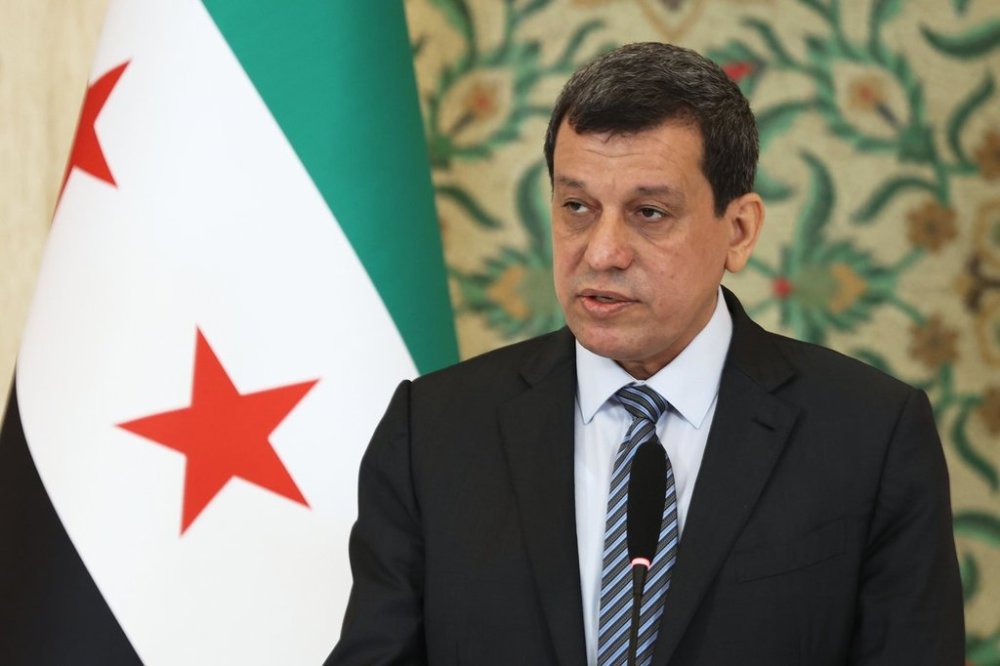
Speaking during a news conference at the presidential palace in Damascus, Mazloum Abdi said the SDF has completed a merger with the Syrian army and would cease to operate as an independent force. The Kurdish-led force lost most of its territory in northeast Syria to a government offensive in January and then signed the deal to merge with the army.
The SDF was once the main partner of the United States in Syria as it battled the Islamic State group. But after the ouster of former Syrian President Bashar Assad in December 2024, Washington formed close ties with the new government in Damascus led by interim Syrian President Ahmad al-Sharaa, the former leader of an Islamist insurgent group.
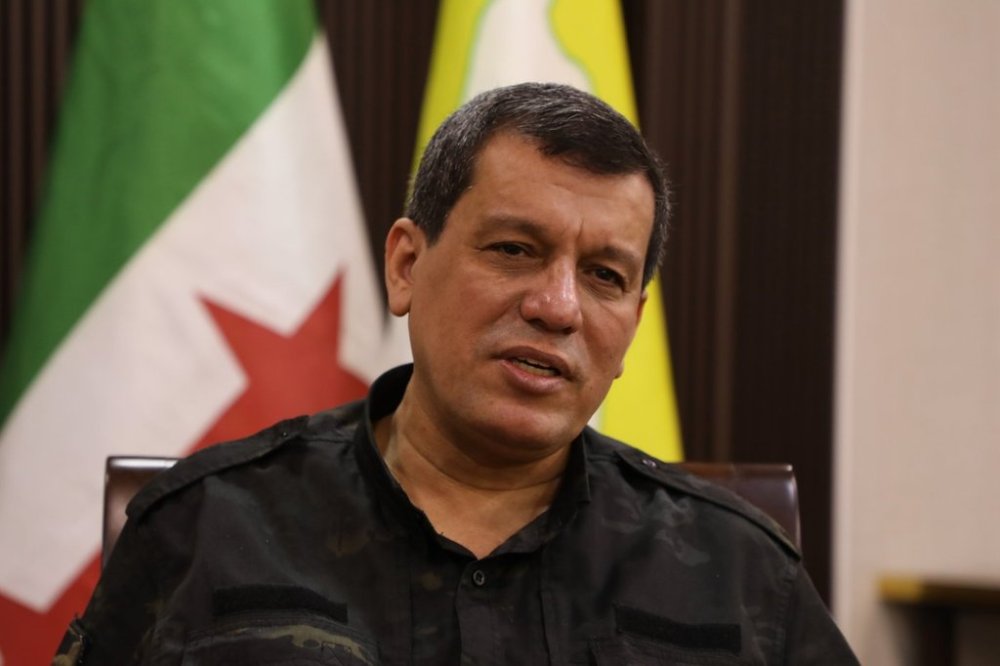
The SDF “carried a heavy responsibility during one of the most difficult periods in Syria’s history,” Abdi said.
“Today, circumstances have changed, and the country has entered a new phase, one of peace and participation in building a new Syria,” he said, announcing the “end of the SDF’s mission” and “its dissolution as an independent military force.”
Under the 50-year rule of the Assad dynasty in Syria, Kurds were marginalized, with many denied citizenship. Public celebrations of the Nowruz holiday — an ancient Persian springtime new year festival that is also celebrated by Kurds in Syria, Turkey and Iraq as well as Iran — were banned.
Shortly after the uprising against the Assad government began in 2011, the Kurds filled the vacuum created by the withdrawal of government forces from wide areas of Syria’s northeast. The SDF at one point controlled about 25% of Syria.
The Kurds were initially circumspect about the new post-Assad government and unwilling to give up their de facto autonomy. Some of the insurgent groups that took part in the offensive that ousted Assad were Turkish-backed forces that had clashed with the SDF in the past.
Turkey considered the SDF to be a terrorist organization because of its ties to the Kurdistan Workers’ Party, or PKK, a separatist group that staged a decades-long insurgency in Turkey. A peace process is now underway.
Kurds questioned whether the new Sunni Arab-led authorities would give them true representation in the new government, while al-Sharaa tried to woo them.
During ceasefire negotiations with the SDF in January, he issued a decree strengthening Kurdish rights. It made Kurdish an official language along with Arabic, and adopted Nowruz as a national holiday. It also restored the citizenship of tens of thousands of Kurds in northeastern Hassakeh province after they were stripped of it during the 1962 census.
Abdi said that al-Sharaa had promised that Kurds would have the right to education in their own language, an important issue for the country’s Kurdish population.
Questions remain, including the fate of the SDF’s all-female fighting units — a sensitive point in the integration talks as many of the Damascus leaders come from a conservative background and are opposed to women in combat.
But the success of the integration agreement with the SDF is a major boost to al-Sharaa’s government, which has struggled to unify the country as it begins to recover from a nearly 14-year civil war. Most of the country is now under the control of the central government in Damascus.
The exception is southern Syria’s Sweida province, which is now controlled by Druze factions that are hostile to Damascus after clashes last year in which government-affiliated fighters launched sectarian revenge attacks on Druze civilians. The Druze factions have received support from Israel, which is also occupying a strip of land in southern Syria near the border with the Israeli-annexed Golan Heights.
___
Sewell reported from Beirut.