
Supreme Court rejects Trump mail ballot restrictions for now ahead of midterms
Advertisement
Read this article for free:
or
Already have an account? Log in here »
We need your support!
Local journalism needs your support!
As we navigate through unprecedented times, our journalists are working harder than ever to bring you the latest local updates to keep you safe and informed.
Now, more than ever, we need your support.
Starting at $15.99 plus taxes every four weeks you can access your Brandon Sun online and full access to all content as it appears on our website.
Subscribe Nowor call circulation directly at (204) 727-0527.
Your pledge helps to ensure we provide the news that matters most to your community!
To continue reading, please subscribe:
Add Brandon Sun access to your Free Press subscription for only an additional
$1 for the first 4 weeks*
- Enjoy unlimited reading on brandonsun.com
- Read the Brandon Sun E-Edition, our digital replica newspaper
*Your next Free Press subscription payment will increase by $1.00 and you will be charged $20.95 plus GST for four weeks. After four weeks, your payment will increase to $24.95 plus GST every four weeks.
Read unlimited articles for free today:
or
Already have an account? Log in here »
WASHINGTON (AP) — The Supreme Court on Monday rejected President Donald Trump’s bid to restrict mail ballots for the midterm elections, capping a flurry of last-minute legal action with voting already underway.
The decision allows states to continue sending out mail ballots under the same processes they’ve used for years.
Justices Samuel Alito and Clarence Thomas publicly dissented from the brief order.
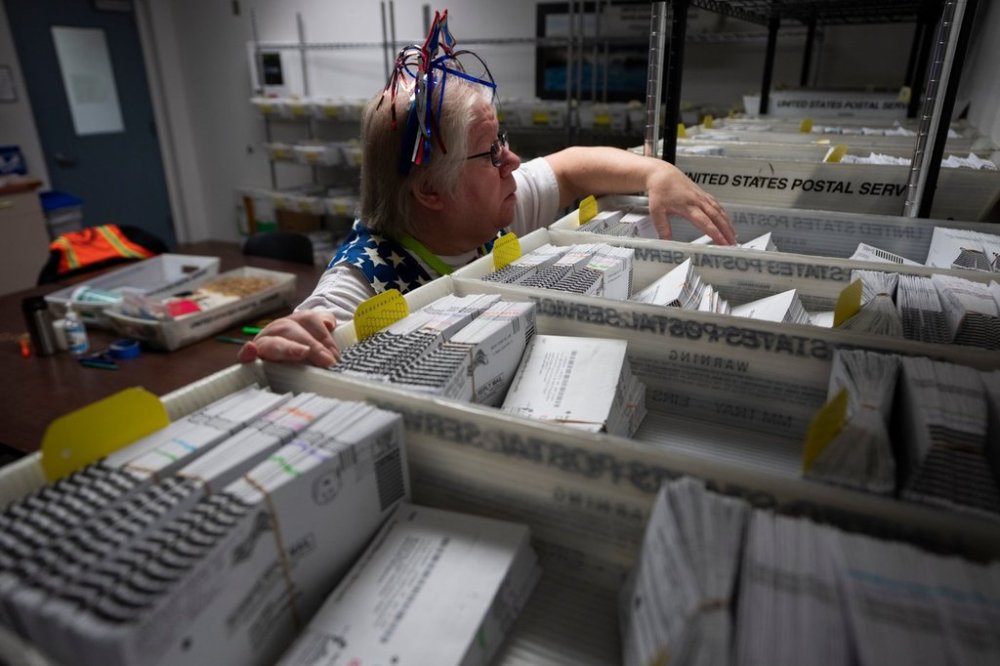
The Trump administration had asked the court, once again at the center of a roiling political controversy, to clear the way for restrictions before the pivotal November contests for control of Congress. The case has major implications because nearly one-third of the country votes by mail.
The Supreme Court majority did not detail its reasoning, as is typical on the high court’s emergency docket. Alito, meanwhile, said in the dissent that the Postal Service “has broad authority to regulate the mail” and likely does have the power to enforce Trump’s restrictions.
Justice Brett Kavanaugh agreed that the restrictions should not go into effect for the midterms but indicated he might rule in favor of the Trump administration if the issue comes back before the court.
Election officials have said there was simply no way to carry out a complete overhaul in the weeks before the midterms. Indeed, Alabama, North Carolina and Wisconsin began sending mail ballots to voters over the past week while the new system was still not active.
The Trump administration plan would require states to adopt a uniform envelope style and submit lists of eligible voters to an online portal. The Postal Service could refuse to deliver ballots to states that didn’t comply.
A whistleblower report, though, said the postal system’s requirements could lead to millions of mail ballots never being sent, because the portal wasn’t properly built and a single bar code error could result in an entire batch of ballots being tossed out.
Democratic state officials and voting rights groups challenged the restrictions in court, arguing that the president has no constitutional authority to set election rules that would “virtually eliminate mail voting on the eve of a major election.”
Lower courts agreed and blocked Trump’s plan, including a preliminary injunction issued by a judge nominated by the president.
But the Trump administration appealed to the Supreme Court, arguing that federal control of the Postal Service allows them to set rules for mail ballot handling and that compliance was possible.
The federal government won an early procedural decision at the Supreme Court, but the justices pointedly did not decide the legality of the plan.
Trump has long opposed mail voting and falsely blamed it for his 2020 election loss to Democrat Joe Biden, even though he often uses that method to cast his own ballot, including as recently as this year.