
Spain’s transport minister steps down 6 days after fatal high-speed rail crash
Advertisement
Read this article for free:
or
Already have an account? Log in here »
We need your support!
Local journalism needs your support!
As we navigate through unprecedented times, our journalists are working harder than ever to bring you the latest local updates to keep you safe and informed.
Now, more than ever, we need your support.
Starting at $15.99 plus taxes every four weeks you can access your Brandon Sun online and full access to all content as it appears on our website.
Subscribe Nowor call circulation directly at (204) 727-0527.
Your pledge helps to ensure we provide the news that matters most to your community!
To continue reading, please subscribe:
Add Brandon Sun access to your Free Press subscription for only an additional
$1 for the first 4 weeks*
- Enjoy unlimited reading on brandonsun.com
- Read the Brandon Sun E-Edition, our digital replica newspaper
*Your next Free Press subscription payment will increase by $1.00 and you will be charged $20.95 plus GST for four weeks. After four weeks, your payment will increase to $24.95 plus GST every four weeks.
Read unlimited articles for free today:
or
Already have an account? Log in here »
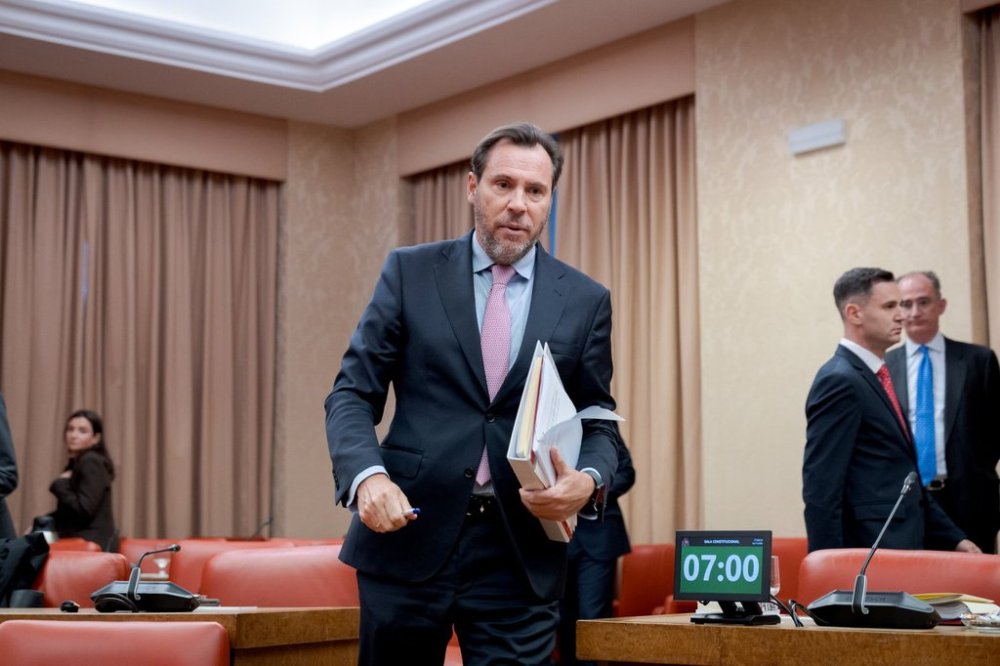
MADRID (AP) — Spain’s transport minister announced Tuesday that he is stepping down, six days after a high-speed train collision south of Madrid killed 69 people.
Transport Minister Óscar Puente made the announcement at the end of an hourslong appearance before lawmakers about the crash — the second such deadly collision this year involving Spain’s extensive high-speed rail network.
“A transport minister in a country like Spain cannot remain in office after two accidents of this seriousness in less than a year,” Puente told lawmakers.
The Oct. 28 crash took place when a high-speed train slammed into another that had stopped on the tracks. The chain of events that led to disaster started when the communication system key to the functioning of the security system on the Madrid-Seville line went down. Central controllers in Madrid took over and gave the go-ahead for a state-operated Renfe high-speed train to proceed, even though there was a stationary train ahead operated by the company Iryo.
It was the second major crash on the Madrid-Seville line this year. In January, more than two hours further south along the route, a train derailed and struck another traveling in the opposite direction, killing 46 people. That crash remains under investigation.
Puente said he had taken the decision to resign immediately after the deadly crash, but had not made it public.
The collisions have raised fresh concerns about the safety of the country’s rail network, and the most recent crash came four weeks before a national election.
Spain’s high-speed rail network has been considered one of the country’s crowning achievements. It is the world’s second-largest, after China’s. Until this year, it had not experienced a deadly crash since coming into service over three decades ago.
Earlier Tuesday, Puente announced safety measures the government would implement on the rail network, including improving conditions in control centers and pushing for a faster rollout of the standardized European Rail Traffic Management System for safety and signaling.