
The final day of voting begins in New Zealand’s election as an unusual law bans any talk of politics
Advertisement
Read this article for free:
or
Already have an account? Log in here »
We need your support!
Local journalism needs your support!
As we navigate through unprecedented times, our journalists are working harder than ever to bring you the latest local updates to keep you safe and informed.
Now, more than ever, we need your support.
Starting at $15.99 plus taxes every four weeks you can access your Brandon Sun online and full access to all content as it appears on our website.
Subscribe Nowor call circulation directly at (204) 727-0527.
Your pledge helps to ensure we provide the news that matters most to your community!
To continue reading, please subscribe:
Add Brandon Sun access to your Free Press subscription for only an additional
$1 for the first 4 weeks*
- Enjoy unlimited reading on brandonsun.com
- Read the Brandon Sun E-Edition, our digital replica newspaper
*Your next Free Press subscription payment will increase by $1.00 and you will be charged $20.95 plus GST for four weeks. After four weeks, your payment will increase to $24.95 plus GST every four weeks.
Read unlimited articles for free today:
or
Already have an account? Log in here »
WELLINGTON, New Zealand (AP) — Polling places opened in New Zealand on Saturday for a final day of voting in the country’s election, with results due to be released in the evening.
Voting began on Oct. 26, with more than 1.6 million voters out of nearly 3.8 million people enrolled having already cast their ballots by the end of Thursday, according to the country’s Electoral Commission. Polling stations opened Saturday at 9 a.m. and will close at 7 p.m.
Influencing someone’s vote on election day is a crime
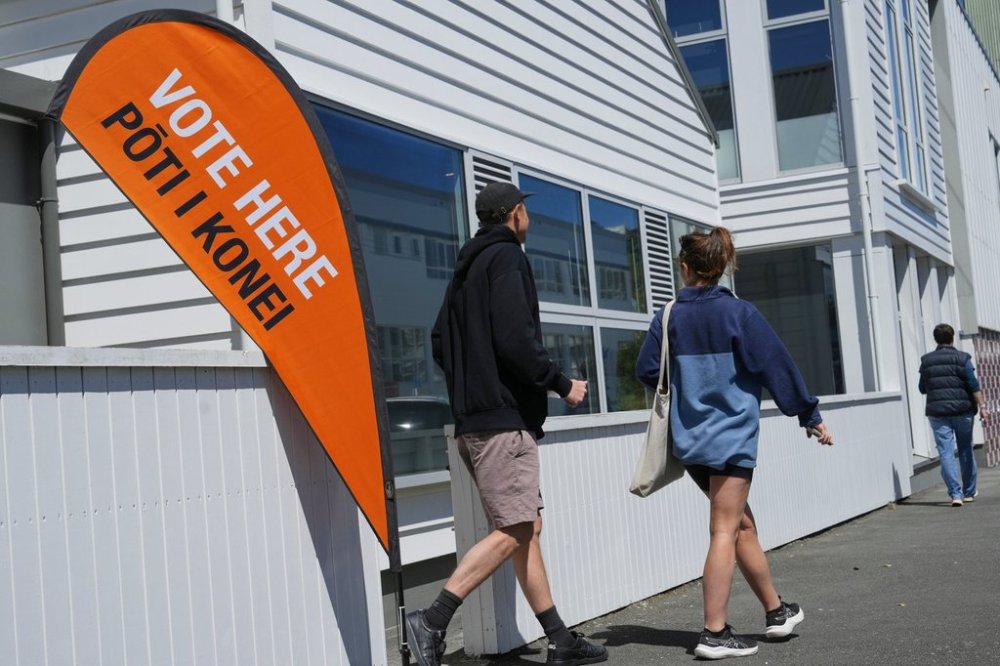
The country’s election day unfolds in a manner almost entirely free from politics, due to an unusual law making it a criminal offense to influence someone’s vote. The 19-hour election day blackout, which ends when polling places close, bars everyone, including political parties, news outlets and social media users, from commentary about likely election outcomes, campaign issues and anything else that might encourage or discourage them from voting in a particular way.
Opinion polls can’t be released on election day and exit polling or interviewing people outside voting places is banned. Partisan billboards and advertising must be removed by midnight and it’s common to see political parties’ supporters rushing to dismantle roadside hoardings at the last minute.
Bumper stickers, T-shirts and even social media profile pictures are covered by the law. Breaches can incur a fine of 20,000 New Zealand dollars ($11,000).
While news outlets can name parties or candidates, they must ensure it’s not done in a way that might influence someone’s vote. They’re not required to remove political content published before election day.
Political leaders are pictured shopping or running errands with their families on election day, planning outings as private citizens to ensure public visibility while making no remarks about current events. One major party leader in 2017 allowed reporters waiting outside her home to photograph her dressed in sweatpants and painting a fence.
Social media photos of dogs replace partisan debate on election day
Some analysts have suggested the measures are redundant because New Zealanders can vote for almost two weeks before election day, when campaigning, advertising, and round-the-clock news coverage remain in full swing. More than half of voters in the South Pacific country of 5 million people cast early ballots before election day in 2023.
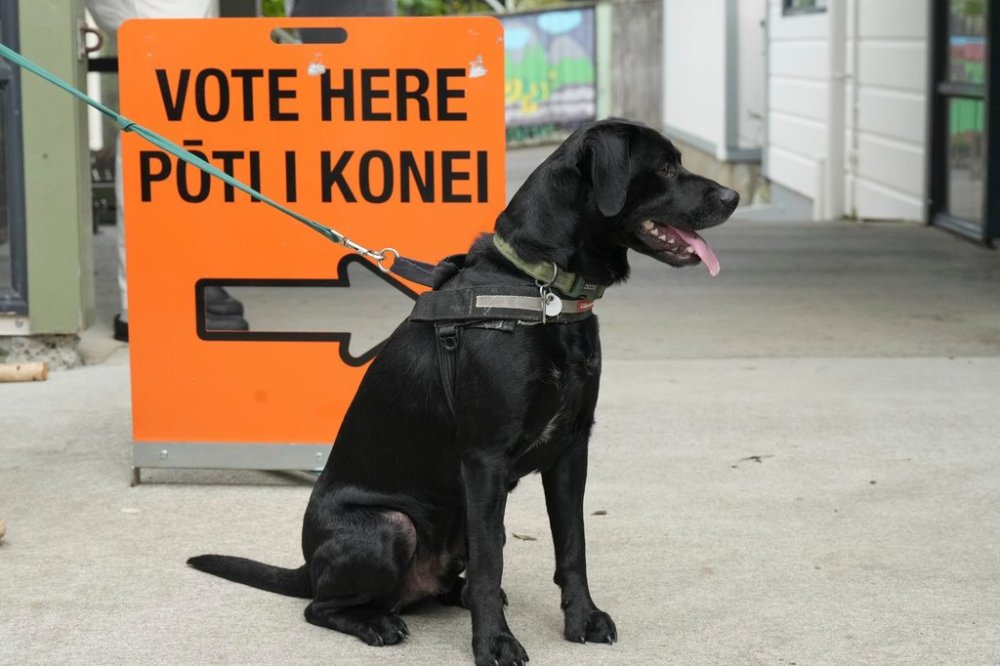
However, there has been little appetite to change the law and its supporters say the blackout allows voters to cast ballots privately and free from interference. Instead of posting political commentary on social media, a New Zealand tradition has sprung up of sharing election day photos of dogs at voting places.
Even color is approached cautiously. Signs outside polling venues, uniform jackets worn by electoral officers and the “orange guy” mascot who appears in election advertising, are all colored bright orange, a shade not associated with any mainstream political party.
Elections decide the makeup of the country’s only house of government
New Zealand has only one house of parliament and there are no states, making the central government a powerful decider of the country’s direction. Elections are held every three years.
Voters don’t elect a leader of the country but instead select their preferred political party and the local candidate they’d most like to represent their area. A party or coalition of parties must hold more than half of the seats in Parliament, a majority, in order to govern.
Unlike in neighboring Australia, voting isn’t compulsory in New Zealand but enrollment is required for those who are eligible. Historically, New Zealanders could enroll anytime up to casting their ballots, but new laws enacted in December 2025 introduced an enrollment cutoff 13 days before election day.
The policy means those who hadn’t enrolled by Oct. 25 this year could be turned away from voting places.
New Zealand’s Electoral Commission aims to release the results from 95% of votes cast by the end of election night Saturday. A final result, which will reflect ballots cast by New Zealanders abroad, is expected by Nov. 27.