
Final count in New Zealand’s election gives neither right nor left bloc enough seats for a majority
Advertisement
Read this article for free:
or
Already have an account? Log in here »
We need your support!
Local journalism needs your support!
As we navigate through unprecedented times, our journalists are working harder than ever to bring you the latest local updates to keep you safe and informed.
Now, more than ever, we need your support.
Starting at $15.99 plus taxes every four weeks you can access your Brandon Sun online and full access to all content as it appears on our website.
Subscribe Nowor call circulation directly at (204) 727-0527.
Your pledge helps to ensure we provide the news that matters most to your community!
To continue reading, please subscribe:
Add Brandon Sun access to your Free Press subscription for only an additional
$1 for the first 4 weeks*
- Enjoy unlimited reading on brandonsun.com
- Read the Brandon Sun E-Edition, our digital replica newspaper
*Your next Free Press subscription payment will increase by $1.00 and you will be charged $20.95 plus GST for four weeks. After four weeks, your payment will increase to $24.95 plus GST every four weeks.
Read unlimited articles for free today:
or
Already have an account? Log in here »
WELLINGTON, New Zealand (AP) — The final vote count in New Zealand’s election published Friday showed neither the right-wing incumbents nor the left-wing opposition bloc won enough seats in Parliament to form a majority government, leaving the prospect of lengthy and fraught negotiations to break the deadlock.
The election on Nov. 7 was the tightest vote in years and didn’t deliver a decisive victory for the right or the left, although the conservative bloc finished the night with a wafer-thin majority. But after counting of 400,000 so-called special votes, including those cast by New Zealanders living abroad, the Electoral Commission said Friday that the main center-right party National, led by Prime Minister Christopher Luxon, had lost two seats.
That left the right-wing parties with a collective 65 seats in a 130-seat Parliament, with 66 needed for a majority government. The left-wing opposition, led by the Labour party’s Chris Hipkins, won 58 seats, up by one from election night.
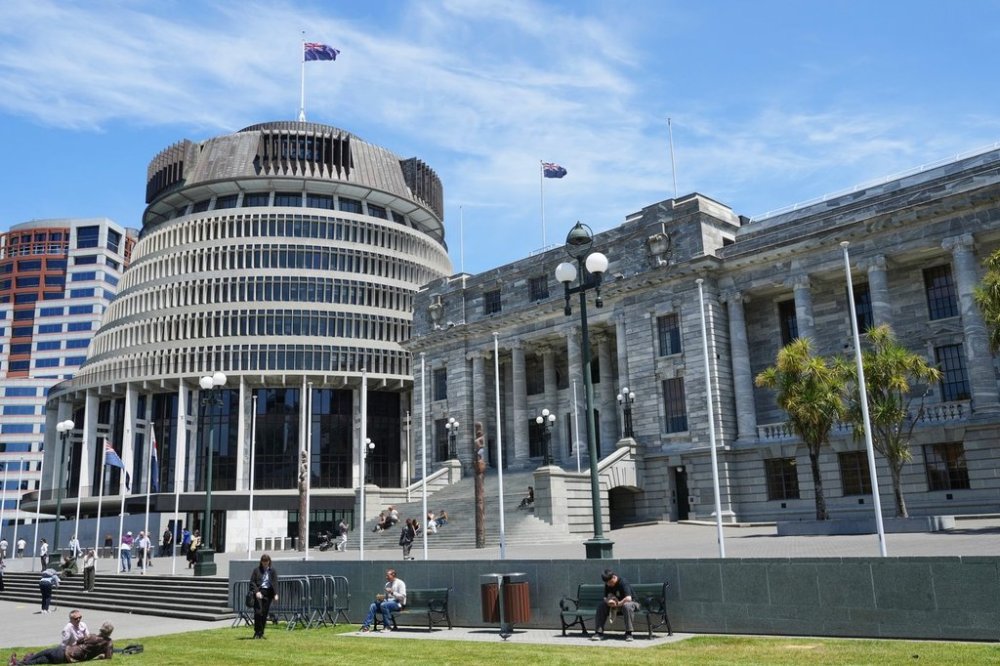
The figures leave a new entrant to parliament, the Opportunity party — a centrist group that won seven seats, as the deciders of what the shape of the next government will be. While their seven seats wouldn’t apparently be enough to propel the left to power, Luxon and his right-wing government partners face lengthy negotiations with Opportunity to form a governing deal.
Opportunity, led by 38-year-old business consultant and political newcomer Qiulae Wong, is unaligned with either bloc and Wong has said she could work with either side to form a government. Wong’s pledges of evidence-based centrism and an end to partisan bickering appeared to have appealed to voters, who delivered a stinging rebuke with the result to the major parties, National and Labour, which have long dominated New Zealand politics.
The final count showed more support for minor parties on the ideological flanks than before. A total of 2.8 million votes were cast.