
‘If you’re not recruiting, good luck’
Advertisement
Read this article for free:
or
Already have an account? Log in here »
We need your support!
Local journalism needs your support!
As we navigate through unprecedented times, our journalists are working harder than ever to bring you the latest local updates to keep you safe and informed.
Now, more than ever, we need your support.
Starting at $15.99 plus taxes every four weeks you can access your Brandon Sun online and full access to all content as it appears on our website.
Subscribe Nowor call circulation directly at (204) 727-0527.
Your pledge helps to ensure we provide the news that matters most to your community!
To continue reading, please subscribe:
Add Brandon Sun access to your Free Press subscription for only an additional
$1 for the first 4 weeks*
- Enjoy unlimited reading on brandonsun.com
- Read the Brandon Sun E-Edition, our digital replica newspaper
*Your next Free Press subscription payment will increase by $1.00 and you will be charged $20.95 plus GST for four weeks. After four weeks, your payment will increase to $24.95 plus GST every four weeks.
Read unlimited articles for free today:
or
Already have an account? Log in here »
Hey there, time traveller!
This article was published 22/02/2021 (1964 days ago), so information in it may no longer be current.
Gil Cheung knows competitive U Sports basketball teams simply aren’t born and bred in a city of 50,000.
If he wants his Brandon University Bobcats to compete, he’s looking beyond Wheat City limits and often beyond the Canada-United States border. The process of getting anyone to join a university basketball team isn’t easy or straightforward to begin with, let alone adding student visas and international student applications into the mix.
All of that made the story of John Paul’s journey to BU from Bexon, St. Lucia a crazy one.
The six-foot-11 centre played the 2014-15 National Junior College Athletic Association season at Tyler Junior College, a Division I school in Texas. He averaged 3.5 points and 3.5 rebounds per game, hardly impressive numbers that raised Cheung’s eyebrows when he spoke with coach Mike Marquis.
“(Marquis said) ‘If this kid went to the NBA tomorrow he could block a shot in a playoff game. He’s not polished, his stats aren’t great.’ I said ‘If he’s so good, why didn’t he play?’” Cheung recalled of the interaction.
“Well, one kid he was behind went to UCLA, the other went to Iowa. He was the third big. To get a kid who played at a big time junior college, big time prep school, was from St. Lucia, to get his visa to get over here and make sure he can show financial stability … how painful it was to get him a student visa was just incredible.”
Cheung and Paul started the process in June 2015 and he didn’t arrive until November, with the season already underway. That’s when the coach and assistant Brett Nohr made the two-plus hour drive to Winnipeg for what was nearly the letdown of the year.
“He’s walking there and the kid’s about 6-5 … Nohr’s like ‘We’re screwed,’” Cheung said with a laugh, not knowing then they were looking at the wrong guy. “Then not even five seconds later, big JP is behind him and he’s like ‘Coach!’
“The difference between 6-5 and 6-11, I can’t describe it.”
Paul played three years in Brandon, averaging 7.3 ppg, 6.5 rpg and nearly two blocked shots per contest as the Bobcats went from 1-19 his first year to a pair of 9-11 records.
That’s the story of one of the 12 to 15 players a U Sports basketball coach needs to recruit and retain and often accounts for a fraction of a long, complex job description assigned by their university.
Ask any university coach, however, and there might not be a single more significant factor contributing to their success more than recruiting.
HAT 4: THE RECRUITER
Winnipeg native and former University of Winnipeg Wesmen women’s volleyball player Alix Krahn is currently working on a PhD at York University on the work and professionalization of university sport coaches. Her findings support the sentiment and speak to a fascinating and unique challenge coaches face.

“All the coaches I interviewed talked about that. The thing about recruitment is it’s constant work. It never stops. Your contract might say you’re a coach from this time to this time, but if you’re a coach you’re recruiting 24/7,” Krahn said. “What part of your coaching education teaches you how to recruit? The answer is zero. None.”
For the most part, coaches learn the art of convincing a promising young star to commit to their program by the trial-by-fire method. They hear ‘no’ a lot more than ‘yes,’ and need to actively work at it by sending emails, watching high school and club games and communicating with high school and college coaches all year.
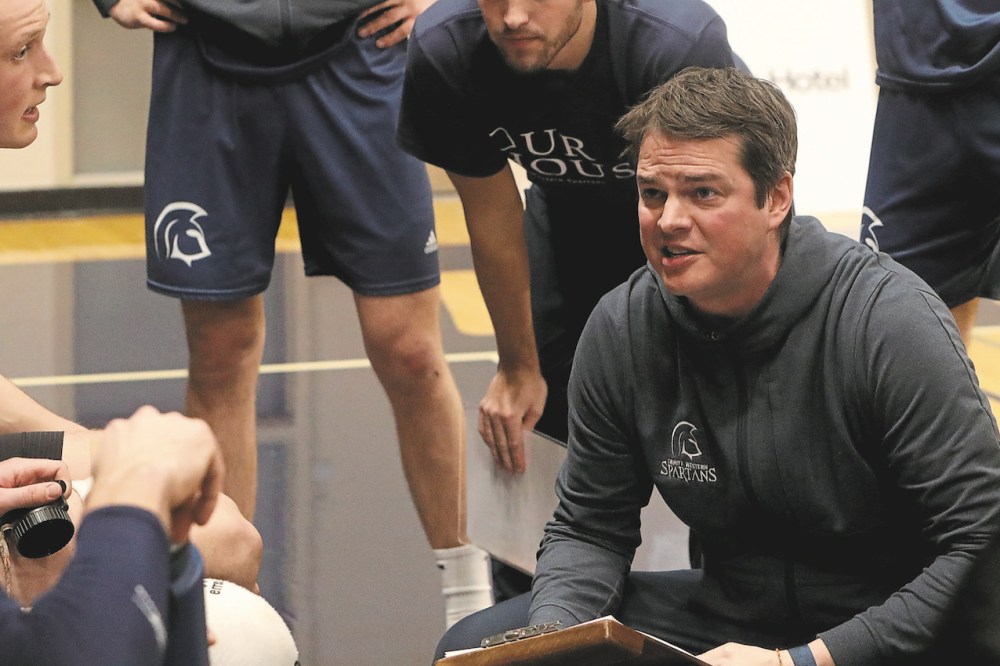
One of the best in the nation at reining in top talents is Trinity Western men’s volleyball coach Ben Josephson. The man behind five national titles and five Canada West golds since 2011 strongly believes the best tool in any coach’s belt is recruiting.
“The best way to improve your team is to go out and find better players, it’s not by coaching them,” Josephson said. “You have to find the horses. You can’t beat a racehorse with a mule, you just can’t. Every once in a while an upset does happen, that’s sports, but if you look before the season begins you can pretty much lay out who the four teams at the end are going to be.
“You have to grind to find the athletes that give you the chance to coach them up and maybe make them five per cent better.”
Josephson said the challenge of finding good fits, both for his Spartans and for athletes about to dedicate years of their lives to a university degree, is immense during the COVID-19 pandemic.
“You got these Grade 12 kids making a really important decision, one of the biggest of their lives to his point of ‘Where do I want to go to school?’”Josephson said, adding the currently prohibited campus visits are critically important for the athletes.
“Really, where they choose to go to school is going to shape who they choose to make friends with, who their spouse is going to be, what kind of career they get in, relationships that are going to be really important in their career path … all of those factors they’re not getting a chance to really evaluate properly.”
Josephson takes the most pride in finding diamonds in the rough, or, the guys who aren’t already on the youth national team and appear automatic starters at the U Sports level. He has a number of factors working on his side, for sure, with past success breeding future success these days. And the mild climate in Langley, B.C., certainly beats -40 C during a prairie winter.
One recruit that stands out to him, however, isn’t one of his own.
MULTI-SPORT METCALF

A strange shockwave passed through the Manitoba volleyball community when the Bobcats announced the signing of six-foot-six Carman Cougar Mason Metcalf.
The fact that he was headed to the U Sports level wasn’t the surprise. It was that he was playing volleyball. Now he was a AA provincial MVP but few at higher levels really knew of him as a volleyball guy. He excelled in hockey and was an absolute force on the basketball court.
Brandon head coach Grant Wilson saw him play during the 18U club volleyball season and the gears started turning.
“I’m a big fan of multi-sport athletes. I feel it makes them more valuable when they do start to specialize. They’ve been coached by different coaches, have trained different muscle groups and understand the flow of sports,” Wilson said.
“When you find somebody with a body type like Mason: Long, lean, athletic and have that high IQ from other sports, you like to think when they do start to specialize they’re just going to get better. Sometimes it works out, sometimes it doesn’t, but Mason’s as good an example as it gets.”
Metcalf finished his fifth year a four-year starter and the Bobcats’ all-time leader in blocks.
“He also was one of the most improved players I’ve ever seen in his five years in Canada West,” Josephson said. “Think of where he was from his first year to his fifth year, it’s mind-blowing how much he developed. No one even knew who he was, even in the middle of his career … but by the end of it he’s one of the top blockers in the whole country.”
“… How have Grant and Russ (Paddock) been able to build such great volleyball teams in Brandon? If you’re recruiting outside of Manitoba, it’s a harder sell but that’s the brilliance of how they’ve gone about it.”
TRUST ME, YOU’LL LOVE BRANDON
The BU coaches will be the first to admit it’s a mighty challenge building their rosters year-in and year-out.
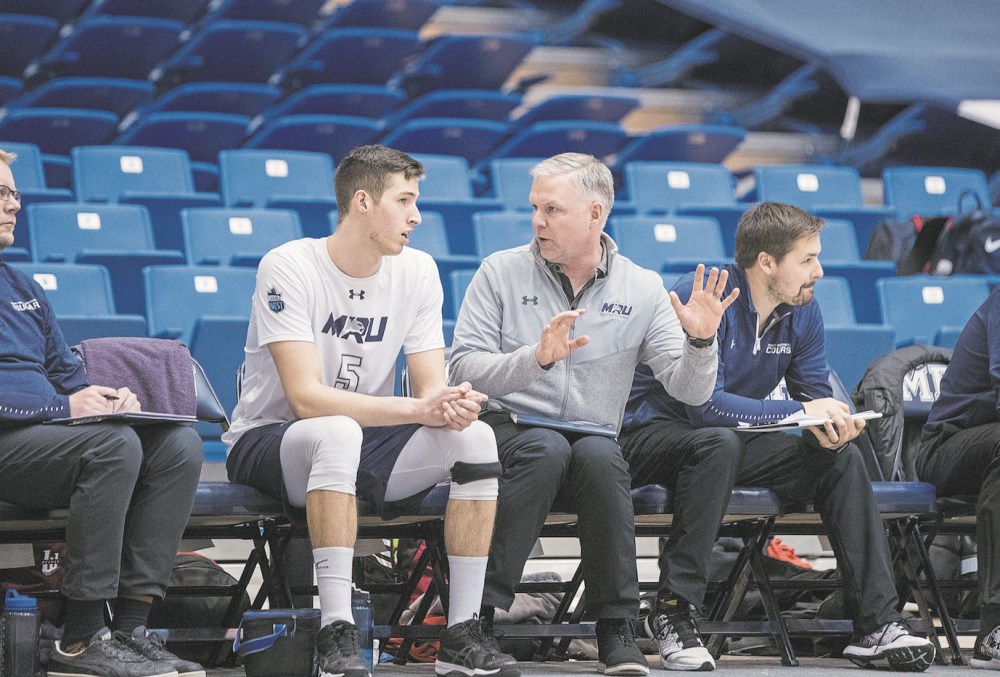
They follow in the footsteps of essentially the original university sports recruiter in former men’s basketball coach Jerry Hemmings, whom the three-import max — two for volleyball — is unofficially named after.
Hemmings pulled incredible talents such as John Carson, Patrick Jebbison and Keith Vassell, all national players of the year and national champions, from across Canada and the United States. He always had a healthy stable of Americans and pushed the big schools to do the same if they wanted to keep up.
While the “Jerry Hemmings rule” is limiting, the Bobcats have a convenient counter in BU’s international tuition waiver. Non-Canadians are typically subject to significantly higher tuition rates at post-secondary schools, but at Brandon, athletes are basically treated as Canadians.
“It’s certainly something we feel is beneficial for our international athletes and our program. I’ve said it before to my colleagues in Canada West, you guys can complain about that all you want. When you fly in a recruit and they see the ocean, the mountains and nice weather, I don’t feel that’s fair. We don’t have that here. Every place has their own perks, certain advantages and that’s one for us, as well as small class sizes and good academic support,” Wilson said.
“The next biggest one for us is community support. We have the highest attendance in Canada West, the best fans in the country, best media coverage in the country and let’s face it, a lot of young athletes like that. They want to be someone special, want to be recognized and there’s not a lot of places that can do that but Brandon University, we can … that’s a huge piece of our recruiting puzzle.”
BU’s tuition fees are also among the lowest in Canada outside of Quebec, and slightly below its provincial rivals in Winnipeg and Manitoba. Since full athletic scholarships are not allowed in U Sports — they can’t exceed tuition and fees — an offer to play at BU will typically be more affordable than any outside of an athlete’s hometown.
Bobcats coaches sell the smaller class sizes and increased opportunity to build relationships with professors, and most current and former Bobcats certainly value that part of their experience.
They also emphasize the importance of finding a solid academic fit. As one of the smaller schools with fewer programs than most, a ton of athletes simply and rightfully don’t see BU as an option.
As a result, coaches still have to go to great lengths to stay competitive.
BU women’s volleyball coach Lee Carter spends countless hours in the off-season travelling to club tournaments and putting on summer camps across the Prairies.
“It’s hard to get international players because the players we tend to get are also getting offered everything down in the U.S. We have to try to find a niche player. In Brandon again, we’re trying to establish relationships because that’s how we get our out-of-province athletes,” Carter said.
“You don’t do that without running camps in Killam, Lethbridge, Grande Prairie and Bonnyville. You need all those ones, then you develop relationships with coaches in Saskatchewan, go to their tournaments and you sit and buy them a coffee and talk to them, ask them lots of questions bring them in to watch your practice.
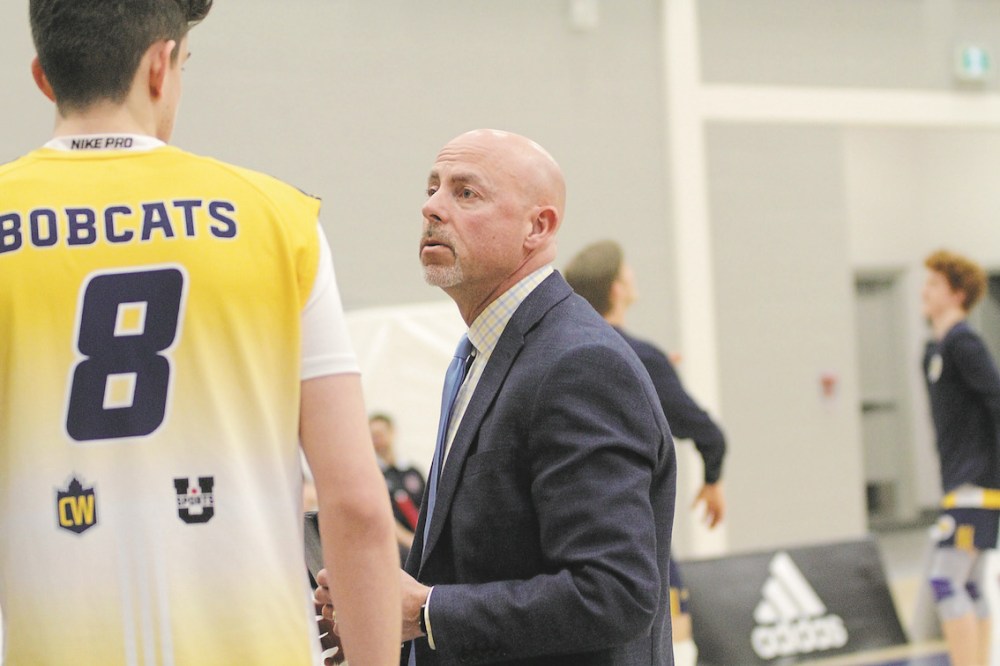
“They come to your club tournament and you make sure you spend lots of time talking to them … you go to a coaches symposium in B.C., Newfoundland and Halifax and establish relationships there so in case a player decides they’re interested, you have a coach that can vouch for you.”
While they can’t control the cold, the Bobcats coaches urge potential athletes to look past it.
“The weather, it’s not something we have any control over. We can’t change it and people who come here know it’s cold,” Wilson said. “There’s no warmer place in the world in terms of the people … it might be frigid inside but the people in the building are going to love you for who you are and support you for who you are.”
Tomorrow: What is success?
» tfriesen@brandonsun.com
» Twitter: @thomasmfriesen