
Salt Lake City Olympic bid projects $4 billion in total costs to stage 2034 Winter Games
Advertisement
Read this article for free:
or
Already have an account? Log in here »
We need your support!
Local journalism needs your support!
As we navigate through unprecedented times, our journalists are working harder than ever to bring you the latest local updates to keep you safe and informed.
Now, more than ever, we need your support.
Starting at $15.99 plus taxes every four weeks you can access your Brandon Sun online and full access to all content as it appears on our website.
Subscribe Nowor call circulation directly at (204) 727-0527.
Your pledge helps to ensure we provide the news that matters most to your community!
To continue reading, please subscribe:
Add Brandon Sun access to your Free Press subscription for only an additional
$1 for the first 4 weeks*
*Your next subscription payment will increase by $1.00 and you will be charged $20.00 plus GST for four weeks. After four weeks, your payment will increase to $24.00 plus GST every four weeks.
Read unlimited articles for free today:
or
Already have an account? Log in here »
Hey there, time traveller!
This article was published 10/06/2024 (649 days ago), so information in it may no longer be current.
Organizers for the proposed 2034 Winter Olympics in Salt Lake City released their first budget estimate Monday, projecting total costs of just under $4 billion, with $2.84 billion of that slated for operational costs.
The committee said even though there will be 40% more events than the last time Salt Lake City hosted the Olympics, the number for operational costs for 2034 is 1% lower than that for 2002 when adjusted for inflation.
The IOC will study the numbers later this month and is expected to officially award the 2034 Games to Utah’s capital at a meeting on July 24 in the lead-up to the Paris Olympics.
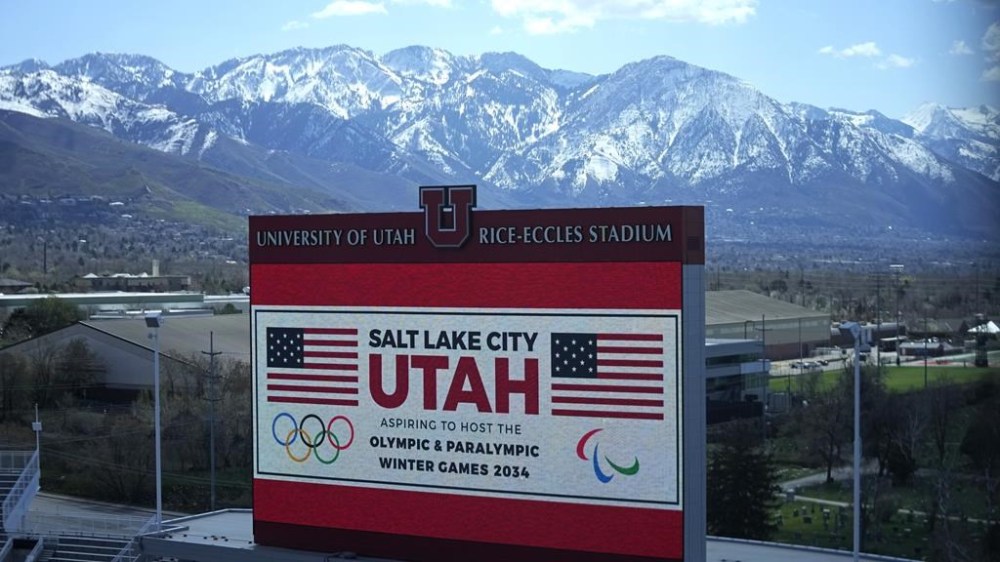
Salt Lake City has been focused on using many of the venues that were in play for 2002. It says no new venue construction is planned for 2034, as it will use facilities that have been kept in use and upgraded since 2002.
Olympics are notorious for coming in over budget, and also for being difficult to track money-wise — in part because of the different elements that make up “operating” and “total” costs and also because of an often-opaque process used in filtering those numbers through governments and the IOC to the public.
“One of the statements that Frazier makes often is that Olympic budgeting is, in fact, an unofficial Olympic sport,” said bid chief operating officer Brett Hopkins, who explained the budget in a media call along with bid CEO Fraser Bullock. “There is just a tremendous amount that goes in behind the scenes.”
If Salt Lake City can come close to these numbers, it would represent a remarkable shift from the last few Winter Games.
Russia famously spent a reported $51 billion on staging the 2014 Olympics in Sochi, which included massive transportation and housing projects.
Four years later, South Korea spent $12.9 billion for the 2018 Games that were originally projected at between $7 billion and $8 billion.
There’s no definitive price tag on the last Winter Olympics in China, though one report placed the cost at more than $38.5 billion after an initial projection of around $3.9 billion.
The Salt Lake organizers released projected revenue figures that estimate they will break even with the help of a target of $1.8 billion in domestic sponsorship.
The committee is budgeting for a $260 million legacy contribution to support local community sports programs, which is part of the non-operational spending and could be diminished if the numbers don’t add up.
Bullock acknowledged the ever-shifting nature of Olympic budgets, but said it was Salt Lake City’s mission to not spend more than it makes on the 2034 Games.
“This budget we’ve gone through, we’re probably on iteration ‘over a hundred,’” he said. “That’s just the dynamics of budgets for games. As you learn more and you get more information, they constantly evolve.”
___
AP Winter Olympics: https://apnews.com/hub/winter-olympicsAP