
How Costco masters the economics of exclusivity
Advertisement
Read this article for free:
or
Already have an account? Log in here »
We need your support!
Local journalism needs your support!
As we navigate through unprecedented times, our journalists are working harder than ever to bring you the latest local updates to keep you safe and informed.
Now, more than ever, we need your support.
Starting at $15.99 plus taxes every four weeks you can access your Brandon Sun online and full access to all content as it appears on our website.
Subscribe Nowor call circulation directly at (204) 727-0527.
Your pledge helps to ensure we provide the news that matters most to your community!
To continue reading, please subscribe:
Add Brandon Sun access to your Free Press subscription for only an additional
$1 for the first 4 weeks*
- Enjoy unlimited reading on brandonsun.com
- Read the Brandon Sun E-Edition, our digital replica newspaper
*Your next Free Press subscription payment will increase by $1.00 and you will be charged $20.95 plus GST for four weeks. After four weeks, your payment will increase to $24.95 plus GST every four weeks.
Read unlimited articles for free today:
or
Already have an account? Log in here »
Hey there, time traveller!
This article was published 24/08/2024 (663 days ago), so information in it may no longer be current.
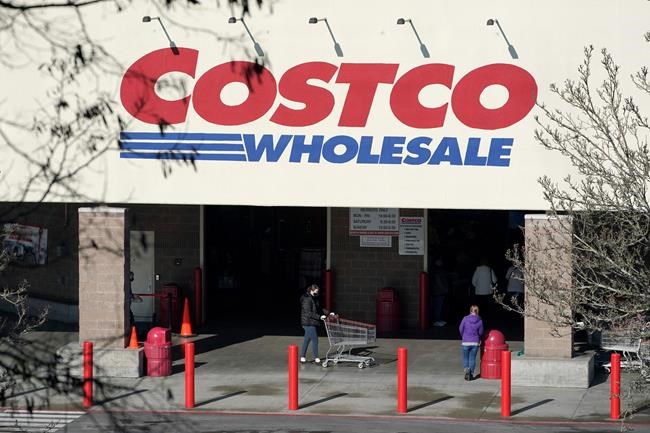
Costco Canada is doubling down on its commitment to membership exclusivity, signalling a shift toward a more disciplined and controlled shopping environment. The retail giant is currently piloting advanced membership card scanners at several locations across Ontario, Alberta, Saskatchewan and British Columbia.
These scanners, positioned at store entrances, mandate that shoppers authenticate their membership before entry. For non-members, access is restricted unless accompanied by a valid card holder.
Nevertheless, there remain limited avenues for non-members to gain entry. A one-day pass, obtainable twice annually, offers temporary access, while those with gift cards or seeking pharmacy services can also bypass the membership requirement.
This strategic move aligns entirely with Costco’s distinct and highly profitable business model. Unlike traditional retailers, Costco derives a substantial portion of its profitability from membership fees rather than retail markups. Costco has effectively transformed its customer base into a revenue stream by monetizing access to its vast inventory — predominantly financed by suppliers. With more than five million active members in Canada, the company generates approximately $325 million annually from membership fees alone before a single product is sold. This speaks volumes about the financial acumen behind Costco’s operations.
From a food retail perspective, Costco has made significant strides in recent years. The company has augmented its in-house food processing capabilities, expanded its offerings of locally sourced products, and enhanced the quality of its Kirkland Signature line. Once regarded as a mediocre food retailer, Costco has become a formidable contender across numerous categories. This is particularly evident with its two iconic loss leaders: the $1.50 hotdog, positioned strategically at the entrance, and the $7.99 rotisserie chicken, located at the far end of the store — both designed to drive foot traffic and maintain customer loyalty.
Despite operating only 109 locations across Canada, Costco’s food sales are competitive with those of Walmart Canada and Metro, which manage 403 and more than 900 stores, respectively. This underscores Costco’s operational efficiency and its ability to drive significant sales volume through a relatively limited footprint.
Costco’s approach to expansion in Canada has been characterized by prudence and deliberation. Historically, the retailer has opened just one new store every two to three years. However, the pace appears to be accelerating slightly, with new stores slated for Surrey, B.C., and Oakville, Ont., within the next two years. These developments are eagerly anticipated, as existing locations frequently experience high traffic, with customers navigating the sprawling 146,000-square-foot warehouse searching for deals.
Introducing membership card scanners is unlikely to dampen revenue from membership fees. Earlier this year, Costco announced an upcoming increase in membership fees, effective this fall. Individual, business, and business add-on memberships will see a $5 annual increase, while executive memberships will rise by $10.
Costco’s ability to maintain customer loyalty is mirrored by its strong appeal to investors. The company’s stock, currently trading at approximately US$862 per share, has appreciated 54.4 per cent over the past year. Speculation regarding a potential stock split has only heightened investor interest. Such a move would be consistent with the practices of other retail giants like Walmart and Amazon, whose shares are priced well below US$200.
While the markets anticipate further strategic manoeuvres, one aspect of Costco remains steadfast: its quiet yet unwavering commitment to operational excellence. With a near-zero advertising budget, Costco continues executing its strategy with precision and restraint that is rarely seen in the retail sector, embodying the adage of “steady as she goes.”
» Sylvain Charlebois is senior director of the agri-food analytics lab and a professor in food distribution and policy at Dalhousie University.
» Troy Media