Columns

Premier, Winnipeg mayor have some explaining to do on firearms buyback

By Dan Lett 5 minute read Tuesday, Feb. 10, 2026

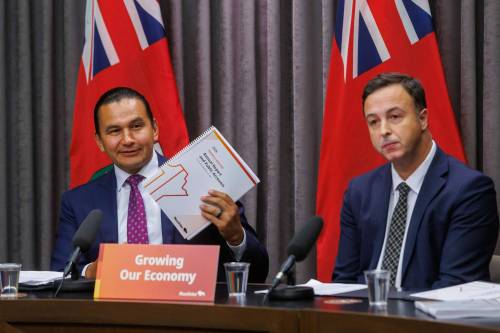
Both Winnipeg Mayor Scott Gillingham and Manitoba Premier Wab Kinew vehemently oppose a federal program to buy back military-style firearms from law-abiding gun owners. The question is why.

At first examination, it’s not entirely clear.

Both claim to be law-abiding gun owners. Both acknowledge that gun violence is a serious problem. However, both have condemned a program to get military-style firearms out of circulation without offering a clear explanation.

Kinew has said the program is “inefficient” and “an overreach.” In particular, he echoed the concerns of the gun lobby about federal legislation that sought to prohibit guns that accept a magazine with five or more rounds of ammunition, a provision that would have outlawed many popular sport hunting rifles.

Advertisement

Advertise With Us

Weather

Feb. 12, 6 PM: -4°c Partly cloudy Feb. 13, 12 AM: -8°c Clear

Brandon MB

-2°C, Cloudy with wind

Full Forecast

When Valentine’s Day forces a relationship reckoning

By Emily Impett 5 minute read Preview

When Valentine’s Day forces a relationship reckoning

By Emily Impett 5 minute read Monday, Feb. 9, 2026

For people who have been quietly struggling with doubts about their relationship, the weeks leading up to Valentine’s Day can feel fraught. As Feb. 14 approaches, questions that were once easy to sidestep often become harder to ignore.

In a study that tracked romantic couples over a year, relationships were about 2.5 times more likely to end during the two weeks surrounding Valentine’s Day than during the fall or spring. When researchers accounted for relationship length, prior relationship history and gender, the odds of a breakup during this window were more than five times higher.

At first glance, this timing may seem strange. Why would couples break up just before a holiday devoted to love, connection and commitment?

Other findings from this study reveal that the increase in breakups appeared only among couples who were already struggling, not among those who were stable or getting stronger.

Read
Monday, Feb. 9, 2026

Valentine's Day gift bags are displayed last month at a retail store in Lincolnshire, Ill. (The Associated Press files)

Valentine’s Day gift bags are displayed last month at a retail store in Lincolnshire, Ill. (The Associated Press files)

Health doesn’t have a ‘look’

By Georgia Feng 5 minute read Preview

Health doesn’t have a ‘look’

By Georgia Feng 5 minute read Sunday, Feb. 8, 2026

This past week, Feb. 1-7, was Canada’s Eating Disorder Awareness Week (EDAW). The week aims to promote body respect, inclusion, and a more compassionate understanding of health.

This year’s theme was “health doesn’t have a look,” which focused on four main goals: to take action at every level (in your own life, in your community and in larger social systems); to break the power of diet culture; to learn how to identify and resist harmful messages that influence our society on how we view food and body size; to create safe and welcoming spaces that don’t focus on weight at home, in schools, in health care, and on social media; and, finally, to explore trusted resources and services.

This campaign invited people to challenge the harmful message that thinness equals health, and instead to start conversations about diversity in all bodies. Eating disorders affect people no matter their gender, age, socioeconomic class, or ethnic background. That is why eating disorder groups across Canada have united to create this national week of action aimed at educating the public, showcasing available resources and advocating for lasting change.

Eating disorders are serious health conditions that affect both your physical and mental health. These conditions are categorized by problems in how someone thinks about food, weight, eating and body shape, thoughts which can lead to severely dangerous eating behaviours. These behaviours can affect someone’s ability to get the nutrients their body needs, resulting in damage to their heart, digestive health, bones, teeth and mouth. There are many different types of eating disorders, the most common being Anorexia Nervosa, Bulimia Nervosa and Binge Eating Disorder. Anorexia has the highest mortality rate of any psychiatric diagnosis other than Opioid Use Disorder. Understanding the damage that eating disorders cause is extremely important when trying to break the weight stigma made by diet culture and our society’s narrow beauty standards.

Read
Sunday, Feb. 8, 2026

Georgia Feng describes how Canada’s Eating Disorder Awareness Week challenged the harmful message that thinness equals health. (Tribune News Service)

Georgia Feng describes how Canada’s Eating Disorder Awareness Week challenged the harmful message that thinness equals health. (Tribune News Service)

The war on empathy leads to barbarism

By Dennis Hiebert 4 minute read Preview

The war on empathy leads to barbarism

By Dennis Hiebert 4 minute read Sunday, Feb. 8, 2026

The commencement by some Americans of a “war on empathy,” not coincidental with the second Donald Trump administration, is shock, but not awe.

While discussing immigration on The Joe Rogan Experience podcast last year, Elon Musk declared that “the fundamental weakness of Western civilization is empathy” which people “exploit.” Adding that “we’ve got civilizational suicidal empathy going on,” he conjured up horrors of white Christian nation-alist great replacement theory.

It served as a dutiful call to arms, and the American political and religious right mobilized on multiple fronts.

Sample recent publications include “Toxic Empathy: How Progressives Exploit Christian Compassion” (2024) by podcaster Allie Beth Stuckey, “The Sin of Empathy: Compassion and Its Counterfeits” (2025) by pastor Joe Rigney, and “Suicidal Empathy: Dying to be Kind” (2026) by professor Gad Saad. The image on the front cover of Suicidal Empathy is a sheep holding a protest sign demanding “Free the Wolves.”

Read
Sunday, Feb. 8, 2026

Dennis Hiebert defends empathy from Elon Musk (shown here), who has declared empathy “the fundamental weakness of Western civilization.” (File)

Dennis Hiebert defends empathy from Elon Musk (shown here), who has declared empathy “the fundamental weakness of Western civilization.” (File)

A tale of two leadership styles

By David McLaughlin 5 minute read Preview

A tale of two leadership styles

By David McLaughlin 5 minute read Sunday, Feb. 8, 2026

The fault line that runs through Canadian politics today isn’t right or left, urban or rural, English or French, or even Liberal or Conservative. It is our border with the United States. Like the Sorting Hat of Harry Potter fame, Canadians are sorting the parties and leaders based on standing up to and negotiating with U.S. President Donald Trump.

Both Prime Minister Mark Carney and Opposition Leader Pierre Poilievre have struggled mightily to manage the Trump gorilla act. Success remains elusive. Both have settled on distance as the best strategy.

Having tried to secure an early economic and security deal with Trump with multiple encounters, Carney now engages him gingerly and episodically. Drive-by chats at international summits rather than direct Oval Office visits are preferred.

Poilievre has always kept Trump at a distance. Even when many Maple-MAGAs in his party enjoyed the Great Disruptor’s ascendancy, Poilievre could hardly bring himself to say his name. That cost him with Canadians who figured since he didn’t have anything particularly bad to say about Trump, he just wouldn’t mention him at all.

Read
Sunday, Feb. 8, 2026

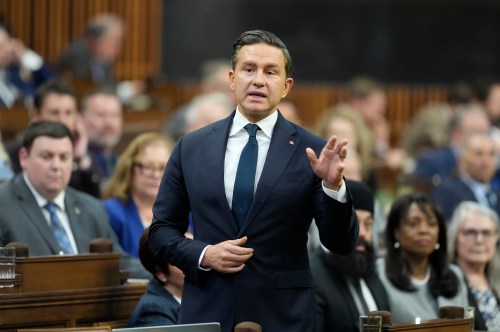
Conservative Party Leader Pierre Poilievre delivering his keynote address at the party’s national convention in Calgary, Jan. 30. David McLaughlin argues that Poilievre’s refusal to address the Trump-shaped elephant in the room has cost him dearly with voters. (The Canadian Press files)

Conservative Party Leader Pierre Poilievre delivering his keynote address at the party’s national convention in Calgary, Jan. 30. David McLaughlin argues that Poilievre’s refusal to address the Trump-shaped elephant in the room has cost him dearly with voters. (The Canadian Press files)

Recycling is not just a local issue

By Zack Gross 5 minute read Preview

Recycling is not just a local issue

By Zack Gross 5 minute read Sunday, Feb. 8, 2026

It might come as a surprise to some that recycling is a global, not just a local, and a controversial, issue. I remember when people first became aware of the recycling movement, maybe 30 or 40 years ago. We had our children crushing pop cans and gathering up recyclable articles and putting them in blue bags. We’d take them to depots set up in the Brandon Shoppers Mall parking lot where the kids would actually receive a small amount of cash based on the weight of the materials we delivered.

There were actually people who didn’t want to recycle, thought it was some kind of hoax, or just didn’t want to make the extra effort when they dealt with their garbage. There are still a few people like that around today, as social media “Meanwhiles” will attest to, who think it all gets thrown into landfills anyway or think our planet’s environment won’t really benefit from our individual recycling efforts. What I found, in my career talking with people about social issues, is that many considered recycling to be an easy and accessible way to make a difference in the world.

Just like any environmental issue, we as families, small businesses and individuals approach recycling as a micro issue, filling a blue bag or box each week with cardboard, tins, glass and plastic. But, on a world scale, it is indeed a macro issue with huge amounts of product being moved about, with treaties and regulations trying to keep up with the issues that arise, and with people’s lives and livelihoods at stake. Turning something old into something new — a plastic coke bottle into a t-shirt — is a good thing. Burning plastic waste for fuel is definitely a bad thing.

Our mega-consumer society creates more waste of every type than we can easily deal with. At one time, the state of California, which has a population and economy bigger than our own, was shipping human waste by barge to Central America as there was nowhere to put it all “at home.” As well, Canada was implicated in an embarrassing situation just a few years ago when The Philippines flagged us for shipping unwanted industrial waste to them.

Read
Sunday, Feb. 8, 2026

In this May 7 file photo, Filipino environmental activists wear a mock container vans filled with garbage to symbolize 50 containers of waste that were shipped from Canada to the Philippines as they hold a protest outside the Canadian embassy at the financial district of Makati, south of Manila, Philippines. Rich nations, including Canada, are shipping their garbage to countries with less stringent environmental regulations, Zack Gross writes. (The Associated Press)

In this May 7 file photo, Filipino environmental activists wear a mock container vans filled with garbage to symbolize 50 containers of waste that were shipped from Canada to the Philippines as they hold a protest outside the Canadian embassy at the financial district of Makati, south of Manila, Philippines. Rich nations, including Canada, are shipping their garbage to countries with less stringent environmental regulations, Zack Gross writes. (The Associated Press)

Serving the U.S.? Absolutely not.

4 minute read Preview

Serving the U.S.? Absolutely not.

4 minute read Friday, Feb. 6, 2026

If some Canadians still hold out the hope that the Canada-U.S.-Mexico free trade agreement can be saved, or that a new free trade agreement can be negotiated to replace it, they should lower those expectations.

That is because the Trump administration has sent its strongest signal so far that it has no intention of continuing the existing free trade relationship with Canada, and no desire to enter into a new trade agreement with us on similar terms.

In testimony before a U.S. Senate committee Thursday, U.S. Treasury Secretary Scott Bessent was asked this question by Louisiana Republican Sen. John Kennedy: “If Canada … came to the United States and said ‘We’re going to zero tariffs on the United States, all of them are off on our end,’ would you … go to zero tariffs and then just let Canadian companies and American companies compete on a level playing field?”

Bessent’s response could not have been clearer: “Absolutely not.”

Read
Friday, Feb. 6, 2026

A comment recently made by U.S. Secretary of the Treasury Scott Bessent is a clear sign that the cosy trade relationship Canada had with its southern neighbour is over. (The Associated Press)

U.S. Secretary of the Treasury Scott Bessent delivers a speech at the USA House during the annual meeting of the World Economic Forum in Davos, Switzerland on Tuesday, Jan. 20, 2026. (AP Photo/Markus Schreiber)

Many questions, few answers

By Deveryn Ross 5 minute read Preview

Many questions, few answers

By Deveryn Ross 5 minute read Friday, Feb. 6, 2026

At some point, the people who sit at Brandon’s city council table have to ask themselves if they have been manipulated and misled, and if taxpayers have been left holding the bag.

Yesterday, it was reported in the Sun that Brandon is experiencing a surge in housing construction before higher development cost charges take effect.

It was also reported that at least one developer is predicting that construction will come to a “screaming halt” in a couple of years unless the city does more to “incentivize” developers to build in Brandon.

It was also reported in January that a developer has filed a “neighbourhood plan” for the large area on the southwest corner of 18th Street and Patricia Avenue, and there have been at least two opinion pieces published in the Sun since then (including one published yesterday) regarding concerns about the future of the wetlands on that site.

Read
Friday, Feb. 6, 2026

A screenshot of a map of the proposed South Village Neighbourhood in south Brandon. Deveryn Ross counts this project as one red flag that leads him to wonder whether city council has been misled when it comes to development in Brandon. (Submitted)

A screenshot of a map of the South Village Neighbourhood in south Brandon. The red section will be developed for commercial uses. Orange is moderate-density homes, yellow is low-density homes and green is for a retention pond and green space. (Supplied)

Ag remains economic lifeblood

By Mark Frison 5 minute read Preview

Ag remains economic lifeblood

By Mark Frison 5 minute read Friday, Feb. 6, 2026

In January, Brandon hosted one of the most significant industrial events that happens in our province — Manitoba Ag Days.

The event results in a significant “tourism spend” in Brandon, filling every hotel room from Virden to Portage la Prairie, and leverages our Keystone Centre, which is built for events like this. It also helps to reinforce Brandon’s rightful place as the ag centre of Manitoba.

More importantly, it’s a great chance for the sector to come together, learn and do business. Like in many industrial sectors, we are stronger in agriculture when we work together.

The event also has philanthropic benefits. Ag Days Gives Back raises money for community projects, scholarships, Ag in the Classroom and other efforts. This year, fire response was a specific area of focus.

Read
Friday, Feb. 6, 2026

Steven Hills, an instructor at Assiniboine College’s Russ Edwards School of Agriculture & Environment, quizzes students taking part in a scavenger hunt as part of the Ag in the Classroom program during Manitoba Ag Days 2023 at the Keystone Centre. (Tim Smith/The Brandon Sun files)

Steven Hills, an instructor at Assiniboine College’s Russ Edwards School of Agriculture & Environment, quizzes students taking part in a scavenger hunt as part of the Ag in the Classroom program during Manitoba Ag Days 2023 at the Keystone Centre. (Tim Smith/The Brandon Sun files)

ICE pullback shows limits of Trump scare tactics

By Eli Lawrence Sopow 6 minute read Preview

ICE pullback shows limits of Trump scare tactics

By Eli Lawrence Sopow 6 minute read Friday, Feb. 6, 2026

Thanks to United States President Donald Trump, 2026 is shaping up to be an age of angst as groups and countries retreat turtle-like into protective economic and cultural shells. We’re trusting very few and are suspicious of many. As is generally the result of such tactics, the perpetrator is creating an environment of divide and conquer.

The global and local anxiety being created by Trump are illustrated by the Edelman Trust Barometer Global Report. It reveals the results of a 2025 survey of 33,000 respondents in 28 countries.

The results show that trust in institutions of all description, and our “shared reality,” has created a “crisis of grievance.” This in turn has produced a “heightened insularity, a reluctance to trust anyone who’s different from you.”

But Trump’s draconian anti-immigration agenda — enforced through masked, violent and unaccountable Immigration and Customs Enforcement (ICE) agents — appears to be fuelling active and successful citizen collaboration.

Read
Friday, Feb. 6, 2026

A person is detained by U.S. federal agents in Minneapolis on Tuesday. (The Associated Press)

A person is detained by U.S. federal agents in Minneapolis on Tuesday. (The Associated Press)

Stability and prosperity must be made in Canada

By Robert Chernomas and Fred Wilson 5 minute read Preview

Stability and prosperity must be made in Canada

By Robert Chernomas and Fred Wilson 5 minute read Wednesday, Feb. 4, 2026

Prime Minister Mark Carney’s eloquent epitaph to the global economic order at the Davos World Economic Forum has been widely acclaimed for its candour in challenging the U.S. economic coercion that President Donald Trump has unleashed on the world.

It needs to be said also, however, that the old order and its multilateral institutions — the World Trade Organization, World Bank and International Monetary Fund — were responsible for a massive growth of inequality, financial and environmental crises, as well as the imposition of a global division of labour in which manufacturing would be based on cheap labour and other countries, like Canada, would be “hewers of wood and drawers of water.”

The financial elites at Davos stood to applaud Carney, but they remain committed to much of the old design and rules that brought those results.

Carney pitched Canada to the Davos investors as an energy superpower with vast reserves of critical minerals, with the most educated population in the world, pension funds among the largest in the world, the most sophisticated investors and a stable government with “immense fiscal capacity.”

Read
Wednesday, Feb. 4, 2026

Prime Minister Mark Carney speaks during the annual meeting of the World Economic Forum in Davos, Switzerland, on Jan. 20. (The Associated Press)

Prime Minister Mark Carney speaks during the annual meeting of the World Economic Forum in Davos, Switzerland, on Tuesday. (The Associated Press)

GOP backlash against Trump’s racist post is all about politics

By Tom Brodbeck 5 minute read Preview

GOP backlash against Trump’s racist post is all about politics

By Tom Brodbeck 5 minute read Yesterday at 10:06 PM CST

There is, it turns out, a line — however faint and grudgingly acknowledged — that even Donald Trump’s brand of racist, dehumanizing rhetoric cannot cross.

That line was apparently breached last week when a video posted to Trump’s Truth Social account depicted former U.S. president Barack Obama and former first lady Michelle Obama as jungle primates.

The clip was swiftly condemned, not just by Democrats and civil rights leaders, but by a notable number of Republicans as well. Within hours, it was deleted, although Trump refused to apologize for it.

Progress? Hardly. The bar was so low it was practically subterranean. If anyone was tempted to believe this episode signalled a newfound restraint, Trump quickly disabused them of that notion with a racist rant over the weekend aimed at Puerto Rican superstar Bad Bunny.

Read
Yesterday at 10:06 PM CST

Bad Bunny performs during the halftime show of Super Bowl LX in Santa Clara, Calif., on Sunday. He is a vocal critic of the Trump administration. (The Associated Press)

Bad Bunny performs during the halftime show of Super Bowl LX in Santa Clara, Calif., on Sunday. He is a vocal critic of the Trump administration. (The Associated Press)

Why Conservatives stand by Poilievre

By Sam Routley 5 minute read Preview

Why Conservatives stand by Poilievre

By Sam Routley 5 minute read Sunday, Feb. 1, 2026

With the support of almost 90 per cent of party delegates, Pierre Poilievre’s Conservative party leadership review results are clear and decisive.

These results not only demonstrate that the party continues to believe that he is their best option to win the next federal election, but that a large majority of Conservatives remain broadly united behind his leadership and message.

POST-ELECTION REFLECTION

Poilievre entered the review following a period of assessment and recovery. As is typical after an election loss, this phase involved internal debate, intense media scrutiny and renewed attention to the leader’s perceived weaknesses.

Read
Sunday, Feb. 1, 2026

Conservative Party Leader Pierre Poilievre, delivers his keynote address at the party’s national convention in Calgary on Friday, where he easily cleared his leadership review. (The Canadian Press)

Conservative Party Leader Pierre Poilievre, delivers his keynote address at the party’s national convention in Calgary on Friday, where he easily cleared his leadership review. (The Canadian Press)

Consultation process sorely lacking on mine proposals

By Mary Jane McCarron 6 minute read Preview

Consultation process sorely lacking on mine proposals

By Mary Jane McCarron 6 minute read Sunday, Feb. 1, 2026

“Intriguing” was a key word used by Norman Brandson in his Jan. 19 column in the Winnipeg Free Press, What should a new Sio Silica bid look like? “Intriguing” indeed. Mr. Brandson dances around the relationship between Sio Silica and Long Plain, but further examination is warranted.

Before providing a response to Long Plain’s foray into mining consultation, know that I have been involved in opposing the licensing of Canadian Premium Sand based on the failure to ensure meaningful consultation. Rules were somewhat loosely interpreted, resulting in a community torn apart by the gap between independent environmentalists and government legislation which only allowed single-source information (the mining company’s) to be presented in public consultation processes.

Let’s start with a bit of history on Sio’s reputation as a schmoozer.

This company started with sponsoring the Blue Bombers in some capacity. They ended with a political scandal involving Conservative MLAs attempting to push the licence through during an election blackout.

Read
Sunday, Feb. 1, 2026

SIO SILICA promotional material. (File)

SIO SILICA promotional material. (File)

Manitoba not ready for nation-building projects

By Patricia Fitzpatrick, Heather Fast and Katrine Dilay 5 minute read Preview

Manitoba not ready for nation-building projects

By Patricia Fitzpatrick, Heather Fast and Katrine Dilay 5 minute read Sunday, Feb. 1, 2026

Nation-building projects are once again being announced across Canada. They have big numbers, bold promises and right now, a sense of urgency. In these projects, the federal government is promising jobs, competitiveness, and economic growth, particularly as Canada moves toward net zero and seeks to secure its place in a rapidly changing global economy.

Speed has become a key selling point. The federal government has made clear it wants projects approved faster and has committed to reducing what it calls bureaucratic red tape. Through the Building Canada Act and the creation of the Major Projects Office, Ottawa is signalling a new approach to development. And it’s gaining real traction. Since last summer, nearly $120 billion in major projects have been announced across the country.

Manitoba has not yet seen one of those announcements. But it most likely will. If it happened today, we believe our province isn’t ready.

As the federal government accelerates approvals, it is also signalling a reduced role in impact assessment, a responsibility it has historically shared with provinces. Ottawa is currently negotiating co-operation agreements that will clarify who assesses what. In practice, this means provinces will carry more responsibility for evaluating the environmental, social, health, and rights-based impacts of major projects.

Read
Sunday, Feb. 1, 2026

P.E.I. Premier Bloyce Thompson (from left), Ontario Premier Doug Ford, Nova Scotia Premier Tim Houston and Manitoba Premier Wab Kinew react as Prime Minister Mark Carney speaks at the end of a news conference following the First Ministers Meeting in Ottawa on Thursday. The federal government is poised to hand more of the responsibility for major project assessments to provinces, but Manitoba isn’t ready. (The Canadian Press)

P.E.I. Premier Bloyce Thompson (from left), Ontario Premier Doug Ford, Nova Scotia Premier Tim Houston and Manitoba Premier Wab Kinew react as Prime Minister Mark Carney speaks at the end of a news conference following the First Ministers Meeting in Ottawa on Thursday. The federal government is poised to hand more of the responsibility for major project assessments to provinces, but Manitoba isn’t ready. (The Canadian Press)

How unions work to improve lives

By Kevin Rebeck 4 minute read Preview

How unions work to improve lives

By Kevin Rebeck 4 minute read Friday, Jan. 30, 2026

In my role as the president of the Manitoba Federation of Labour, an organization made up of over 30 unions and labour bodies that represent more than 130,000 workers throughout the province, I spend a lot of time speaking with Manitoba workers, including those who are members of unions and those who are not.

And it is always interesting to learn more about what Manitobans know about unions.

When I speak with workers about why they think unions are important, several common themes emerge.

These include the fact that unions provide better wages that help workers pay the mortgage and support their families, that unionized workers are more likely to have a workplace pension and a good benefits plan and how health and safety issues are prioritized in unionized workplaces. The ability of unionized workers to take part in the democratic process of negotiating and voting on their collective agreement also comes up.

Read
Friday, Jan. 30, 2026

Manitoba Federation of Labour president Kevin Rebeck writes on the importance of unions. (File)

Manitoba Federation of Labour president Kevin Rebeck writes on the importance of unions. (File)

LOAD MORE