
How public spaces can be safer, more welcoming for children
Advertisement
Read this article for free:
or
Already have an account? Log in here »
We need your support!
Local journalism needs your support!
As we navigate through unprecedented times, our journalists are working harder than ever to bring you the latest local updates to keep you safe and informed.
Now, more than ever, we need your support.
Starting at $15.99 plus taxes every four weeks you can access your Brandon Sun online and full access to all content as it appears on our website.
Subscribe Nowor call circulation directly at (204) 727-0527.
Your pledge helps to ensure we provide the news that matters most to your community!
To continue reading, please subscribe:
Add Brandon Sun access to your Free Press subscription for only an additional
$1 for the first 4 weeks*
*Your next subscription payment will increase by $1.00 and you will be charged $20.00 plus GST for four weeks. After four weeks, your payment will increase to $24.00 plus GST every four weeks.
Read unlimited articles for free today:
or
Already have an account? Log in here »
Hey there, time traveller!
This article was published 29/11/2024 (452 days ago), so information in it may no longer be current.
A Georgia mother was recently arrested for reckless endangerment after her 10-year-old son was seen walking outside alone. The warrant for her arrest claimed she “willingly and knowingly” endangered her son’s safety.
The boy had walked less than a mile into town to visit the local dollar store. Despite the boy’s evident ability to navigate public spaces independently, a passerby perceived his presence on the street as alarming and called the police.
This incident illustrates the damaging effects of “safetyism,” a societal anxiety that wrongly assumes children should not be out on their own. Such perceptions not only curtail children’s independence but also perpetuate unnecessary interventions that undermine the ability of parents to make decisions for their own family.
A focus on safetyism ignores the absence of child-friendly infrastructure in many of our towns and cities. For example, many suburban neighbourhoods in North America lack sidewalks and other pedestrian infrastructure. In the Georgia incident, the road the boy walked along did not have a sidewalk, meaning he had to walk on the shoulder. This lack of space exacerbates fears of children being in public spaces alone.
How did we reach a point where parents now risk arrest if their children are seen outside alone?
RISE OF SAFETYISM
My research focuses on how public spaces can be better designed for children. As societies change, their understanding of childhood changes. The way children were treated 50 years ago differs from what they are experiencing now. Likewise, perceptions of what is safe to do and what is not have also changed over time.
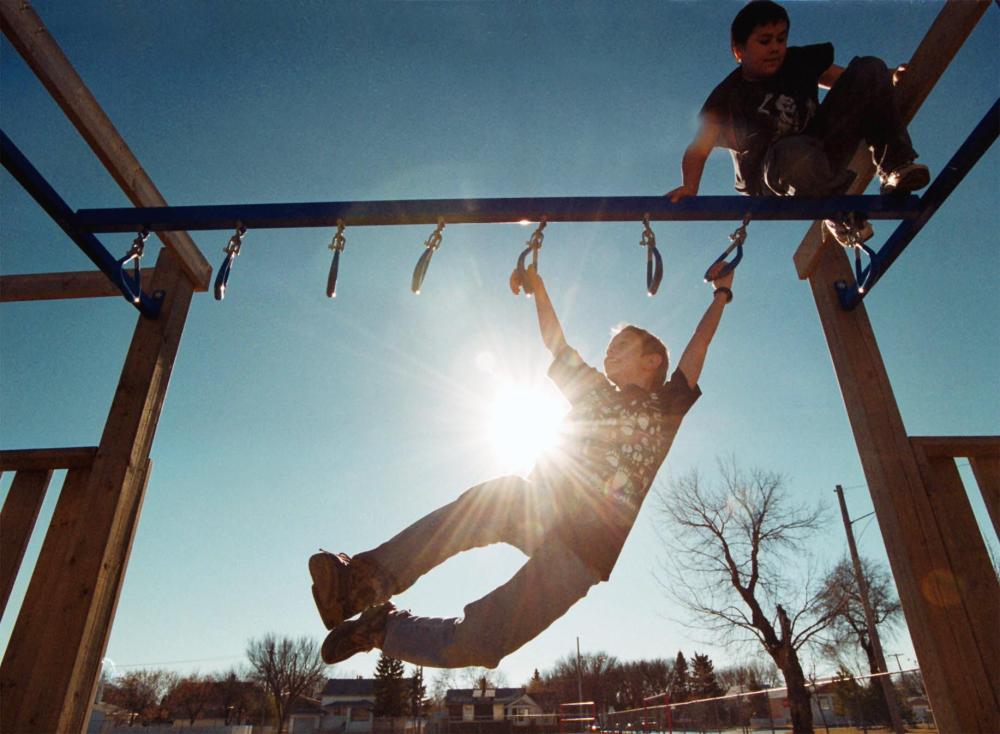
Spontaneous outdoor play is a vital way for children to explore, grow and understand their environment. Yet, urban and suburban design often stifles this natural inclination. These environments usually confine children’s play to parks and playgrounds while leaving broader public spaces off-limits.
Historically, attitudes toward children in public spaces have been shaped by industrialization, rapid urbanization and the growth of suburbs. Early playgrounds emerged during the child-saving movement of the 1980s, aiming to protect children from street dangers.
However, these heavily supervised, segregated spaces reflected societal biases, dividing children by race, gender and class. Activities prepared boys for leadership, girls for motherhood, and marginalized children for labour.
Architects and planners like Aldo van Eyck have challenged these restrictive notions, advocating for adventure playgrounds and child-friendly urban spaces. Their work emphasizes unstructured play that promotes children’s agency.
Despite these efforts, the rise of safetyism in recent decades has eroded children’s independence. Fears of busy traffic and stranger dangers have led caregivers to limit children’s exposure to the outdoors. This “bubble-wrapped generation,” as education professor Karen Malone describes, experiences childhood within narrowly defined boundaries, chauffeured between organized activities.
This overprotection deprives children of opportunities to develop resilience. Car dependence also contributes to the very risks it seeks to prevent. For instance, traffic congestion caused by parental dropoffs near schools increases accident risks. Meanwhile, children shielded from navigating public spaces may lack the skills to handle unexpected situations, such as how to seek help when lost.
The Georgia incident starkly illustrates how societal attitudes perpetuate these cycles. The passerby’s decision to involve the police reflects a broader societal discomfort with children’s presence in public spaces. Addressing this issue requires both cultural and infrastructural change.
CHILD-FRIENDLY CITIES
It is time for a new child-saving movement. Cities like Barcelona and Copenhagen offer inspiring examples of child-friendly design that challenge these anxieties. The walkability of these cities contributes to children’s overall skill development.
Integrating playful elements along walkable pathways further advances opportunities to explore and develop a sense of safety and belonging. These opportunities normalize children being in public spaces, countering the harmful perceptions that fuel safetyism.
Implementing traffic-calming measures is another way to foster safer pedestrian movements around the neighbourhood. Among these measures are lowering speed limits around residential buildings, adding more intersections with signals and mid-block crosswalks especially along longer and curved streets.
Walkability can also be improved by implementing soft edges along pathways. As opposed to hard physical boundaries such as fences, incorporating soft edges, such as green buffers, ensure the safety of children and pedestrians while still enabling them to freely navigate space and engage in playful activities.
Moreover, the creation of intergenerational public spaces must be prioritized over creating age-specific spaces, such as the common fenced playgrounds. First, being in these spaces encourages a sense of shared responsibility, thus improving children’s agency. Second, they foster a sense of community among all, which eventually improves parental perceptions of safety. Third, intergenerational spaces allow caregivers to socialize while children play. This opportunity is an important timeout for the caregivers, while still being able to supervise their kids.
Children’s well-being is a barometer for the health of our societies and cities. To create inclusive, sustainable communities, we must challenge the restrictive boundaries that confine children’s experiences and see their independence as a threat. By designing child-friendly public spaces, we can nurture future generations who are better equipped to navigate our world.
» Anahita Shadkam is a sessional instructor at Toronto Metropolitan University’s School of Urban and Regional Planning.
» This column was originally published at The Conversation Canada: theconversation.com/ca