
A housing opportunity for Manitoba
Advertisement
Read this article for free:
or
Already have an account? Log in here »
We need your support!
Local journalism needs your support!
As we navigate through unprecedented times, our journalists are working harder than ever to bring you the latest local updates to keep you safe and informed.
Now, more than ever, we need your support.
Starting at $15.99 plus taxes every four weeks you can access your Brandon Sun online and full access to all content as it appears on our website.
Subscribe Nowor call circulation directly at (204) 727-0527.
Your pledge helps to ensure we provide the news that matters most to your community!
To continue reading, please subscribe:
Add Brandon Sun access to your Free Press subscription for only an additional
$1 for the first 4 weeks*
- Enjoy unlimited reading on brandonsun.com
- Read the Brandon Sun E-Edition, our digital replica newspaper
*Your next Free Press subscription payment will increase by $1.00 and you will be charged $20.95 plus GST for four weeks. After four weeks, your payment will increase to $24.95 plus GST every four weeks.
Read unlimited articles for free today:
or
Already have an account? Log in here »
Hey there, time traveller!
This article was published 15/01/2025 (640 days ago), so information in it may no longer be current.
Despite the recent prorogation of Parliament, the work of government continues.
Newly appointed federal ministers know they have limited time to leave their mark. There will be an urgency to get budgeted funding out the door before a new Liberal leader is chosen and an election is called.
Housing and Infrastructure Minister Nathaniel Erskine-Smith said that he accepted the call to cabinet because he wants to “make the biggest difference that I can.” He recognizes that the housing crisis is closely linked to rising homelessness and a host of other societal issues. He describes Canada’s housing crisis as one Canada’s most pressing issues.
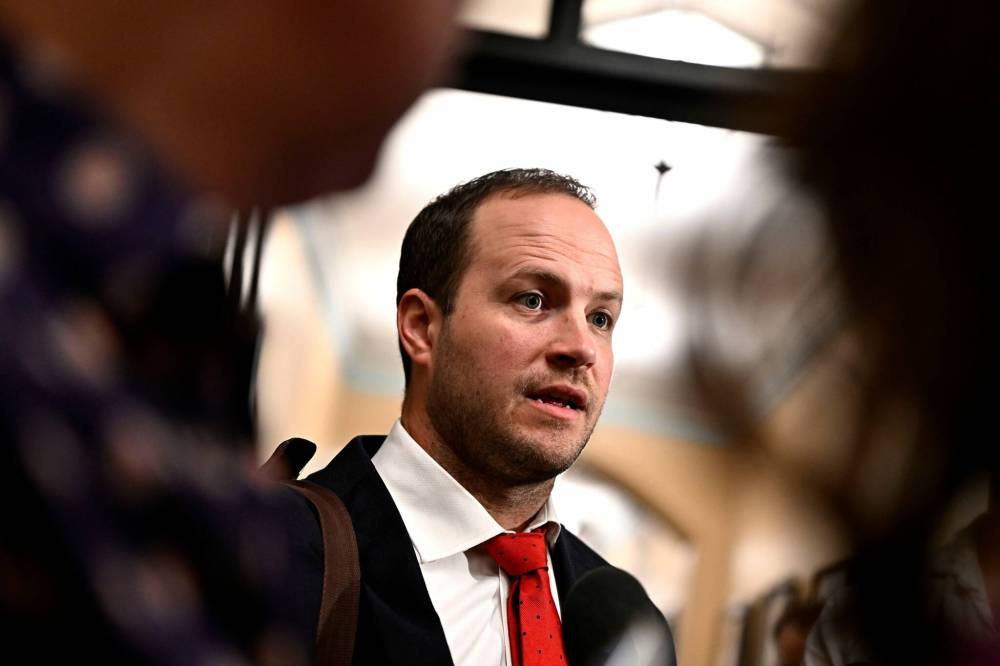
Federal Housing Minister Nathaniel Erskine-Smith has recently said increasing the supply of social housing is a priority of his. (File)
In a Jan. 12 CBC interview with Rosemary Barton, Erskine-Smith noted a few priorities that he will pursue over the next few months. One of those priorities is to increase the supply of social housing. This creates a significant opportunity for the Manitoba government, but it will require quick action and collaboration with non-profit housing providers and the City of Winnipeg.
In 2017, the Trudeau government announced the first-ever National Housing Strategy (NHS). The strategy was to focus on “improving housing outcomes for those in greatest need.” While there has been a significant increase in rental housing built through various NHS programs since that time, very little has gone to the creation of housing for those in greatest need. Housing researchers have determined that less than three per cent of the rental units produced by the NHS’s largest program are affordable to low-income households. The increase in the number of people who are homeless or precariously housed suggests the strategy has not succeeded.
Social housing advocates are telling Erskine-Smith that if he wants to ensure his government creates housing for those in greatest need, he should do a few things. One of those is to reallocate existing housing funds to the Rapid Housing Initiative (RHI). The federal government created the RHI during the COVID-19 pandemic. It is the only social housing-focused federal program, but it is the smallest of the NHS programs. Moving funding to the RHI from other programs would redirect already committed federal funding to where it is needed most. The Manitoba government could access these funds to meet its social housing objectives. But it would need to act quickly to develop a viable cost-shared social housing plan that the federal government will support.
Erskine-Smith’s interest in social housing aligns with what housing advocates have been long calling for here in Manitoba — expanded investments in social housing, a key social determinant of health. In a CBC interview responding to the tragic death of Chad Christopher Giffin, a patient who died after waiting upwards of eight hours at Winnipeg’s Health Sciences Centre’s emergency department, Premier Wab Kinew noted the continued urgency to improve the health-care system. He also rightly noted that reducing the pressures facing the health-care system requires attending to the social determinants of health. Housing has long been associated with health — housing and health disparities are inextricably linked.
Social housing advocates applaud Manitoba’s current NDP government for making a commitment to invest in the expansion and maintenance of social housing (with supports), but with a federal election looming and expectations that Pierre Poilievre’s Conservatives will replace the Liberal government, it is going to find itself in a predicament. The scale of social housing needed will require federal investment. Poilievre has made clear that he has no intention in investing public funds in social housing. A Poilievre government will rely solely on the private sector. That has been the dominant approach taken for more than 30 years, and it hasn’t worked.
With a new federal minister motivated to move quickly on social housing, there is a time-sensitive opportunity for Manitoba. Access to federal housing funds is still possible.
Both the federal and provincial government have much to gain from taking action on social housing. The federal government wants to leave a legacy that shows its National Housing Strategy made an impact on the lives of those it was intended to help. Investing in social housing and supports will ease pressure on the health-care system. It will provide the foundation needed to improve education outcomes, access to employment, keeping kids out of the care of the child-welfare system and other NDP government priorities. But the provincial government needs the federal government’s help to expand social housing at the scale required to meet the need in Manitoba.
The wheels of government typically move slowly. That will need to change at this unique moment in time if the Manitoba government is going to seize an opportunity before it is too late.
» Shauna MacKinnon is a professor and chair of the University of Winnipeg’s Department of Urban and Inner-City Studies, and is a member of the Right to Housing Coalition. This column previously appeared in the Winnipeg Free Press.