
“September 5” film revisits 1972 broadcast of Munich Olympics terrorism
Advertisement
Read this article for free:
or
Already have an account? Log in here »
We need your support!
Local journalism needs your support!
As we navigate through unprecedented times, our journalists are working harder than ever to bring you the latest local updates to keep you safe and informed.
Now, more than ever, we need your support.
Starting at $15.99 plus taxes every four weeks you can access your Brandon Sun online and full access to all content as it appears on our website.
Subscribe Nowor call circulation directly at (204) 727-0527.
Your pledge helps to ensure we provide the news that matters most to your community!
To continue reading, please subscribe:
Add Brandon Sun access to your Free Press subscription for only an additional
$1 for the first 4 weeks*
*Your next subscription payment will increase by $1.00 and you will be charged $20.00 plus GST for four weeks. After four weeks, your payment will increase to $24.00 plus GST every four weeks.
Read unlimited articles for free today:
or
Already have an account? Log in here »
Hey there, time traveller!
This article was published 23/01/2025 (427 days ago), so information in it may no longer be current.
His swimming pursuits at the 1972 Olympics complete, Canada’s Byron MacDonald joined some friends one night in Munich for a live viewing of another big sports event on the go at the time — hockey’s Summit Series.
The walk back to the athlete village in the wee hours was a jovial one after Canada’s 4-1 Game 2 triumph over the Soviet Union in Toronto. That journey home would include a brush with terror in what would soon become one of the Games’ darkest days.
“Initially it was surreal,” MacDonald said. “The gravity of the situation didn’t hit right away.”
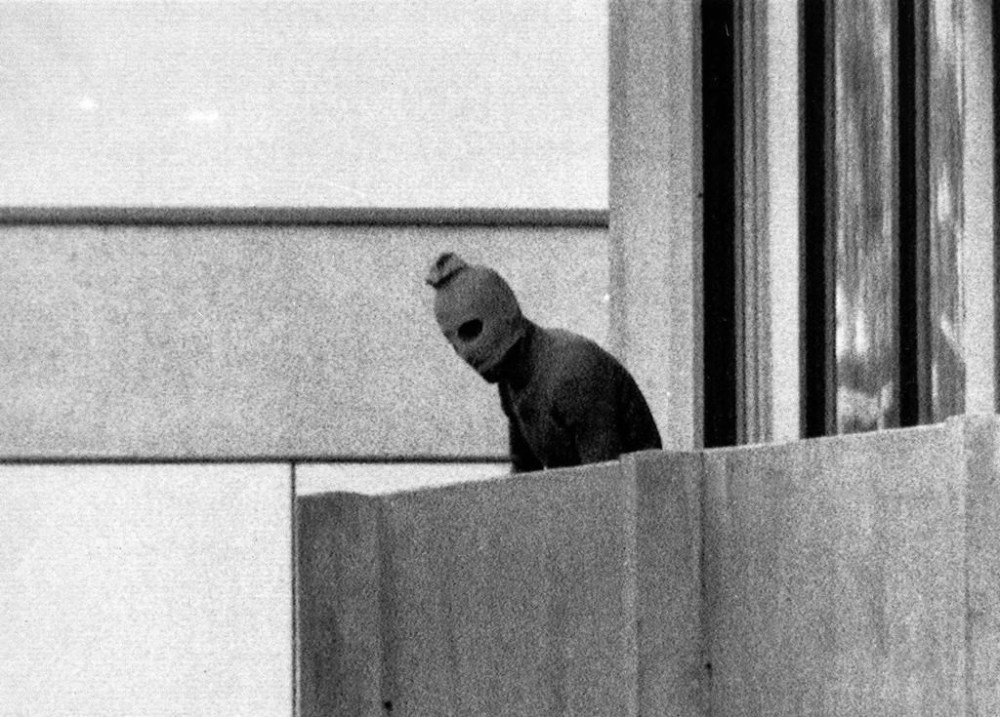
The behind-the-scenes broadcast coverage of the events that day provides the hook for “September 5,” a new film that takes viewers inside the ABC Sports control room at those Games.
Traditional Olympic sport coverage shifted to live coverage of a nearby hostage situation. The film, starring Peter Sarsgaard and John Magaro, provides a new perspective on the broadcast seen by about 900 million people around the world at the time.
Members of the Palestinian group Black September had broken into the village, killed two athletes from Israel’s national team and took nine others hostage.
The attackers hoped to force the release of Palestinian prisoners held by Israel as well as two left-wing extremists in West German jails. All nine hostages and a West German police officer died during a rescue attempt by German forces.
MacDonald, who was sixth in the men’s 100-metre butterfly final in Munich, recalled a locked entry area when he returned to the sprawling village’s back gate as dawn approached.
With the front entry over a kilometre away, MacDonald estimated, the back was the preferred option. The Canadian dorm was nearby, not far from the Israeli quarters.
“Nobody was there. Of course it’s 4:30 in the morning,” MacDonald said from Toronto in a recent interview. “We did see three, four guys in generic tracksuits about 100 metres from us down the fence, and they hopped over the fence. And so, it turns out later, I’m sure they were the terrorists. I mean I can’t prove it, but my guess was it certainly was them.
“Once they hopped the fence, we hopped the fence. Again, this is back in the day when security was not thought to be a big deal. Nobody was really worried about security.”
After walking his friends to their rooms, MacDonald went back to his apartment to sleep. Gunshots rang out a short time later.
“We went out into the little walkway outside of my (apartment) and looked around thinking that it was fireworks because obviously gunshots is not the first thing that comes to your mind in an Olympic village,” he said.
“We couldn’t see anything and I remember commenting to (my friend) going, ‘Who are the morons that are setting off fireworks? These guys all still have to compete. Then we went back to bed.
“When we woke up, all hell had broken loose.”
Much of the 91-minute film takes place in a smoky control room with period analog equipment. Producers grapple with how best to cover the drama not far from their building door.
Media ethics are at the forefront during one of the first breaking news events to be televised worldwide.
“”It is, in my opinion, a beautifully done memory of what we went through that day in a very challenging and difficult situation,” producer Geoff Mason, played by Magaro in the film, said from New York.
“It happened so fast that we didn’t really have time to think about it until afterwards.”
The film keeps its focus on the broadcast – mixing in archival footage – that culminated in broadcaster Jim McKay’s announcement of the hostages’ tragic end: “They’re all gone.”
Mason said he consulted as a co-producer on how best to keep the telling of the story on “legitimate lines.”
“I take great pride in how well and how authentic this movie portrays that day,” he said. “They trusted me and I trusted them in how to tell this story the right way.”
“September 5,” presented by Paramount Pictures, was released in select Canadian theatres on Dec. 13.
It’s scheduled for wide release across the country on Friday.
This report by The Canadian Press was first published Jan. 23, 2025.
With files from The Associated Press.
Note to readers: This is a corrected story. A previous version incorrectly stated Game 2 of the 1972 Summit Series was in Montreal. In fact, it was in Toronto.