
Minister responds to health-care concerns
NEELIN VIEWS
Advertisement
Read this article for free:
or
Already have an account? Log in here »
We need your support!
Local journalism needs your support!
As we navigate through unprecedented times, our journalists are working harder than ever to bring you the latest local updates to keep you safe and informed.
Now, more than ever, we need your support.
Starting at $15.99 plus taxes every four weeks you can access your Brandon Sun online and full access to all content as it appears on our website.
Subscribe Nowor call circulation directly at (204) 727-0527.
Your pledge helps to ensure we provide the news that matters most to your community!
To continue reading, please subscribe:
Add Brandon Sun access to your Free Press subscription for only an additional
$1 for the first 4 weeks*
- Enjoy unlimited reading on brandonsun.com
- Read the Brandon Sun E-Edition, our digital replica newspaper
*Your next Free Press subscription payment will increase by $1.00 and you will be charged $20.95 plus GST for four weeks. After four weeks, your payment will increase to $24.95 plus GST every four weeks.
Read unlimited articles for free today:
or
Already have an account? Log in here »
Hey there, time traveller!
This article was published 02/06/2025 (385 days ago), so information in it may no longer be current.
For decades, Canadians have had the right to access socialized health care largely free of user fees. With this right, many Canadians are able to receive medical care regardless of their financial standing.
As Canada’s population continues to rise, it becomes more and more difficult to ensure that there are enough health-care workers for those citizens. As for citizens of Manitoba, there has been an increase in the shortage of health-care workers. According to the Manitoba Government and General Employees Union (MGEU), “Health Care Aide vacancy rates are over 30 per cent in PMH (Prairie Mental Health), including sixteen facilities with vacancy rates over 40 per cent.”
The Neelin Journalism Team (NJT) spoke with Health Minister and Deputy Premier Uzoma Asagwara who was able to shed some light on the current health-care situation in Manitoba.
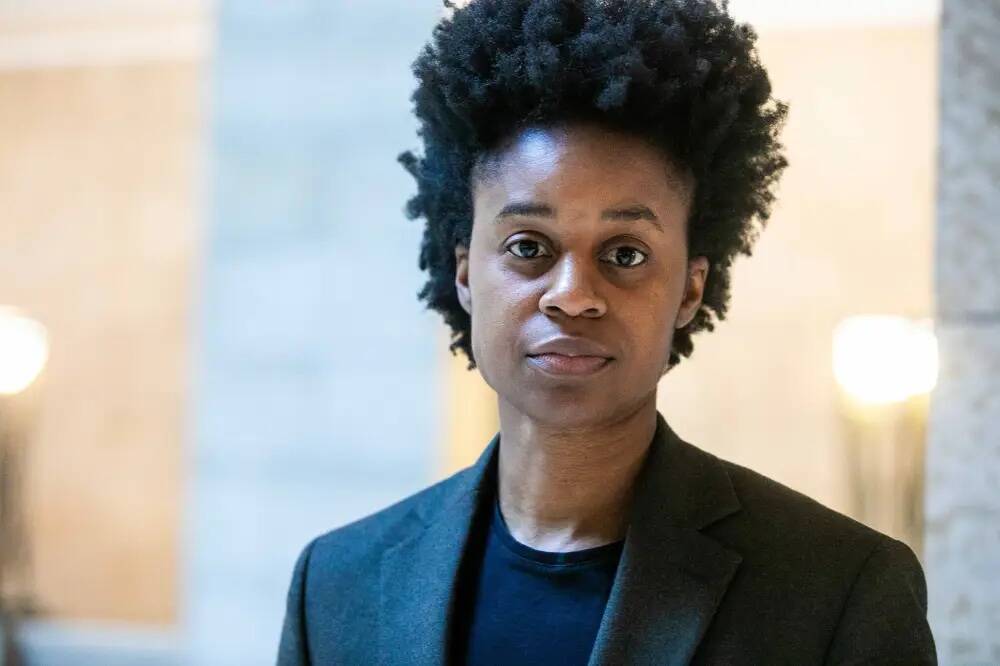
Uzoma Asagwara
NJT asked, “With the recent development of the (Brandon Minor Injury and Illness Clinic) here in Brandon, the provincial government stated that the clinic would relieve pressure on urgent care staff and better serve the residents of Brandon. However, this does not seem to reflect on current reality. Why does it appear that the clinic is already overwhelmed and unable to meet its intended functions and what can be done to address these shortcomings?”
Minister Asagwara replied, “I think that there are going to be some folks that are going to have criticisms, feedback and we’re a listening government. We believe in listening to the feedback of people who are accessing health care, and we can always take steps to make it better.”
Asagwara also stated that health care was cut year after year under the previous government, especially health care in rural Manitoba. According to Asagwara, “One of the most important things that you can do to strengthen health care and to reduce pressure on emergency departments or acute care is to make investments in primary care.”
The minister stated that is the main reason behind the development of this clinic. Although there are criticisms in terms of the clinic not meeting its intended function, they said they want the citizens of Manitoba to know that Manitoba has in fact more primary care, because since the opening of the minor injuries clinic here in Brandon, according to Asagwara, “Well over 5,000 Manitobans in Brandon and surrounding communities have accessed care in this clinic … What I will say is that, we want to make sure that were not only adding primary care to help reduce pressures in the emergency department but also its fundamentally to improve the health care outcomes for Manitobans.”
It’s important to note that the minister mentioned how people are able to walk in to book appointments if they are unable to do so remotely. Another option for those looking for an appointment at the clinic is an online platform at www.medinav.ca for those hoping to book appointments for the very same day. With these methods, we are able to see how the provincial government has implemented numerous accessible ways to receive health care through the minor injuries clinic.
Minister Asagwara then addressed the following question: “Given the attack on a nurse in Brandon that happened in April of 2025, to what extent should people feel it’s safe to become health-care workers? What can be done to ensure the safety of staff and patients in Westman health-care facilities?”
As Asagwara worked as a nurse for over a decade, they were able to understand the severity of the situation that occurred. “The safety of staff, patients and visitors is our top priority,” said Asagwara. “First, I want to acknowledge, and I want to thank the front-line health-care workers who are providing care every day, but I also want to thank the institutional safety officers (ISO) who were on site and responded.”
Asagwara also stated, “Our government has hired over 100 institutional safety officers who are specialty trained to manage violent incidents and to prevent violent incidents from occurring.” The minister stated that there is consistently one ISO stationed in an emergency room. Thankfully, at the time of the incident in April, there was an ISO and security guard present. At the minister’s latest visit to Brandon’s emergency room, they mention how they met with both the ISO and the security guard and was impressed by their dedication to their work. With that, Asagwara estimates to there will be around 130 ISOs stationed on the front lines once their training has been completed. It was stated that a top priority for the minister as they were elected was to ensure that health-care workers always had ISOs present, ensuring that there are enough people trained in that position to help secure and deescalate any situation that may have gotten out of hand.
The minister was then asked, “What is being done to attract and retain more staff in Manitoba health-care facilities in general, and in Westman in particular?” The Minister responded, “Our government set a really big goal of hiring 1,000 health-care workers, and we’ve surpassed that goal […] and we’ve hired well over 1,600 health-care workers. In order to make sure we’re retaining the staff we have, we have to make sure were training more folks, especially training those … in their own communities, and then we’ve got to recruit.”
A Retention and Recruitment Office has been put in place with its No. 1 priority be health-care staffing. With their help, the province has been able to hire over 600 nurses, over 168 doctors, and over 800 health-care professionals, the minister said. As these numbers begin to increase, Asagwara acknowledged they are simply not enough. They said they know this is just the start, and hope to keep this momentum going to increase these numbers.
One final question was put to the minister: “The province has recently announced that in the beginning of July, pharmacists will be empowered to prescribe certain medications, including contraceptives and some HIV treatments, directly to clients. What other initiatives are on the horizon to alleviate burdens on doctors and provide services to Westman residents without raising taxes or implementing user fees?”
With the intent to relieve pressure on doctors, the government has been working with Manitoba doctors to identify ways to achieve this. With current doctors having more focus on their patients and allowing those with medical knowledge to be more present on the frontlines, it is hoped to spread more care across Manitoba. Asagwara stated, “Not only can we reduce the burden on doctors, but we can enhance the scope of practice for pharmacists who are very eager and wanting to work to their full scope and to provide more care to Manitobans. (That being said) we’re enhancing their ability to provide primary care. We’re working with them in partnership to make sure that Manitobans have more access to health care, not less care. We’re doing that as well with other providers, (such as) nurse practitioners … (as well as) health-care aids … and getting more training for technologists.”
Minister Asagwara continued, “We really believe that it’s a team effort, you don’t fix health care by working in isolation, we do it by getting everybody at the table, working in collaboration and being committed to making health care better for everybody across this province no matter where they live.”
As health-care issues arise in Manitoba, the provincial government and the health minister have collected the data they need and reached out to the people currently working in our health-care system to make sure they know how to tackle the issues that are occurring. Evidently, this is not a simple task and has been in the works for many years.
On behalf of École secondaire Neelin High School, we would like to thank Health Minister and Deputy Premier Uzoma Asagwara for taking the time to answer a few questions about the health-care system in Manitoba today and what the future holds going forward.
» Tatiana Dupuis is a grade 12 student at École secondaire Neelin High School