
Powerful opportunity that’s worth studying
Advertisement
Read this article for free:
or
Already have an account? Log in here »
We need your support!
Local journalism needs your support!
As we navigate through unprecedented times, our journalists are working harder than ever to bring you the latest local updates to keep you safe and informed.
Now, more than ever, we need your support.
Starting at $15.99 plus taxes every four weeks you can access your Brandon Sun online and full access to all content as it appears on our website.
Subscribe Nowor call circulation directly at (204) 727-0527.
Your pledge helps to ensure we provide the news that matters most to your community!
To continue reading, please subscribe:
Add Brandon Sun access to your Free Press subscription for only an additional
$1 for the first 4 weeks*
- Enjoy unlimited reading on brandonsun.com
- Read the Brandon Sun E-Edition, our digital replica newspaper
*Your next Free Press subscription payment will increase by $1.00 and you will be charged $20.95 plus GST for four weeks. After four weeks, your payment will increase to $24.95 plus GST every four weeks.
Read unlimited articles for free today:
or
Already have an account? Log in here »
Hey there, time traveller!
This article was published 04/07/2025 (305 days ago), so information in it may no longer be current.
Earlier this week, the Globe and Mail published a feature (“P.E.I. industrial park aims to meet Passive House standards,” July 2) that discussed the evolution of Summerside, P.E.I., into a national leader in sustainability and renewable energy.
The article revealed that the city owns its power utility, and that a whopping 62 per cent of its power sources are renewable thanks to that city’s ownership of the Summerside Wind Plant and the Sunbank Solar Farm.
The Summerside Wind Plant, which began operations in 2009, is Canada’s first community-owned wind-power generator. It is capable of generating 12 megawatts of clean, green electricity via four large wind turbines, and currently provides more than one-third of the city’s required electricity.
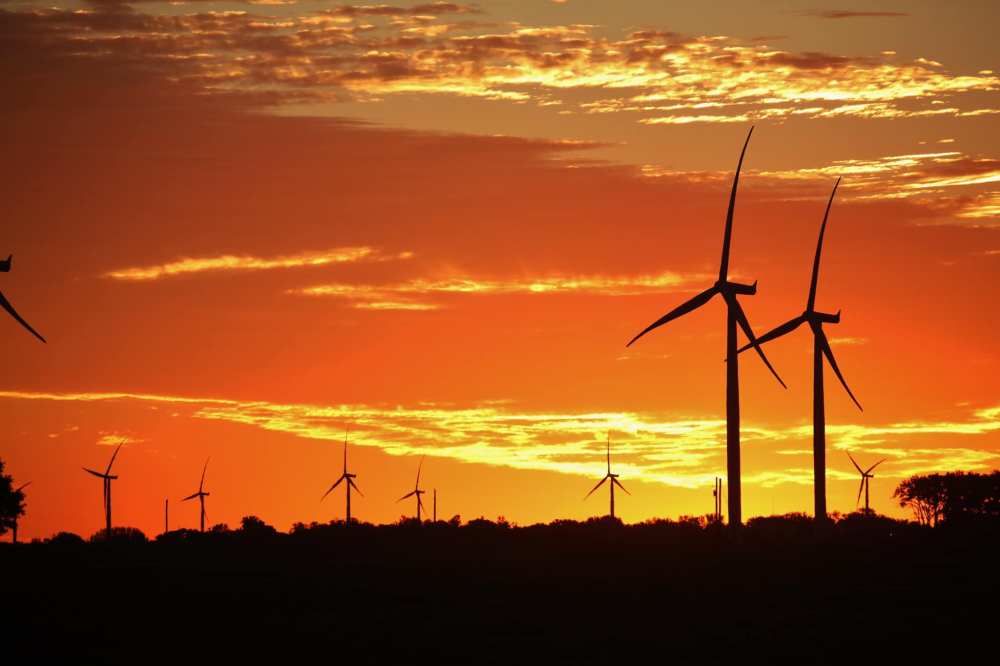
Prior to the facility’s construction, Summerside was getting much of its electricity from diesel generators, which were emitting tons of greenhouse gas emissions annually. The plant’s turbines have ended those emissions.
The electricity produced by the wind plant often exceeds demand in Summerside at various times of the year. As a result, the city has developed a program that co-ordinates the installation of water heaters and furnaces in local homes and businesses that are able to store energy as heat. That allows the city to harness some of the excess wind energy that is being produced.
Summerside’s Sunbank Solar Farm is capable of generating 21.6 megawatts of electricity, along with a 10-megawatt, 20-megawatt hour “battery” for energy storage. It can provide enough clean, renewable energy to power more than 2,500 homes annually, and removes more than 8,000 tonnes of greenhouse gasses annually. That equates to the emissions of more than 1,700 vehicles.
The total project budget for the Sunbank Solar Farm was $68.8 million, of which $20.6 million was contributed by the city of Summerside. The balance of the plant’s cost — $48.2 million — was paid for via federal and provincial contributions. As a result, the city received a fully functioning electricity generating facility, which also generates revenue for the city, for a fraction of the actual project cost.
The success in Summerside leads to a pretty obvious question: why aren’t we doing this here in Brandon? The most-plausible answer is that we don’t have similar power plants because no city leader has thought of it, or lacks the determination to advocate for such a project.
That’s a mistake on our part. Brandon is already suffering from an electricity shortfall that has cost the city economic growth, and Manitoba is headed toward a power shortage caused by insufficient generating capacity to meet the anticipated growth in demand over the next 20 years.
Given that reality, combined with the accelerating threat posed by climate change, both the city and Manitoba Hydro should be looking at renewable energy projects that will meet the growing need for electricity in both Brandon and throughout the province.
That’s not exactly happening. Rather, Manitoba Hydro is about to issue a request for proposals for 600 megawatts of additional electricity, but the RFP will require that applicants be at least 51 per cent Indigenous-owned. The Kinew government regards the approach as an important step toward reconciliation, but the power that would be produced by the projects would not come close to satisfying expected demand.
Much more generating capacity is needed throughout the province and Manitoba’s municipalities — including Brandon — should be taking a serious look at following the example set by Summerside. That is especially the case if the energy projects can be financed in the same low-cost manner as the Summerside projects were financed, or in which the Indigenous-owned projects are expected to be financed in Manitoba.
That makes sense, as it would be both unfair and hypocritical for the senior governments to treat Indigenous-owned entities (or Indigenous-private partnerships) more favourably than municipally owned projects.
This is the point in conversation when some may argue that Brandon is neither windy nor sunny enough to make wind and/or solar projects viable. That’s a bogus claim. Brandon receives more sun than Summerside each year, and is almost as windy. If they can make it work, so can we.
With generous funding from senior governments similar to that received by Summerside, the projects would pay for themselves over time and would be a huge source of revenue for our cash-strapped city in the future. That revenue could be used to lower taxes and/or improve city services.
Summerside has become a national leader in community-owned power generation. It is setting an example for profitable sustainability that cities such as Brandon should be striving to emulate. And yet, we aren’t doing that.
As usual, we are sitting on the sidelines, twiddling our thumbs as we wait (and wait and wait) for people in Winnipeg to solve our problems. That has to change.