
Missed opportunity will produce higher greenhouse-gas emissions
Advertisement
Read this article for free:
or
Already have an account? Log in here »
We need your support!
Local journalism needs your support!
As we navigate through unprecedented times, our journalists are working harder than ever to bring you the latest local updates to keep you safe and informed.
Now, more than ever, we need your support.
Starting at $15.99 plus taxes every four weeks you can access your Brandon Sun online and full access to all content as it appears on our website.
Subscribe Nowor call circulation directly at (204) 727-0527.
Your pledge helps to ensure we provide the news that matters most to your community!
To continue reading, please subscribe:
Add Brandon Sun access to your Free Press subscription for only an additional
$1 for the first 4 weeks*
*Your next subscription payment will increase by $1.00 and you will be charged $20.00 plus GST for four weeks. After four weeks, your payment will increase to $24.00 plus GST every four weeks.
Read unlimited articles for free today:
or
Already have an account? Log in here »
In his Letter to the Editor published in the Sun yesterday, former Brandon West NDP candidate Quentin Robinson objects to the Kinew government’s plan to construct a $3-billion combustion turbine facility in Brandon.
For those unfamiliar with the issue, the plant will initially be fuelled by natural gas, but the government says the goal is to eventually shift to an energy source such as renewable methane or hydrogen. The power mix being created will reportedly include 600 megawatts of wind-generated electricity, meaning that the gas-fired plant would only be used when needed, not year-round.
In explaining the decision to build the plant, Premier Wab Kinew said, “We’re Trump-proofing our economy by having power sovereignty … (It’s so) we’re no longer as reliant on bringing in electricity during the coldest days of our winter.”
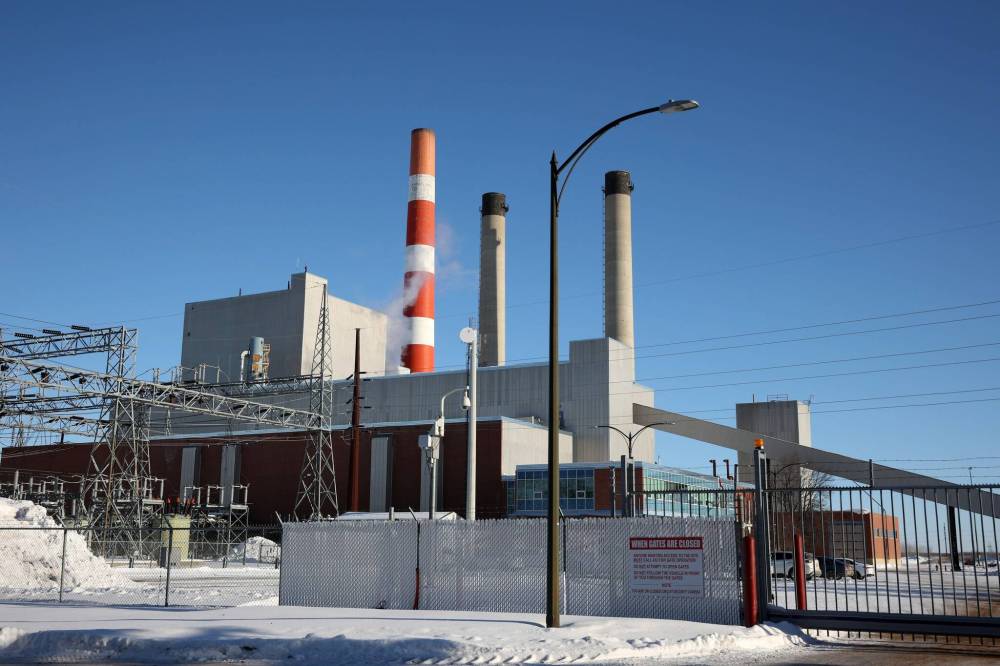
The Manitoba Hydro Brandon Generating Station off Victoria Avenue East. The provincial government is proposing a $3-billion combustion turbine facility at the site to meet the increasing demand for power. It is expected to be in place by 2030 at the latest. (Tim Smith/The Brandon Sun files)
What he really meant is that Manitoba has become increasingly reliant on electricity imports from the U.S. and, given the unstable and occasionally vindictive nature of the Trump administration, that exposes our province to an unacceptable level of risk.
That’s a valid position under the current circumstances, further strengthened by the reality that growth in demand for electricity in the province will soon exceed the amount of electricity Manitoba Hydro is capable of generating.
In fact, given declining water levels in the province over the past few years, which has caused the need for increased power purchases from U.S. utilities, it is arguable that Hydro is already unable to keep pace with the existing level of demand — thus making it even more urgent that a reliable supply of additional electricity be found or created.
That explains why the government is proceeding with its plan, but is it the right plan? Quentin disagrees, saying that “It should be clear that a gas-fired power plant is by no means a ‘risk-free’ choice. Every new piece of fossil fuel infrastructure is like a bullet in the climate-change gun, the barrel of which we are all facing down now.”
He makes a good point. The construction of a large gas-powered plant may help to address our electricity shortage and protect us from rate and political volatility south of the border, but it will also mean higher greenhouse gas emissions here in Manitoba and all the harm that will come from those emissions — most notably, an elevated risk of drought and wildfires.
Sadly, this problem was avoidable. In 2018, I was told by a senior Manitoba Hydro executive that the utility would be unable to meet growing demand by 2028 at the latest. Despite that reality, the government didn’t even publicly disclose the problem until 2022 and still hasn’t come out with a comprehensive, coherent plan to solve it.
They have squandered years of time, when they should have been working hard to prevent the inevitable energy shortage.
For two years they have been saying that part of the solution will include 600 megawatts of wind power produced by Indigenous-owned entities, but there is scant evidence those projects are anywhere close to proceeding.
A gas-powered plant in Brandon may put a short-term Band-Aid on the projected shortage, but it will increase greenhouse gas emissions, it will be years before it is producing power, and it will only offset a fraction of the projected 10,000 to 16,000 megawatts of electricity that will be needed by 2040.
Where will the rest of the power we need come from, and when? Will it come with even higher greenhouse-gas emissions?
The government isn’t saying, but it announced last week that it has signed onto a proposal to expand and modernize interprovincial electricity transmission lines. The plan would link neighbouring electric utility systems, allowing them to share and trade electricity, providing valuable import capacity during periods of peak demand or unexpected system stress.
That suggests the government plans to solve the shortage by importing electricity from nearby provinces like Saskatchewan and Alberta. The problem with that, however, is that electricity is produced in those provinces via coal and/or natural gas-powered facilities. That would mean even more greenhouse gases in the air above Manitoba.
Again, it didn’t have to be this way. Two years ago, I pointed out that the Alberta government had suspended approvals for renewable energy projects over one megawatt, including wind, solar and geothermal projects.
I noted that a total of 118 projects impacted by the moratorium, comprising 12.7 gigawatts of solar, 5.3 GW of wind and 1.5 GW of battery energy storage as part of solar projects. The total investments supporting the projects were estimated to be just over $33 billion, with an additional $263 million in yearly revenue from municipal taxes and land leases.
The planning, development and construction of the projects were predicted to generate an estimated 24,000 full-time job-years. Beyond that, renewable energy projects in Alberta attracted almost $5 billion in investments between 2019 and 2023 and had created approximately 5,500 jobs.
I argued that Manitoba had a once-in-a-lifetime opportunity to solve its future electricity requirements, attract billions of dollars in new investment, create thousands of good-paying jobs and add millions of dollars in annual tax revenue for both the province and local governments.
I suggested that the government invite the proponents of those projects to consider coming to Manitoba, as it could put our province on a path to clean, green and sustainable prosperity.
My advice was ignored then, but the opportunity may still exist. Why isn’t our government acting on it?