
Harper’s archival collection includes one million photos, a quilt and a hockey card
Advertisement
Read this article for free:
or
Already have an account? Log in here »
We need your support!
Local journalism needs your support!
As we navigate through unprecedented times, our journalists are working harder than ever to bring you the latest local updates to keep you safe and informed.
Now, more than ever, we need your support.
Starting at $15.99 plus taxes every four weeks you can access your Brandon Sun online and full access to all content as it appears on our website.
Subscribe Nowor call circulation directly at (204) 727-0527.
Your pledge helps to ensure we provide the news that matters most to your community!
To continue reading, please subscribe:
Add Brandon Sun access to your Free Press subscription for only an additional
$1 for the first 4 weeks*
- Enjoy unlimited reading on brandonsun.com
- Read the Brandon Sun E-Edition, our digital replica newspaper
*Your next Free Press subscription payment will increase by $1.00 and you will be charged $20.95 plus GST for four weeks. After four weeks, your payment will increase to $24.95 plus GST every four weeks.
Read unlimited articles for free today:
or
Already have an account? Log in here »
OTTAWA – Former prime minister Stephen Harper has officially launched his archival collection, which includes more than a million photos, a quilt and a hockey card.
Harper spoke about the collection at a panel Thursday alongside Canadian political historian Arthur Milnes and archive project leaders Élizabeth Mongrain and Darrel Reid.
Mongrain, who is a manager and senior strategic adviser at Library and Archives Canada, said the project is the largest digital archive acquisition ever undertaken by Library and Archives Canada.
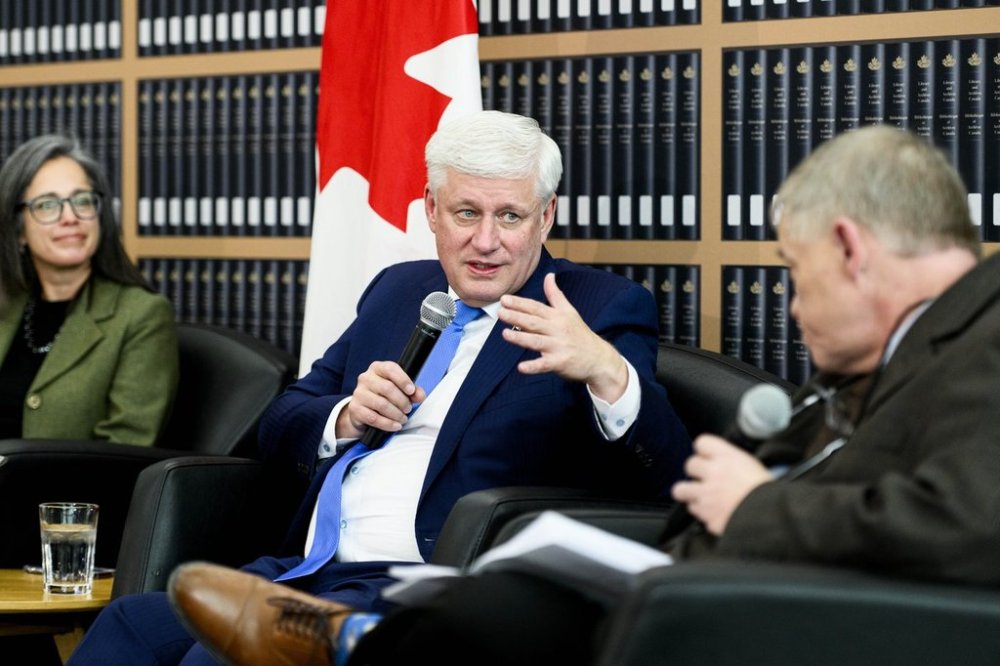
She said it includes more than 400,000 digital records, 4,000 sound recordings and many other types of media, like plaques, architectural drawings and even temporary tattoos that were sent to the former prime minister.
The collection also includes a 1937-1938 season hockey card featuring Toronto Maple Leafs player Charles Conacher.
Library and Archives Canada said the card was a gift from Lionel F. Conacher, grand-nephew of Conacher.
Harper, who served as prime minister from 2006 to 2015, said he sat for about 50 hours of video interviews at his home in Alberta to discuss his life, political career and time in office — creating an “oral history” that will be accessible to the public in 2030.
Until then, said senior political archivist Kelly Ferguson, Canadians can view thousands of records online, including photos, audiovisual files and speech transcripts.
Harper said at the event that he hopes some of the collection’s users will become the political leaders of the future.
“They may completely disagree with everything we did but look at how we did things,” Harper said. “I hope that, when people look through the records, they will understand the real benefit of … taking a real serious approach and indirectly thinking down the road about the record you will create.”
This report by The Canadian Press was first published Feb. 5, 2026.