
Brandon planning for growth
Advertisement
Read this article for free:
or
Already have an account? Log in here »
We need your support!
Local journalism needs your support!
As we navigate through unprecedented times, our journalists are working harder than ever to bring you the latest local updates to keep you safe and informed.
Now, more than ever, we need your support.
Starting at $15.99 plus taxes every four weeks you can access your Brandon Sun online and full access to all content as it appears on our website.
Subscribe Nowor call circulation directly at (204) 727-0527.
Your pledge helps to ensure we provide the news that matters most to your community!
To continue reading, please subscribe:
Add Brandon Sun access to your Free Press subscription for only an additional
$1 for the first 4 weeks*
*Your next subscription payment will increase by $1.00 and you will be charged $20.00 plus GST for four weeks. After four weeks, your payment will increase to $24.00 plus GST every four weeks.
Read unlimited articles for free today:
or
Already have an account? Log in here »
Over the last many months I have written here and spoke publicly about the need for Brandon to grow if we are going to become the city people want and the region Manitoba needs.
In my column in January, I noted the presentation Gerald Cathcart — the City of Brandon’s director of economic development — gave at last October’s economic summit, which noted that Brandon’s population growth since the last published census has been quite significant.
In my estimation that pace of growth is not likely to continue in the near term, as it appears to have been heavily fuelled by immigration. And, as we know, since January 2024 there has been a significant shift in immigration policy in Canada.
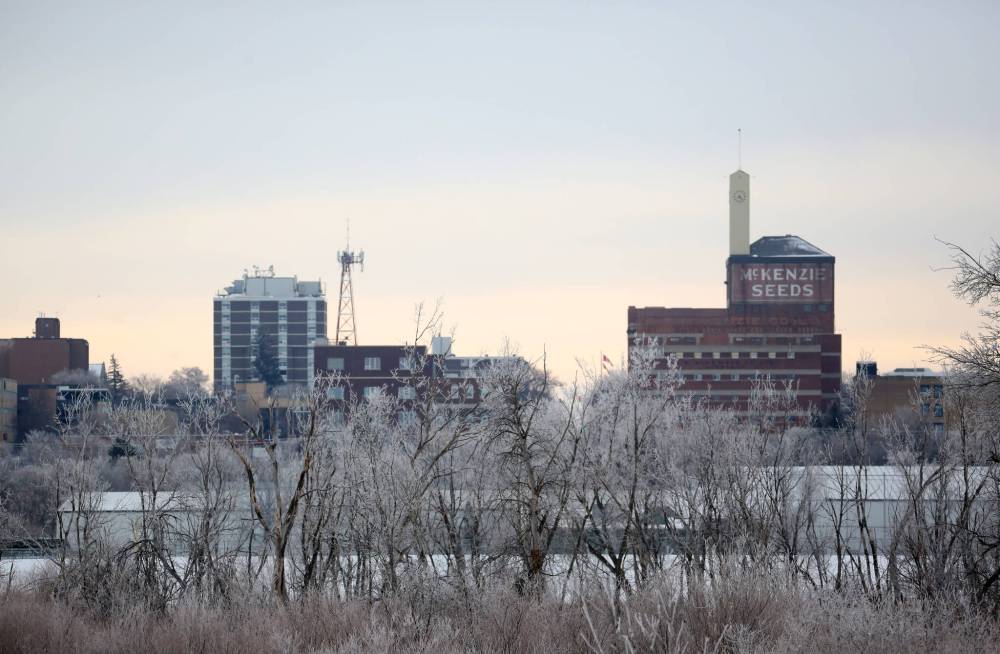
“Many of the things people want for Brandon will be supported by growth,” Assiniboine College president Mark Frison writes. (Matt Goerzen/The Brandon Sun files)
In November 2022, then-minister Sean Fraser announced that the country would move from welcoming 410,000 immigrants annually to 550,000 by 2025. But when Marc Miller became minister, he moved to reverse course and the current new levels plan has the level cut to 380,000 through 2028.
This shift, combined with a decisive plan to reduce the number of temporary residents in the country, has caused the parliamentary budget officer to note that the possibility of Canada’s population shrinking exists. Not necessarily a favourable economic outcome.
While many groups have worried about the economic consequences of this change, the Canadian population is generally in favour of the move to tap the brakes on immigration. For example, a 2025 poll by Environics showed 56 per cent of Canadians believed we were still accepting too many immigrants.
The Government of Canada has even slashed highly successful Provincial Nominee Programs. This has been a mistake in my view.
Provincial Nominee Programs allow for better targeting of the “where” of immigration. While Canadians do enjoy the freedom of mobility, this might at least allow for better matches between provinces that need more immigration, like Manitoba, and provinces that are less well positioned to support higher levels, like Ontario.
It also allows provinces to tailor the “who” to the skills and talents they need to power their economies.
For Brandon, we had a number of successful initiatives including the Regional Immigration Pilot, a new regional Provincial Nominee initiative and post-secondary growth that allowed for a significant expansion of programs and population gain. These allowed for more targeted action but will all likely be compromised to some extent in the new policy environment.
Thanks for indulging that digression, but I think it’s important context for what we need to do next, which is assemble a plan for our growth.
One needs to start by acknowledging that in a society like Canada, managing population in a city or region is not like filling a glass of juice nor like being a bouncer at a nightclub. There are things a region can do which might encourage or discourage population changes but there is no control in an absolute sense.
Currently, the City of Brandon maintains and uses population projections. They use information produced by Statistics Canada. These often include likely, high and low scenarios for population change. This information is largely a simple projection based on historical data.
This is helpful to the city when it looks at how it might allocate its resources to infrastructure, like housing needs. In my view, the city is being responsible and planning for what they see in the data, but this might be different than deliberately trying to influence the levels through policy measures.
Other groups also rely of similar data sources for planning. The Brandon School Division, for example, needs to keep a close eye on what’s happening. You’ll recall before Maryland Park School was built, many schools were well over capacity. Weeks before that school even opened, it was already too small to accommodate all of the kids in the catchment. Thus, an addition is required.
It is not unusual in the last decade for the lived experience of the school division to have eclipsed what the StatCan projections might have suggested.
As we look to grow to be the city we want to become, I believe it’s advantageous to have a more deliberate plan, even while acknowledging the limitations of control.
As part of this effort, the Grow Brandon alliance is bringing together multiple parties from across the region including the Brandon Chamber of Commerce, City of Brandon Planning, Brandon School Division, Prairie Mountain Health, CFB Shilo, the Rural Development Institute at Brandon University, Westman Immigrant Services, Assiniboine College, the Brandon Friendship Centre and others to help critically assess the population forecasts.
This includes bringing on-the-ground knowledge of initiatives, like expansion of the workforce at CFB Shilo or alterations to local immigration efforts, that can ground projections in reality and help for planning.
Part of this will help to verify if a Brandon population of 80,000 by 2040 is realistic. In my column in January, I noted that with a four per cent annual growth rate (that we saw from 2021-24) Brandon’s population would hit 100,000 by 2040! For me that feels like a very big stretch. Further, I don’t feel like we are well positioned in our current development efforts to have the receptor capacity (e.g. housing starts in the next 10 years) for that level of growth.
Our historical growth rate is much lower, closer to one per cent. That may be also low for where we are headed, or where we should be headed.
One thing we know from the last 15 years is that we are likely going to grow, whether we plan for it or not. So, we may as well work together and plan for it.
Many of the things people want for Brandon will be supported by growth. Whether that’s a vibrant sustainable economy, improved recreation options, diversified entertainment, better air access or expanded retail and dining, more population helps to make these developments more viable.
If Manitoba is to achieve “Have Province” status by 2040, a vibrant Brandon needs to be part of that equation. If we are to achieve big things we need to work together and align our efforts.
I look forward to this next step in our evolution.