
War, climate change impact humanity
Advertisement
Read this article for free:
or
Already have an account? Log in here »
We need your support!
Local journalism needs your support!
As we navigate through unprecedented times, our journalists are working harder than ever to bring you the latest local updates to keep you safe and informed.
Now, more than ever, we need your support.
Starting at $15.99 plus taxes every four weeks you can access your Brandon Sun online and full access to all content as it appears on our website.
Subscribe Nowor call circulation directly at (204) 727-0527.
Your pledge helps to ensure we provide the news that matters most to your community!
To continue reading, please subscribe:
Add Brandon Sun access to your Free Press subscription for only an additional
$1 for the first 4 weeks*
- Enjoy unlimited reading on brandonsun.com
- Read the Brandon Sun E-Edition, our digital replica newspaper
*Your next Free Press subscription payment will increase by $1.00 and you will be charged $20.95 plus GST for four weeks. After four weeks, your payment will increase to $24.95 plus GST every four weeks.
Read unlimited articles for free today:
or
Already have an account? Log in here »
I was struck by a news report recently about the health risks of the current war in the Middle East. Well, I guess, what would you expect?! After all, missiles and drones falling, blowing up buildings and vehicles, are surely going to cause death and terrible injury, and ultimately if soldiers get involved on the ground even more death, destruction to infrastructure and economies, and trauma for generations.
But the health impacts that the news report was focusing on were climate and environment-related. Oil depots being targeted and destroyed causes huge fires, black smoke and air filled with poisonous particles breathed in by human populations. What doesn’t kill people now will likely cause illness and death for adults and children in the coming months and years. In this case, war is changing an already damaged climate, making it much worse for health in that region, with the risk of it spreading further afield. Our current greenhouse gas emissions are having oily air added to the atmosphere.
The World Health Organization documents, monitors and tries to mitigate changes in our planet’s climate and reports that almost half the world’s population is vulnerable to emergencies such as heatwaves, wildfires, floods and tropical storms, which are increasing in frequency and intensity. Heat, for instance, is expected to cause a quarter million extra deaths from 2030 to 2050 by directly causing hunger, malaria, diarrhea and heat stress. Along with affecting lives directly, climate change is causing losses and costs of US$2 to 4 billion per year to health-care systems and economies.
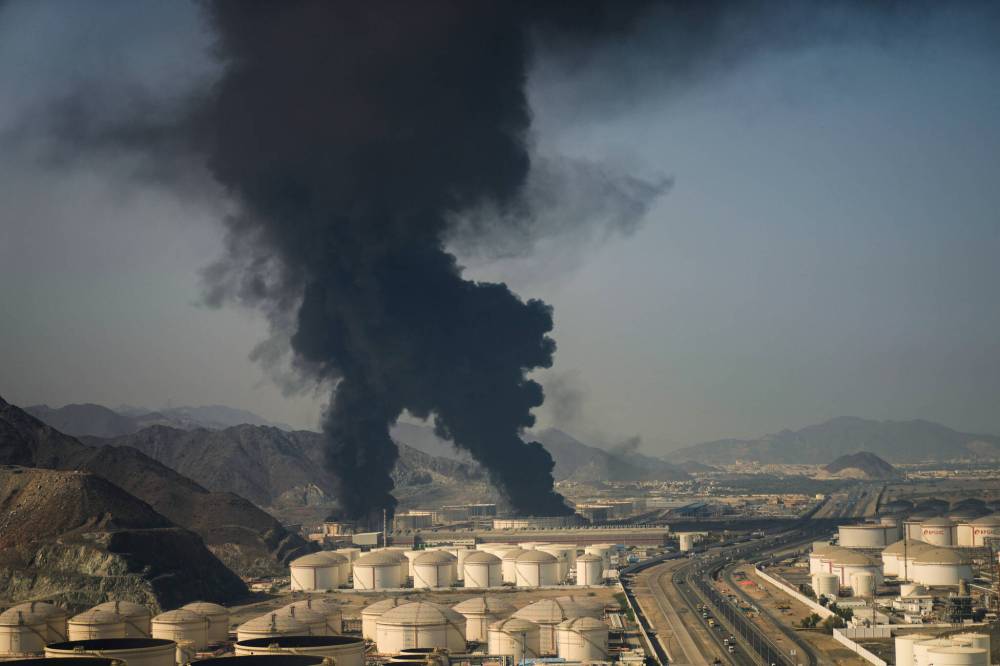
Plumes of smoke rise from an oil facility in Fujairah, United Arab Emirates on March 14. The war in Iran has added to the challenges faced by humanity, Zack Gross writes. (The Associated Press files)
Along with the 3.6 billion people affected by emergent climate situations, our global environment is also showing other signs of unsustainability. WHO data shows that 2 billion people lack safe drinking water and 600 million people suffer from food-borne illnesses. Climate change has affected crops, particularly in vulnerable poorer countries, with 770 million people currently facing hunger in Africa and Asia. This particularly affects children and seniors. Poverty and disease, along with war and climate, have also been behind massive migration in recent years.
Progress was being made in dealing with many of these issues until recent changes in world politics and policies. Aggressive and authoritarian leadership in key countries, leading to wars on the one hand, trade disruption, and cutbacks in research, aid and co-operation on the other hand are key factors in today’s backsliding world. Powerful countries are spending their money in destructive ways and cutting back on social, environmental and health programming to cut taxes and pay for their adventures. Middle powers are also cutting back, in some cases just so their economies survive.
While many larger programs have disappeared or been reduced, there is still some good news. The Brandon-Westman-based international development organization, The Marquis Project, for instance, has a small project with women and youth farmers in Tanzania, East Africa, supporting their efforts to mitigate the affects of climate change on their local farms. Training through extension programs, introduction of climate-resistant crops and new equipment, and supporting those with the most need, will make a difference.
The fair trade movement around the world is working with producers and workers who are most often under-valued, and the victims of what is called “modern slavery,” to help their communities change farming techniques, acquire new tools, get better prices and enter the world market with their crops. These include coffee, bananas, sugar, cocoa products and tea. On a trip to Peru to visit fair trade co-operatives a few years ago, I was told by plantation workers that every time they sold a banana, they had lost money. But by joining the fair trade system, they were able to market their products internationally, get better paid, and bring new benefits to their communities, such as schools, clinics, training and modern equipment.
A key part of the work of small organizations like Marquis or Fairtrade Canada is to confront the challenge of climate change. But, these small steps cannot easily stand up to decisions made by powerful governments, companies or classes. One hopes that the pendulum will swing back to progress on the social, economic and environmental side in the coming years, but much damage will have been done.
People see what is happening with war and climate change in our world. They make decisions as they better understand what is going on. We may choose not to travel to certain countries or not buy certain products. We may choose to support certain organizations or causes with our time and money. We may change aspects of our lifestyle, how we vote, or share our concerns in public forums. All of these options may help us turn the current situation around.
» Zack Gross is president of the Marquis Project, a Brandon-Westman based international development organization.