
Bill 13 could make life worse for both landlords, renters
Advertisement
Read this article for free:
or
Already have an account? Log in here »
We need your support!
Local journalism needs your support!
As we navigate through unprecedented times, our journalists are working harder than ever to bring you the latest local updates to keep you safe and informed.
Now, more than ever, we need your support.
Starting at $15.99 plus taxes every four weeks you can access your Brandon Sun online and full access to all content as it appears on our website.
Subscribe Nowor call circulation directly at (204) 727-0527.
Your pledge helps to ensure we provide the news that matters most to your community!
To continue reading, please subscribe:
Add Brandon Sun access to your Free Press subscription for only an additional
$1 for the first 4 weeks*
- Enjoy unlimited reading on brandonsun.com
- Read the Brandon Sun E-Edition, our digital replica newspaper
*Your next Free Press subscription payment will increase by $1.00 and you will be charged $20.95 plus GST for four weeks. After four weeks, your payment will increase to $24.95 plus GST every four weeks.
Read unlimited articles for free today:
or
Already have an account? Log in here »
Four or five years ago, a friend of mine inherited a large amount of cash after the death of his parents. He decided to invest the money and thought a rental property — an older home with a few suites — could be a lucrative long-term investment for him and his family. That is, until he started doing the math.
He looked at a number of rental properties that were for sale in Brandon and realized the rents being paid by the tenants of those properties totalled, at best, 10 per cent of the asking prices of the various buildings. That potential “return on investment” figure didn’t include reductions for property taxes, mortgage payments, maintenance and repair costs, utility charges and several other likely expenses.
Based on those calculations, he concluded that he would be very lucky to net five per cent annually on his investment (before income taxes) — and that was without factoring in the hassle of managing the property, complying with regulatory requirements under the Residential Tenancies Act, collecting rents, repairing damage and dealing with eviction issues when they arise.
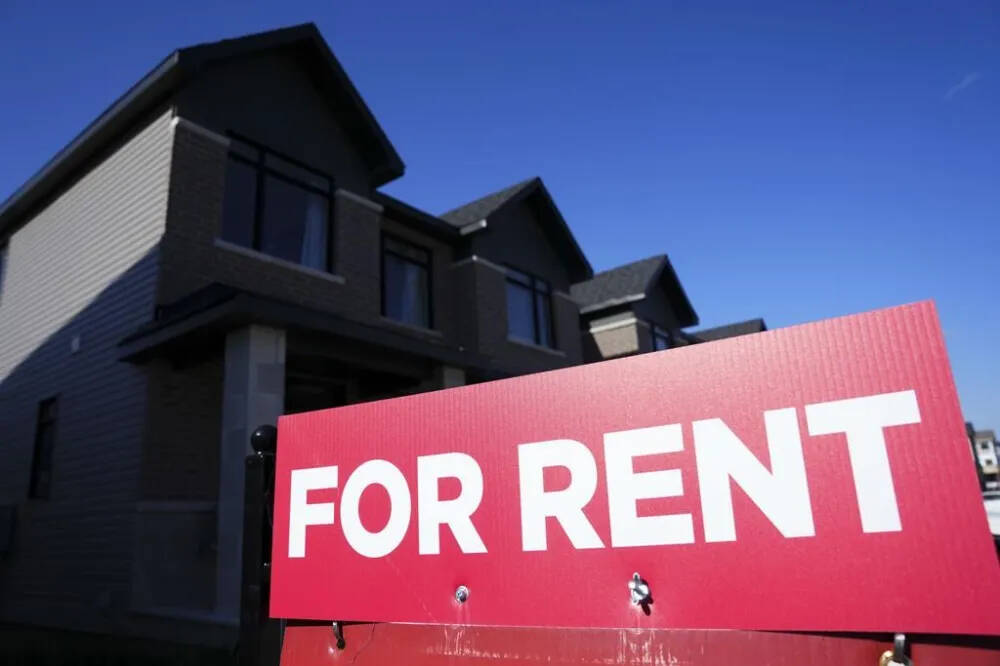
While the provincial government recently introduced Bill 13 — which it calls the “largest expansion to rent controls in decades” — Deveryn Ross contends that “(w)hat’s needed is an approach that ensures the ongoing availability of housing units that are needed in the province at rental rates Manitobans can afford, while still giving landlords a viable opportunity to earn a reasonable rate of return on their investment.” (The Canadian Press files)
He was concerned he would be effectively buying a second job with no guarantee of actually earning any money from it, and a genuine possibility that he could actually lose money.
At the time, mutual fund returns were soaring and banks were paying more than five per cent interest on long-term investments, so my friend made a logical decision that involved far less risk and inconvenience. He and his wife maximized their contributions to their respective TFSAs and RRSPs, and they invested the rest through his bank.
This story is far from unusual. I know several people who were considering getting into the rental game, but figured out there was no realistic hope of consistently earning any profit. I know even more who own rental properties and are planning on selling and getting out of the business. They all say it’s an impossible game that becomes even more challenging each year.
They point out that the allowable guidelines for residential rent increases in Manitoba have totalled just 6.5 per cent over the past five years, while the consumer price index increased by 18 per cent during that time frame. For this year, the increase is capped at just 1.8 per cent. Beyond that, the Kinew government has also eliminated the 50 per cent school tax rebate for rental properties.
They complain that Bill 13, recently introduced by the Kinew government, will make matters even worse. The legislation, which the government characterizes as the “largest expansion to rent controls in decades,” will increase the monthly rent exemption from $1,670 to $2,000. As a result, units that are rented for up to $1,999 monthly will no longer be exempt from those guidelines, and will now be subject to the annual increase limits.
Beyond that, the bill further limits a landlord’s ability to pass capital expenses associated with the property — for example, a new roof — on to tenants via increased rents. Such a change will force rental property owners to choose between taking on costs that will further reduce their profitability or postponing necessary repairs for as long as they can.
Most will choose the second option.
All this adds up to a conundrum for the government. On one hand, they have committed to “make life more affordable for renters,” and Bill 13 is a big step toward accomplishing that goal, in the short term at least.
On the other hand, however, the steps they are taking to limit rent increases are making it increasing difficult for landlords to even hope of earning a profit from their rental properties — and that could end up reducing the supply of rental housing in the province.
In fact, this may already be happening. I know of several rental properties that have either been converted to single-family homes or to properties in which the owners live in part of the property and rent out the rest or have other family members living in those units. Under each scenario, the result is fewer housing units available for renters at a time when demand for rental accommodations has increased dramatically.
Beyond that important reality, it doesn’t make economic sense to build new rental housing that cannot turn a profit for the owner who is taking on the construction cost and risk. Bankers generally refuse to finance projects that don’t have a realistic hope of making money year over year.
This is a tough one for the NDP government. Renters are an important part of its voter base, but Bill 13 may ultimately make things worse for renters in the long run. What’s needed is an approach that ensures the ongoing availability of housing units that are needed in the province at rental rates Manitobans can afford, while still giving landlords a viable opportunity to earn a reasonable rate of return on their investment.
Achieving that objective won’t be easy, but the government needs to show that it understands the problem and has a plan to fix it.