
Inflation expected to jump in March as Iran oil shock enters price data
Advertisement
Read this article for free:
or
Already have an account? Log in here »
We need your support!
Local journalism needs your support!
As we navigate through unprecedented times, our journalists are working harder than ever to bring you the latest local updates to keep you safe and informed.
Now, more than ever, we need your support.
Starting at $15.99 plus taxes every four weeks you can access your Brandon Sun online and full access to all content as it appears on our website.
Subscribe Nowor call circulation directly at (204) 727-0527.
Your pledge helps to ensure we provide the news that matters most to your community!
To continue reading, please subscribe:
Add Brandon Sun access to your Free Press subscription for only an additional
$1 for the first 4 weeks*
- Enjoy unlimited reading on brandonsun.com
- Read the Brandon Sun E-Edition, our digital replica newspaper
*Your next Free Press subscription payment will increase by $1.00 and you will be charged $20.95 plus GST for four weeks. After four weeks, your payment will increase to $24.95 plus GST every four weeks.
Read unlimited articles for free today:
or
Already have an account? Log in here »
OTTAWA – Statistics Canada will reveal the early impacts of the Iran war’s oil price shock on inflation when the agency reports its consumer price index for March on Monday.
A Reuters poll shows economists widely expect the headline inflation rate rose to 2.5 per cent in March, up from 1.8 per cent in February, according to LSEG Data & Analytics.
RBC senior economist Claire Fan said the bank is also expecting a 0.7-percentage-point jump in the headline inflation rate in March.
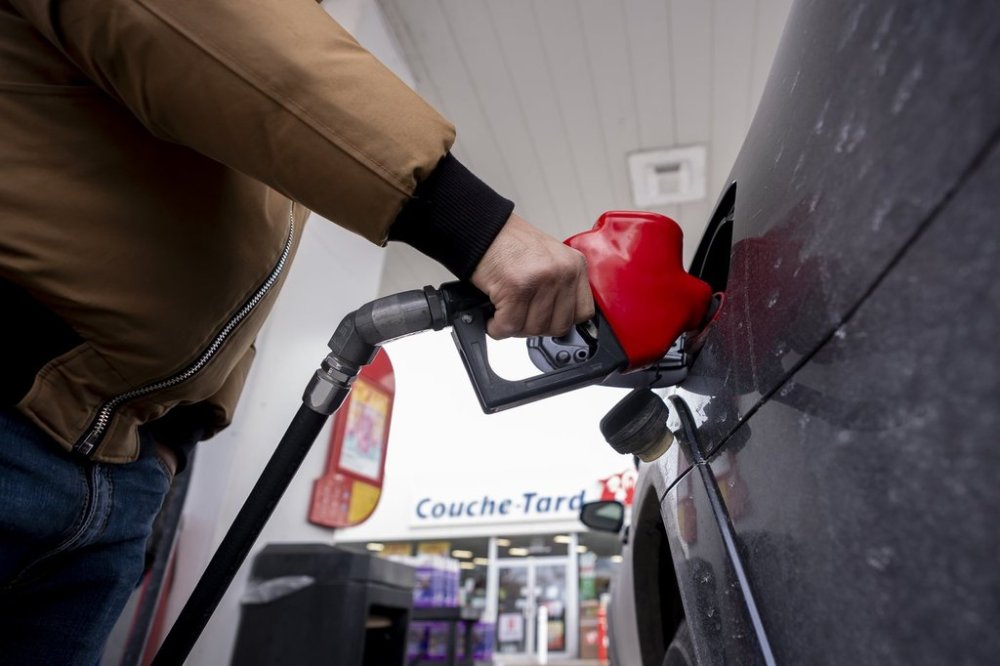
“Most of that will just be driven by elevated gasoline prices as well as diesel prices,” she said.
The price of oil has surged in recent weeks after Iran responded to attacks from the United States and Israel by shuttering the Strait of Hormuz, where a fifth of the world’s fuel normally transits.
Global oil prices tumbled more than 10 per cent early Friday after Iran said that the Strait of Hormuz is now fully open, allowing tankers to exit the Persian Gulf again and carry crude to customers worldwide.
Fan said the acceleration would be even higher, but the removal last year of the consumer carbon price is still taking some steam out of the annual price comparisons.
She said she expects the headline rate will top three per cent in April when the end of the carbon tax drops out of the inflation calculation.
Prime Minister Mark Carney announced earlier this week that the federal government will remove excise taxes on fuel starting Monday through to Labour Day, a move expected to take 10 cents off the price of a litre of gas and four cents per litre off diesel.
With the tax break coming into effect mid-month, April’s inflation figures won’t see the full benefit of that relief, Fan noted. But by May, she projects the headline inflation rate will be two tenths of a point lower than it would’ve been otherwise with the excise tax removed.
Bank of Canada governor Tiff Macklem said last month he’s also expecting a near-term jump in inflation, but suggested the central bank would look through the initial price shock from the Iran war as monetary policy-makers gear up for their interest rate announcement on April 29.
Macklem spoke to reporters Friday on the sidelines of the International Monetary Fund meetings in Washington. He said that central bank officials around the world are grappling with the question of timing when it comes to setting interest rates.
“We’re all feeling like, you don’t want to jump too early and raise interest rates and lower growth, particularly when growth is already weak. On the other hand, you don’t want to be late and let inflation get a hold and get entrenched,” he said.
Macklem said Canada was at a good starting point entering the Middle East conflict with underlying inflation showing signs of stability in recent months.
With the economy in “excess supply” — a term economists use when businesses are overproducing compared to consumer demand — monetary policy-makers at the central bank weren’t expecting higher prices from the Iran war shock to pass quickly through to goods and services in Canada, he said.
Those kinds of conditions separate the current inflationary episode from the post-pandemic run-up in prices, Macklem said. That recovery period was marked not only by supply chain constraints amid Russia’s invasion of Ukraine, but also by fervent consumer demand as COVID-19 restrictions lifted and households deployed savings.
“You’ve got to look at the whole situation … there’s some elements that may be similar but you’ve got to look at all the elements together,” Macklem said.
Fan said she’s also watching for how higher energy costs could filter into other parts of the consumer basket. She said the price of jet fuel has seen “quite a substantial increase” in the Middle East conflict, which could spread in the form of higher air freight costs and pricier airfares for consumers.
“But even there it potentially could take a couple of months for that to start actually showing up in consumer prices here in Canada,” she said.
In addition to the March inflation data, the Bank of Canada will be taking cues from the Monday release of its own quarterly surveys of businesses and consumers. The business outlook survey in particular gives the central bank a look into how much firms might be planning to raise prices and where business leaders expect inflation to wind up in the coming years.
Macklem said the Bank of Canada won’t be too worried if they see near-term inflation expectations rise in surveys. But if those expectations start to shift higher over the medium- or long-term, that would spark some concern, he said.
Beyond the gas pumps, Fan said she expects food inflation to cool somewhat in March, due in part to other past tax changes from the federal government.
Ottawa’s two-month “tax holiday” ending mid-February 2025 applied to restaurant food and some groceries. Food inflation has been higher in recent months, in part because of comparisons to the tax break’s artificially lower prices from a year ago.
Come March, those comparisons will normalize, which Fan said will deliver some relief in food inflation even as items like beef and coffee continue to face price hikes.
This report by The Canadian Press was first published April 17, 2026.
— with files from The Associated Press.