
‘Electric Playground’ creator Victor Lucas changed the game — by putting it on TV
Advertisement
Read this article for free:
or
Already have an account? Log in here »
We need your support!
Local journalism needs your support!
As we navigate through unprecedented times, our journalists are working harder than ever to bring you the latest local updates to keep you safe and informed.
Now, more than ever, we need your support.
Starting at $15.99 plus taxes every four weeks you can access your Brandon Sun online and full access to all content as it appears on our website.
Subscribe Nowor call circulation directly at (204) 727-0527.
Your pledge helps to ensure we provide the news that matters most to your community!
To continue reading, please subscribe:
Add Brandon Sun access to your Free Press subscription for only an additional
$1 for the first 4 weeks*
- Enjoy unlimited reading on brandonsun.com
- Read the Brandon Sun E-Edition, our digital replica newspaper
*Your next Free Press subscription payment will increase by $1.00 and you will be charged $20.95 plus GST for four weeks. After four weeks, your payment will increase to $24.95 plus GST every four weeks.
Read unlimited articles for free today:
or
Already have an account? Log in here »
TORONTO –
Victor Lucas, a pioneer of video game journalism who made a career out of shining a spotlight on Canada’s interactive entertainment industry, was celebrated as a “game changer” by his peers in Toronto on Thursday night.
Lucas, 58, is both the mind behind and principal presenter of “The Electric Playground,” a series showcasing the video game industry and profiling the developers behind the screen.
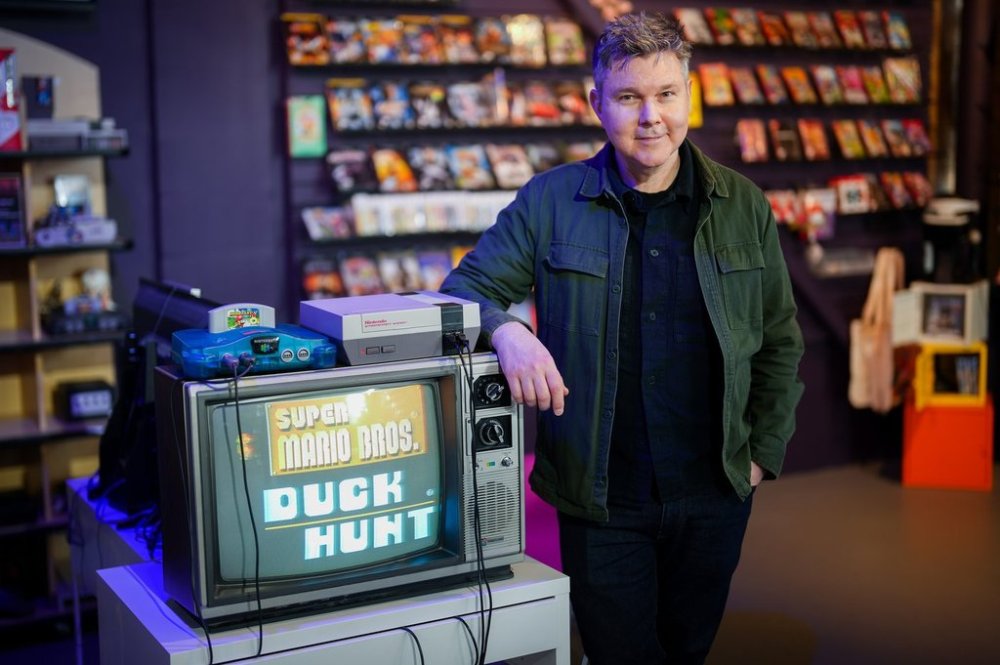
Canada’s gaming industry feted Lucas at the Canadian Game Awards on Thursday, where he received the night’s only standing ovation. After the formal show wrapped, a horde of game developers and fans gathered to shake Lucas’s hand, many asking for a picture while reminiscing about how they grew up watching him.
“It’s a surreal thing,” Lucas said in an interview ahead of the awards show.
“One of the things that I was not aware of, when you’re in the trenches just making your stuff, is that sometimes you can inspire people. And we didn’t set out to do that. We were just trying to make something that we were inspired by.”
“The Electric Playground” launched as a weekly show in 1997 and aired on a variety of channels across North America through its nearly two-decade broadcast run, including Rogers’ City TV and the tech-focused G4 Network. It went daily in the mid-2000s and spun off the half-hour “Reviews on the Run” program as demand for gaming content swelled.
Shows typically opened on Lucas, brimming with excitement about a new game or movie about to drop. Others were set at a gaming expo where Lucas or one of a rotating roster of co-hosts could give viewers a hands-on look at what was on the horizon.
In the 1990s, when the internet was not yet widespread and gaming media was relegated to magazines, the show was one of the few windows Canadians had into the burgeoning world of video games.
Carl-Edwin Michel, executive producer of the Canadian Game Awards, said Lucas was “prolific” at the turn of the century. He was among the few personalities in early gaming media in Canada that inspired Michel to pursue a career in the space.
Beyond reviews, previews and video game showcases, Lucas and his team made a point of visiting studios themselves and interviewing not just the creative heads, but the programmers, composers and other artists who did work under the hood of a video game.
Michel said deciding to name Lucas the awards show’s inaugural “game changer” came down to the generational impact the broadcaster has had on the industry. Many of the developers honoured at the game awards this year wouldn’t have been in that room if not for Lucas showing them what those careers look like, Michel believes.
“(Lucas) was the first one to shed the light on these studios and these workers and these people creating those amazing experiences,” he said.
Lucas said his own career path was not always so clear.
After a few years busing tables in Vancouver and trying his hand at acting in the early 1990s, Montreal-born Lucas said he felt a call to create something. He said he was feeling restless on a bus in Mexico, where he wrote down 100 ideas — names, concepts, blueprints — and settled on “The Electric Playground.”
He said the title evoked more than just video games, but he knew they would be the “beating heart” of the idea.
Lucas recalls walking into rooms with TV producers in the mid-1990s and pitching them on the gaming tsunami that was about to crash down on the entertainment industry.
By that point, the popular conceptions of video games were the fuzzy pixels of “Pac-Man” and “Super Mario Bros.” Lucas, a young upstart with no broadcast experience under his belt, was explaining to skeptical executives that consumers would soon be playing games that looked a lot more like Pixar’s “Toy Story.”
One producer told Lucas he could see the vision for one episode, but didn’t see what they would do for a second.
“We made 25 seasons, we made thousands of episodes. So we figured it out,” Lucas said.
“The Electric Playground” was a stepping stone for high-profile names in show business including Geoff Keighley, creator of the Game Awards south of the border, video game producer Jade Raymond and actress Evangeline Lilly.
Many faces from the show’s past appeared on screen at the game awards Thursday with an outpouring of love for Lucas and what his support meant for their careers. Former contributor Marissa Roberto, now a host at TSN, called Lucas “the godfather of gaming in Canada.”
Part of Lucas’s online content today includes re-airing classic episodes of “The Electric Playground” for a new audience on YouTube. In revisiting those episodes, he’s struck by the enduring quality of shows and he points to the collective effort at the time in making a show that had staying power.
He worries that spirit of collaboration is lost in modern gaming media, dominated by solo streamers and reactionary content.
This year’s Canadian Game Awards in Toronto — just the second fully in-person event for a show still finding its footing — arrived after a difficult few years for an industry that adds an estimated $5.1 billion to the domestic economy annually.
Some studios are shrinking or shuttering in Canada and globally as part of a hangover from the pandemic era when demand for in-home entertainment surged.
Michel acknowledged there’s a pall over the industry right now, but he said that does not deter him from shining a spotlight on great games being made in Canada.
“We understand that it is not an easy moment for the industry, but I think that it’s also really important to celebrate those great moments … because otherwise we’re just going to be in that spiral of negativity,” he said.
The story of his show could not be told, Lucas said, without considering the person who has been next to him from the bus in Mexico to the game awards in Toronto — his wife, Marcy Lavoie.
Lucas self-identifies as a dreamer, but he said what the show needed just as much in its early days was someone to manage the details and help turn those dreams into reality. That was Lavoie.
“She helped run the company and actually manage the people and the production entity that we became. My God, there would have been no EP without my wife,” he said.
The pair now have a daughter, Ruby, aged 14. Lucas speaks with pride about how his Ruby has started to help him make content for “The Electric Playground” in its ongoing life on YouTube.
Lucas said he’s sad the show is not in full production today to document the latest transformations in the gaming industry.
The show disappeared from traditional airwaves in 2015 after an agreement with Rogers expired, and Lucas never found another partner willing to put video games on TV when viewers were flocking to the online platforms that let them engage directly with gaming personalities.
That doesn’t mean trends in gaming media have passed the broadcaster by: in a full-circle moment Thursday night, Lucas received an additional award for content creator of the year. The grey-haired streamer acknowledged on stage that he is the “uncle” in a category filled with younger nominees.
If there’s a legacy to pass on to that next generation, he wants it to be that spirit of collaboration. Looking back on the studios he visited and the team he assembled to cover them, Lucas was adamant that the best experiences in gaming are not, for lack of a better term, single-player.
“People are interesting. These products are cool. These products are great. They’re so fun to play them and get lost in them, but it’s humans that are the story,” he said.
This report by The Canadian Press was first published May 23, 2026.