
Canada can help Lebanon — if Ottawa finds the political will
Advertisement
Read this article for free:
or
Already have an account? Log in here »
We need your support!
Local journalism needs your support!
As we navigate through unprecedented times, our journalists are working harder than ever to bring you the latest local updates to keep you safe and informed.
Now, more than ever, we need your support.
Starting at $15.99 plus taxes every four weeks you can access your Brandon Sun online and full access to all content as it appears on our website.
Subscribe Nowor call circulation directly at (204) 727-0527.
Your pledge helps to ensure we provide the news that matters most to your community!
To continue reading, please subscribe:
Add Brandon Sun access to your Free Press subscription for only an additional
$1 for the first 4 weeks*
- Enjoy unlimited reading on brandonsun.com
- Read the Brandon Sun E-Edition, our digital replica newspaper
*Your next Free Press subscription payment will increase by $1.00 and you will be charged $20.95 plus GST for four weeks. After four weeks, your payment will increase to $24.95 plus GST every four weeks.
Read unlimited articles for free today:
or
Already have an account? Log in here »
Canada has a historic responsibility and a profound national interest in preventing the total collapse of Lebanon, a nation with which we share deep cultural, familial and humanitarian ties.
Lebanon is again being torn apart and a terrifying security vacuum looms. Meanwhile, the United Nations Security Council is planning the withdrawal of the United Nations Interim Force in Lebanon (UNIFIL) by the end of 2027.
The UN’s passive observer model has failed to protect Lebanon’s sovereignty in the face of Hezbollah’s occupation on its southern border. Not surprisingly, Israel has responded to the escalations of violence against its territory.
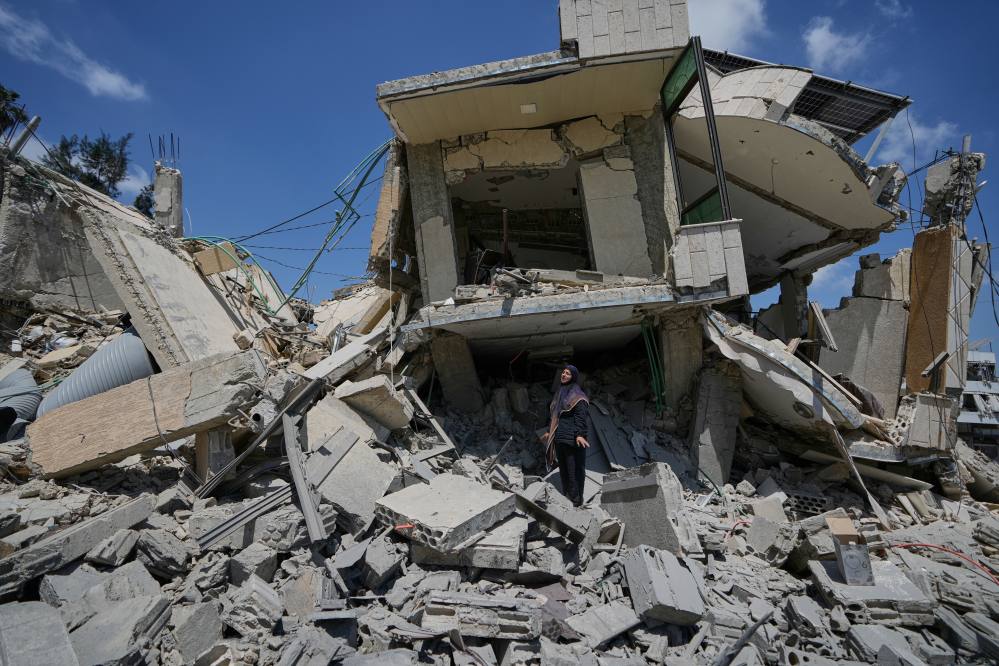
If Canada truly wishes to revive its legacy as a pillar of global stabilization and to give value to the idea that “middle powers” can make a difference, the Mark Carney government could leverage the specialized capabilities of the Canadian Armed Forces (CAF) and champion a robust international enforcement operation to secure Lebanon’s borders.
Canada is uniquely disposed to take a lead at this conjuncture. It is a loyal friend to Israel and because it has not been active in the Middle East since the days it placed peacekeepers in Gaza in the 1960s, it would be seen as a fresh approach in an area that desperately need its. Canada is also intimately known to the Lebanese. It is home to one of the largest Lebanese diasporas in the world. When stability fractures in Beirut or southern Lebanon, communities from Montreal to Vancouver feel the shockwaves.
More importantly, Canada has a general interest in a stable and peaceful Middle East and it could again play a vital role in the region, much as Lester Pearson did in 1956 with the idea of deploying an international peace force to defuse the Suez crisis.
It could be a cure for the persistent malaise hangs over Ottawa. For decades now, Canada’s contribution to global peace operations has dwindled to token deployments, hampered by an intense domestic focus on minority government survival, fiscal constraints and a risk-averse political culture.
Critics will argue that with the CAF facing severe recruitment shortages and deep equipment modernization pressures, Canada simply cannot afford another overseas deployment. But leadership is about choosing where to deploy scarce resources for maximum impact.
A stabilization mission in Lebanon is precisely the kind of high-stakes, multilateral intervention where Canadian expertise can punch well above its weight without requiring a massive, unsustainable infantry footprint.
Canada does not need to send thousands of boots on the ground to make a decisive difference. Instead, Ottawa should deploy the highly sought-after, specialized strategic enablers that the CAF excels at providing. A Canadian contribution could centre on high-level command-and-control structures, utilizing our experienced officers to lead a multinational headquarters.
Furthermore, the CAF’s tactical airlift capabilities, specialized military engineering units and advanced signals and intelligence personnel are exactly what a modernized enforcement mission requires to maintain secure communication lines, fortify border outposts, and manage complex logistics in a hostile environment.
The existing peacekeeping framework is fundamentally unequipped for this modern threat landscape. Established in 1978 and expanded under UN Resolution 1701, UNIFIL was restricted to monitoring hostilities and assisting the Lebanese Armed Forces, barred from actively entering private property or disarming militias on its own command.
This structural weakness allowed non-state actors to accumulate vast, sophisticated arsenals right under the noses of blue helmets. Now, as the UN Security Council prepares for UNIFIL’s final drawdown, merely extending a toothless mandate is no longer an option. The world needs a successor mission equipped with real teeth.
Canada must use its diplomatic leverage to advocate for a modernized coalition under a Chapter VII mandate from the UN Security Council. This upgraded international force must possess the explicit authority to enforce demilitarized zones, actively intercept illegal weapons smuggling and deploy defensive force to deter cross-border provocations.
Rather than violating Lebanese sovereignty, a powerful international buffer would protect it. It would grant the central government in Beirut the vital breathing room it needs to assert a true state monopoly on the use of force — disarming regional proxies while shielding its borders from devastating foreign incursions.
Critically, Canada’s own foreign policy requires this shift toward active enforcement. Global Affairs Canada has repeatedly condemned violations of international law, civilian casualties and attacks targeting peacekeepers. Yet, issuing strongly worded joint statements alongside European allies does little to alter the reality on the ground.
To truly protect humanitarian workers and uphold international humanitarian law, Ottawa must back its rhetoric with structural action. By spearheading a multilateral coalition that includes neutral regional players, Francophone partners and Arab League states, Canada can help shape a legitimate, diverse force that defies any narrative of Western occupation.
Lester Pearson famously pioneered modern UN peacekeeping to resolve the Suez Crisis, fundamentally shaping Canada’s identity on the world stage. Today, the Levant faces an even more volatile convergence of state decay and military escalation. If the international community stands by and allows the post-UNIFIL transition to devolve into an unmitigated security vacuum, the resulting humanitarian fallout and extremist expansion will reverberate globally.
It is time for Ottawa to step beyond the sidelines and overcome its domestic hesitations. By driving the creation of an empowered international security shield and backing it with elite CAF capabilities, Canada can protect millions of innocent civilians, support Lebanese sovereignty and prove that Canadian internationalism is still an active force for global peace.
» Patrice Dutil is a senior fellow at the Macdonald-Laurier Institute. One of his recent books is “Statesmen, Strategists and Diplomats: Canada’s Prime Ministers and the Making of Foreign Policy.” His article first appeared in The Hill Times.