
If it works in Ontario, why not in Manitoba?
Advertisement
Read this article for free:
or
Already have an account? Log in here »
We need your support!
Local journalism needs your support!
As we navigate through unprecedented times, our journalists are working harder than ever to bring you the latest local updates to keep you safe and informed.
Now, more than ever, we need your support.
Starting at $15.99 plus taxes every four weeks you can access your Brandon Sun online and full access to all content as it appears on our website.
Subscribe Nowor call circulation directly at (204) 727-0527.
Your pledge helps to ensure we provide the news that matters most to your community!
To continue reading, please subscribe:
Add Brandon Sun access to your Free Press subscription for only an additional
$1 for the first 4 weeks*
- Enjoy unlimited reading on brandonsun.com
- Read the Brandon Sun E-Edition, our digital replica newspaper
*Your next Free Press subscription payment will increase by $1.00 and you will be charged $20.95 plus GST for four weeks. After four weeks, your payment will increase to $24.95 plus GST every four weeks.
Read unlimited articles for free today:
or
Already have an account? Log in here »
Grid-scale battery storage has fundamentally changed the global energy landscape — and Manitoba needs to get on board.
Battery systems store large amounts of excess electricity for when it’s most needed. While they can be charged from any generation source, they are especially beneficial for integrating wind and solar power, which vary with weather and time of day. Batteries allow electrical grids to meet the need for firm, dispatchable, and affordable capacity using renewable energy, rather than relying on coal, nuclear, and fossil gas. They also provide numerous other benefits, including reducing overloading of transmission infrastructure and helping to regulate the grid’s frequency and voltage.
Average costs for grid-scale batteries plummeted by more than half between 2023 and 2025, and installations have skyrocketed in China, the U.S., Australia, and Europe. Texas now has 16,500 megawatts (MW) of battery storage, while California has 15,200 MW. Closer to home, Ontario recently awarded 640 MW of contracts to three battery storage projects in a competitive auction, with batteries beating out fossil gas-fired power plants on cost every time. One of these projects will be built near Dryden, only four hours east of Winnipeg.
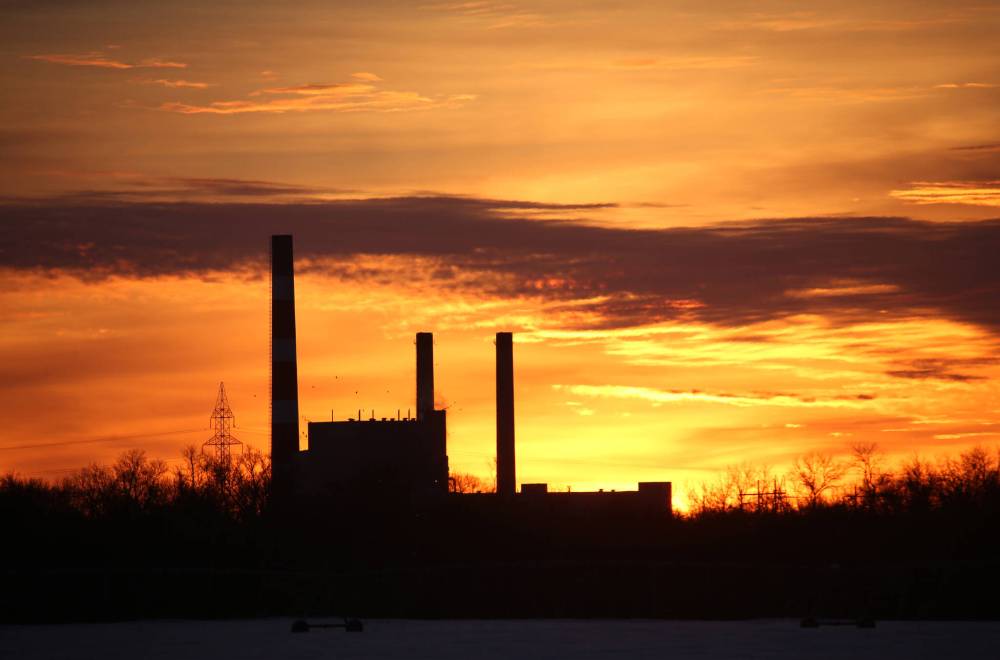
Manitoba Hydro is still betting on natural gas generating stations — like this one in Brandon — instead of considering battery storage solutions for peak energy needs. (Matt Goerzen/The Brandon Sun files)
Each battery system will provide eight hours of capacity but will cost considerably less than Ontario’s previous battery procurements, which provide only four hours of capacity. With this latest auction, Ontario has now secured 3,600 MW of battery storage capacity, including the operational Oneida (250 MW), Hagersville (300 MW), and Napanee (250 MW) projects. Almost all have significant Indigenous participation, with the latest procurements boasting 50 per cent First Nations ownership.
The Ontario example raises the question of why Manitoba isn’t taking a similar approach. Throughout the process of preparing and defending its 2025 Integrated Resource Plan (IRP), Manitoba Hydro has dismissed and marginalized battery energy storage, claiming it’s too expensive, inadequate for the province’s winter-peaking load profile, and redundant with existing energy storage in hydroelectric reservoirs. As a result, Hydro plans to develop only a minuscule five MW of battery storage by 2034, which is smaller than the installed capacity of a single modern wind turbine.
One of Hydro’s core criticisms of battery storage is its perceived cost compared with other options. In its IRP filed in early February, Hydro reported that a 100 MW, five-hour (500 MWh) battery project would cost about $300 million to build, with costs eventually dropping by 18 per cent by 2035 and 27 per cent by 2050. By late May, Hydro reported that the cost of battery capacity had already fallen by 14 per cent from its IRP estimate just a few months earlier. But even this revised estimate from Hydro was about 50 per cent higher than the results of the recent Ontario auction.
An affidavit submitted to Manitoba’s Public Utilities Board by the chief development officer of NRStor, one of the major battery storage companies in Canada, also reported that a 100 MW, eight-hour (800 MWh) battery costs $230 million to build — and only $175 million with the federal clean electricity investment tax credit — representing more capacity, at a far lower price, than what Manitoba Hydro assumes about batteries.
While overstating the costs, Hydro underestimates battery lifespan. It asserts that battery projects have 15-year lifespans, even though all recent storage contracts in Ontario are for 20 years. Hydro suggests that it takes an average of five years to build a battery storage system, while developers have completed actual projects in as little as 18 months.
At the same time, Manitoba Hydro significantly understates the combined role of expanded wind power, electricity imports, and hydroelectric generation in charging batteries during the winter months, further disadvantaging the assumed reliability contributions that batteries can make during peak hours.
Of Hydro’s stated concerns about battery storage, the most seemingly compelling is the argument that the province’s “existing hydroelectric system already provides large-scale energy storage and flexibility.” After all, Hydro has engineered Lake Winnipeg, Cedar Lake, and Southern Indian Lake to release or hold back water into the Nelson River (where Manitoba’s largest dams are) depending on supply and demand.
But there are several important limitations of existing reservoir storage. One is freely acknowledged by Hydro: that it takes weeks for water to flow from reservoirs to the Nelson, meaning that it isn’t well placed to respond to rapidly changing supply and demand. Another is that frequent ramping of hydro turbines can cause mechanical and socio-ecological issues. And then there’s the rising threat of droughts and low-flow years that may significantly undermine predictable storage capacities.
Battery energy storage helps solve these problems. While hydro reservoirs provide seasonal and multi-day storage, batteries can step up to smooth fluctuations over the timescales of hours, minutes, and even seconds. Their modularity allows for exact siting, sizing, and duration to ensure the greatest benefits to the grid. And, combined with increased wind generation and long-duration energy storage from hydro reservoirs, they offer a cost-competitive and climate-responsible alternative to building another 750 MW of gas-fired power (on top of the existing 280 MW already in operation).
Instead of spending billions of public dollars on more fossil gas turbines amidst devastating flooding, fires, and droughts, Manitoba Hydro and the provincial government should accept the massive advances in battery storage and invest in capacity solutions that help solve, not worsen, the crisis.
» James Wilt is policy development manager with Climate Action Manitoba. This column originally appeared in the Winnipeg Free Press.