
Can science museums help us talk about our mental health?
Advertisement
Read this article for free:
or
Already have an account? Log in here »
We need your support!
Local journalism needs your support!
As we navigate through unprecedented times, our journalists are working harder than ever to bring you the latest local updates to keep you safe and informed.
Now, more than ever, we need your support.
Starting at $15.99 plus taxes every four weeks you can access your Brandon Sun online and full access to all content as it appears on our website.
Subscribe Nowor call circulation directly at (204) 727-0527.
Your pledge helps to ensure we provide the news that matters most to your community!
To continue reading, please subscribe:
Add Brandon Sun access to your Free Press subscription for only an additional
$1 for the first 4 weeks*
- Enjoy unlimited reading on brandonsun.com
- Read the Brandon Sun E-Edition, our digital replica newspaper
*Your next Free Press subscription payment will increase by $1.00 and you will be charged $20.95 plus GST for four weeks. After four weeks, your payment will increase to $24.95 plus GST every four weeks.
Read unlimited articles for free today:
or
Already have an account? Log in here »
Moving beyond traditional roles as communicators of established knowledge, science museums are engaging more and more with difficult societal issues.
Despite the pressing importance of responding to mental health globally and locally, science museums have rarely been connected to this topic.
I argue, however, that science museums are increasingly becoming emotional sites where difficult issues, including mental health, can be approached.
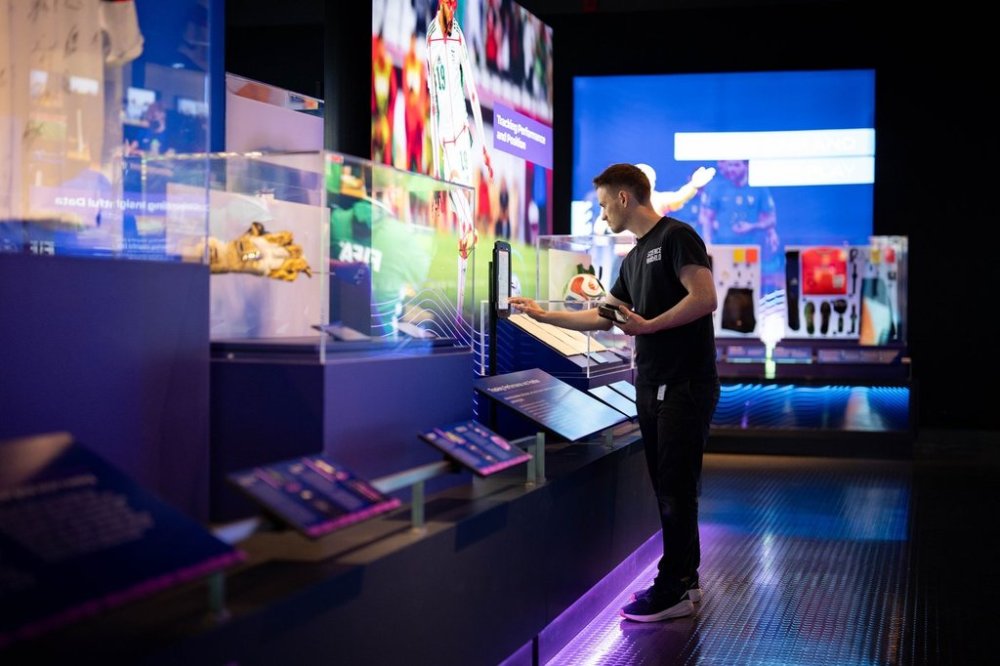
This affirmation is supported by research I conducted over the past 10 years in different countries, including Canada, Portugal, the United States and Finland.
Facing the challenge
Mental health is a key challenge of our times. Research from the World Health Organization shows how governments around the world have been responding to growing levels of loneliness, social isolation and mental distress.
In this scenario, social connection is increasingly recognized as a critical issue for public health and well-being.
My research examines a challenging transformation in how science museums understand their roles and purposes through initiatives with a mental health focus, as across the world, science museums begin to join conversations and develop work about this theme.
Finnish exhibit
My research about hosting a mental health exhibition at a science centre talks about an exhibition originally developed by Heureka, the Finnish science centre.
The exhibit engaged with mental health through personal narratives, immersive environments (such as a “schizophrenia room”), displays to help express emotions and scientific perspectives.
The Finnish Central Association for Mental Health was part of the exhibition’s scientific advisory board (as well as psychiatrists), and through this body, organizers worked with “peer experts” — people with lived experiences of mental health problems who had support learning how to communicate what they’d been through.
Organized around three main themes — “The Labelled,” “How does it feel” and “Go Crazy!” — the exhibit was intended to support visitors in safely talking about mental health and in developing empathy.
Finnish versus American context
In 2018, the exhibit was hosted by the Science Museum of Minnesota. At that time, I was part of a research team that studied how staff adapted the exhibit for the American audience. The research showed that the exhibition’s impact was not only on visitors, but also on the institution. In bringing the exhibit to the U.S., staff had to rethink content, representation and ethical responsibility.
Based on interviews, we traced how museum professionals navigated adjustments across cultural contexts. We heard how they encountered moments of tension, uncertainty and what researchers in the Museum of Science in Boston call “productive struggle.”
The original Finnish title of the exhibit was “Heureka Goes Crazy,” but the Minnesota staff rejected that wording because of its negative connotations. They called the exhibit “Mental Health: Mind Matters.”
Similar to what happened in Finland, adjustments to the exhibit were informed by an advisory committee of mental health professionals from the National Alliance for Mental Illness and the Wilder Foundation in St. Paul, Minn. Advice also came from community members and museum staff living with mental health conditions. With this guidance, and through careful consideration, staff redesigned content and video testimonials to better reflect local racial and cultural diversity.
Questions about representation, care
These experiences show that exhibiting mental health is not simply a matter of content delivery. It is a relational, emotional and ethical process shaped by questions of representation, social inclusion and care. My research also showed that emotions are not external to museum practice but central to how exhibitions are designed, curated and experienced by staff.
Moments of productive struggle have the potential to foster a shift in science museums.
In preparing for and hosting the 2018 exhibition, U.S. staff struggled with issues of stigma, inclusion, diversity and the risks of misrepresentation. They had to rethink, in their own context, what it means for a science museum to publicly engage with a topic that is deeply personal, socially sensitive and unevenly experienced across communities.
COVID-19 shifts in Portugal
“Mind Matters” is not an isolated case. In another example from my current research related to science museums and the COVID-19 pandemic, mental health also emerged as an important area of museum work. The study focuses on how staff see the impact and lessons of the pandemic in their own museums.
In 2024, as part of this work, a colleague and I visited the Museu Nacional de História Natural e da Ciência (National Museum of Science & Natural History) in Portugal. Interviews with staff revealed how the pandemic reshaped practices of care and relationships among colleagues, with visitors and also with non-visitors. It also reshaped staff perspectives about social inclusion and what this concept means in practice.
The natural history museum’s education head described how, at the peak of the pandemic, the institution had to rethink its social role in relation to mental health. This topic had never before been part of the museum’s agenda. Since 2021, the museum became a participant in Portugal’s Social Prescription Project. This initiative involves health-care professionals recommending cultural and community activities as part of mental-health support.
In this new context, the natural history museum and its botanical gardens have become spaces where people experiencing loneliness, isolation or mental-health challenges could be referred by doctors. At the museum, they could participate in activities that foster well-being, social connection and a sense of belonging.
Impact beyond single exhibitions
Taken together, these examples invite us to reconsider science museums as more than places that communicate established knowledge.
They can be seen as sites where care, emotions and ethical responsibility are embedded in curatorial practice, and sites where societies negotiate how to talk about difficult and sensitive topics.
This shift has impact beyond single exhibitions. It can permeate institutional values and broader practice. In this new context, science museums can play a more active role in public engagement than what is often acknowledged. They can help build the conditions for connection, understanding, empathy and collective well-being.
» Ana Maria Navas Iannini is an assistant professor in science education with the faculty of education at Simon Fraser University. This column was originally published at The Conversation Canada: theconversation.com/ca