
Evolutionary biology — the unwilling ally of the manosphere
Advertisement
Read this article for free:
or
Already have an account? Log in here »
We need your support!
Local journalism needs your support!
As we navigate through unprecedented times, our journalists are working harder than ever to bring you the latest local updates to keep you safe and informed.
Now, more than ever, we need your support.
Starting at $15.99 plus taxes every four weeks you can access your Brandon Sun online and full access to all content as it appears on our website.
Subscribe Nowor call circulation directly at (204) 727-0527.
Your pledge helps to ensure we provide the news that matters most to your community!
To continue reading, please subscribe:
Add Brandon Sun access to your Free Press subscription for only an additional
$1 for the first 4 weeks*
- Enjoy unlimited reading on brandonsun.com
- Read the Brandon Sun E-Edition, our digital replica newspaper
*Your next Free Press subscription payment will increase by $1.00 and you will be charged $20.95 plus GST for four weeks. After four weeks, your payment will increase to $24.95 plus GST every four weeks.
Read unlimited articles for free today:
or
Already have an account? Log in here »
From steroid use to “bone smashing”, the “looksmaxxing” movement is only the latest example of the manosphere’s toxic hold on young people.
Less obvious is the role ecologists have unwittingly played in its rise. Contemporary male supremacist arguments routinely borrow from evolutionary biology and behavioral ecology, and that should give ecologists pause.
As a professor of environmental science at the Université du Québec à Trois-Rivières (UQTR), I study, among other things, how these sciences and philosophy have shaped one another over the centuries. My co-author, a master’s student, researches the distribution of chemical elements in aquatic ecosystems and the social and political implications of advances in environmental science.
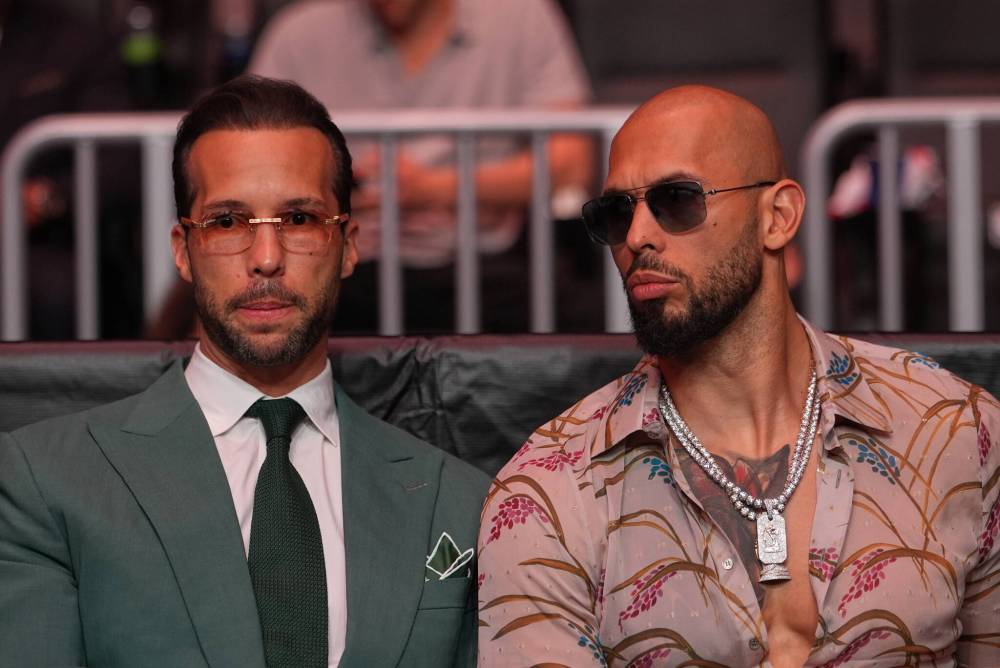
Manosphere influencers, including the Tate brothers (shown here), promote a hierarchical view of gender relations. (The Associated Press)
BIOLOGY AS JUSTIFICATION FOR SEXISM
Before the internet, men’s rights and anti-feminist movements rarely invoked biology. They relied mainly on psychological and sociological arguments to justify keeping men above women in the social hierarchy.
Today, members of the manosphere ground their ideology primarily in biology.
This shift gives them a rhetorical advantage: they can claim that their fatalism and misogyny simply reflect the natural order. Their grievances then appear to rest on facts while feminist demands are dismissed as ideology.
THE ALPHA MALE THROUGH THE YEARS
The concept of the alpha male is the most glaring example of the manosphere’s appropriation of what’s known as behavioural ecology.
The term was first used nearly a century ago in a study of social hierarchy in mice. It gained popularity in the 1980s through the work of scholars David L. Mech on wolves and Frans de Waal on chimpanzees.
While this research made no misogynistic arguments, it did show a certain gender bias. Alpha males received more attention than alpha females, who were mentioned mainly in the context of reproduction; alpha males were described in a much wider range of roles.
Since then, the concept of the alpha male (unlike that of the alpha female) has spread widely in public discourse and it has taken on particular significance within the manosphere, where it now refers to a virile, confident man who attracts many women effortlessly.
Yet the definition of an alpha male is hotly debated in behavioural ecology. De Waal himself himself sought to refute the popular belief that aggression is what defines a dominant male’s status, emphasizing instead the importance of empathy.
Unfortunately, this correction has done nothing to alter the manosphere’s discourse, which cherry-picks its references. It would be unfair to blame Mech and de Waal for bringing the “alpha male” into manosphere ideology; still, the way their research was presented made the term easier to appropriate.
MANOSPHERE’S MODERN ALLY
Evolutionary psychology, which aims to explain human behaviour through the principles of evolutionary biology, is a field that has drawn heavy criticism within academia.
The manosphere is particularly fond of evolutionary psychology, which seeks to link evolutionary mechanisms directly to human behaviour. It’s much easier to cite a study claiming that evolution drives women to marry high-earning men than to try to explain women’s personalities by studying animal behaviour.
What should worry ecologists is this: just as the manosphere borrows from evolutionary psychologists, evolutionary psychologists borrow from ecologists.
The “sexy son hypothesis”, proposed by ecologists Patrick J. Weatherhead and Raleigh J. Robertson in 1979, holds that a female’s ideal mate is one whose genes will give her sons the best chances of reproductive success. According to this hypothesis, females should therefore favour a male’s attractiveness over his other traits.
The hypothesis has since been taken up in numerous evolutionary psychology articles, which have in turn been cited on incel forums.
This is why ecologists need to be more careful than in the past. An entire field of psychology is combing through the ecological literature, seeking to link evolutionary theories to the complexities of the human mind, regardless of the intentions of the scientists who developed them.
Our aim is not to cast aspersions on evolutionary biology or behavioural ecology, but to make researchers and the public aware of the repercussions this research can have in the current political climate. Today, people use science not only to define their environment but also to define themselves. That is why ecologists must choose their words carefully and interpret their findings with caution.
» Eric Harvey is a professor at Université du Québec à Trois-Rivières. François-Xavier Habimana is master of environmental sciences at Université du Québec à Trois-Rivières. This column was originally published at The Conversation Canada: theconversation.com/ca.