
Why the ‘early’ election narrative doesn’t hold up
Advertisement
Read this article for free:
or
Already have an account? Log in here »
We need your support!
Local journalism needs your support!
As we navigate through unprecedented times, our journalists are working harder than ever to bring you the latest local updates to keep you safe and informed.
Now, more than ever, we need your support.
Starting at $15.99 plus taxes every four weeks you can access your Brandon Sun online and full access to all content as it appears on our website.
Subscribe Nowor call circulation directly at (204) 727-0527.
Your pledge helps to ensure we provide the news that matters most to your community!
To continue reading, please subscribe:
Add Brandon Sun access to your Free Press subscription for only an additional
$1 for the first 4 weeks*
- Enjoy unlimited reading on brandonsun.com
- Read the Brandon Sun E-Edition, our digital replica newspaper
*Your next Free Press subscription payment will increase by $1.00 and you will be charged $20.95 plus GST for four weeks. After four weeks, your payment will increase to $24.95 plus GST every four weeks.
Read unlimited articles for free today:
or
Already have an account? Log in here »
When a first minister and their party are riding high in opinion polls, and the opposition is in disarray, you can be sure visions of an “early” election call will dance in their heads.
Those visions were certainly dancing a full-on jig this past weekend in the heads of Premier Wab Kinew and members of the Manitoba New Democratic Party.
At the opening of the party’s annual general meeting, Kinew took little time to feed speculation he might call an election next spring, months before the Oct. 5, 2027 deadline specified in election law.
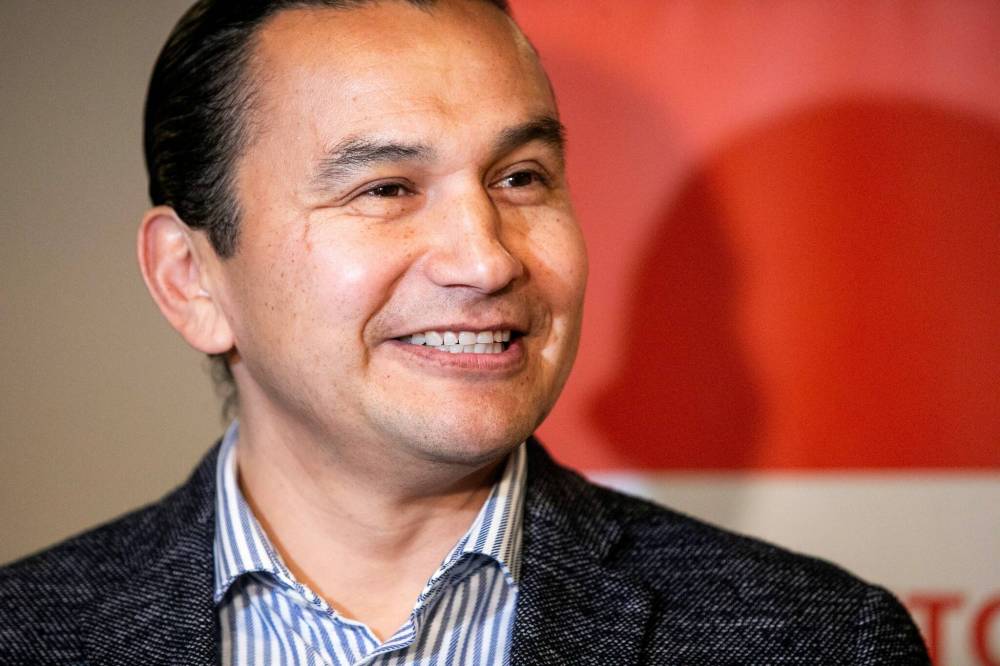
Wab Kinew speaks to reporters at the Manitoba NDP convention in Winnipeg on Friday. (Mikaela MacKenzie/Winnipeg Free Press)
“We are heading into an election year and the opposition says they’re ready and we are definitely ready,” Kinew said.
Kinew no doubt loved the tittering that rippled through the party membership and assembled journalists. “Kinew considers early vote” is a much better headline than “Kinew attends another party love-in.”
But would an election held next year — within the fourth year of the NDP’s mandate, but not at the fourth anniversary — really qualify as “early?”
In an effort to help readers navigate Kinew’s playful tease about a spring election, it’s beneficial to look at some early election myths and realities.
MYTH: An election called within 12 months of a legal deadline is an “early” election.
Manitoba, like other provinces, has a legal requirement that a vote take place within 48 months of the last election. What the law doesn’t do is prevent a party from going earlier than legally required.
However, in many ways, once a government has entered its fourth year in power, it is not really calling an “early” election.
With 36 months under its belt, a government has done and said enough to be judged on its own merits. Three years means three budgets, three full legislative cycles and more than enough time to give voters all the information they need to make an informed voting decision.
REALITY: The only premiers who wait the full 48 months are those who know they are likely to lose.
In 2023, then-Progressive Conservative Premier Heather Stefanson waited the full four years to call an election. And for good reason.
The Tories had been a distant second in pre-vote opinion surveys for many months, and Stefanson personally had very poor personal approval ratings. She was headed for what turned out to be a historic electoral trouncing and had little choice but to milk election law for every additional day in power that she could.
However, former NDP Premier Greg Selinger holds the record for electoral desperation.
In 2015, with an election scheduled for October, Selinger was under siege both inside his own party and outside among the electorate. Then, former Prime Minister Stephen Harper served up a lifeline by calling a federal election in the fall.
Manitoba’s election law allows the premier to push back the provincial vote if it conflicts with a federal election. Selinger took advantage of this provision to push the 2015 vote back to April 2016.
History will show that it didn’t do him any favours; Brian Pallister’s Tories romped to victory the following spring.
MYTH: Early election calls are risky for the government of the day.
The theory that early election calls are risky really resonates now after British Columbia Premier David Eby called an election two years early and lost badly to what was essentially a leaderless Conservative opposition party.
However, a deeper dive reveals that Eby’s government was not that popular, and had been in a dead heat with the Conservatives for more than a year. Which supports the theory that popular governments led by relatively popular premiers don’t suffer the same risk.
Manitoba PC Premier Duff Roblin, who was quite popular at the time, called an election before his fourth anniversary in 1962 and was returned with a majority.
In contrast, the PC party lost an election held in 1969 (after only three years in power) to the Ed Schreyer-led NDP. The Tories suffered a profound loss in support after Roblin stepped down and his successor, Walter Weir, failed to capture the hearts and minds of voters.
Tory Premier Brian Pallister also called an election in 2019 before his fourth anniversary and won a second majority.
The most-obvious outlier is the 1990 Ontario election when Liberal Premier David Peterson called an election after three years. Peterson squandered a huge lead in support and lost to the NDP-led Bob Rae.
REALITY: Only the premier and a very small handful of people know for sure when an election will be called.
Will Kinew call an early election or will he wait until next fall?
If Kinew adheres to one of the oldest parliamentary traditions, only first ministers and maybe one or two other people actually know when it’s time to visit the lieutenant-governor’s office in the Manitoba legislature.
Many people will have suspicions but only one person knows for sure.
Manitoba could very well see an election next spring, given that Kinew is likely to remain extremely popular, the currently leaderless Tories are likely to remain afterthoughts, and spring is indeed a very good time to go to the polls.
But if he does, it won’t really be early.
» Dan Lett is a Winnipeg Free Press columnist.