
French sports minister calls gene testing on female athletes ‘extreme violence toward women’
Advertisement
Read this article for free:
or
Already have an account? Log in here »
We need your support!
Local journalism needs your support!
As we navigate through unprecedented times, our journalists are working harder than ever to bring you the latest local updates to keep you safe and informed.
Now, more than ever, we need your support.
Starting at $15.99 plus taxes every four weeks you can access your Brandon Sun online and full access to all content as it appears on our website.
Subscribe Nowor call circulation directly at (204) 727-0527.
Your pledge helps to ensure we provide the news that matters most to your community!
To continue reading, please subscribe:
Add Brandon Sun access to your Free Press subscription for only an additional
$1 for the first 4 weeks*
- Enjoy unlimited reading on brandonsun.com
- Read the Brandon Sun E-Edition, our digital replica newspaper
*Your next Free Press subscription payment will increase by $1.00 and you will be charged $20.95 plus GST for four weeks. After four weeks, your payment will increase to $24.95 plus GST every four weeks.
Read unlimited articles for free today:
or
Already have an account? Log in here »
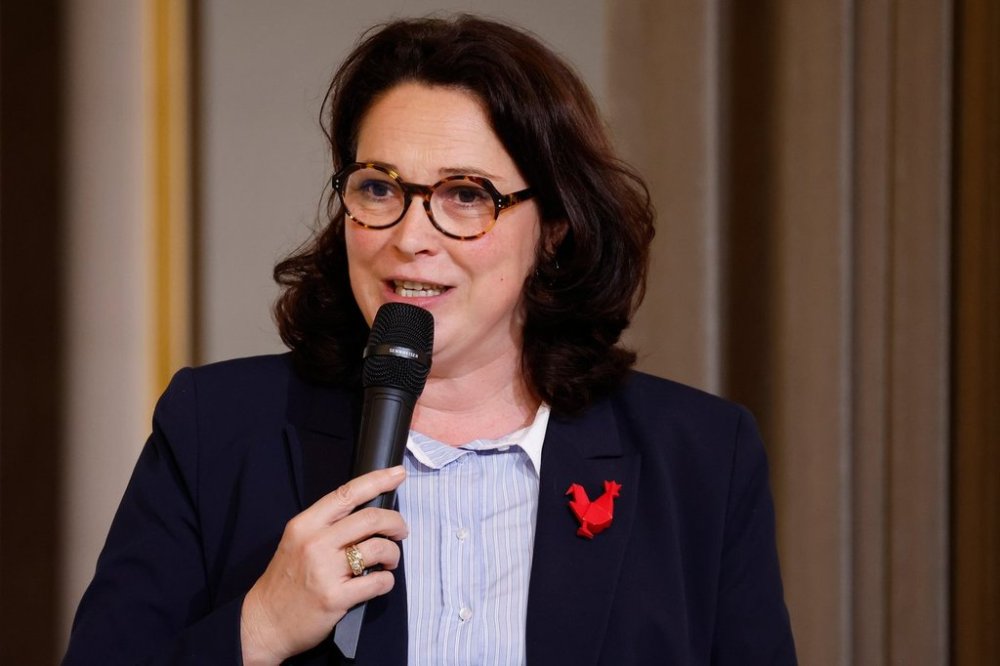
PARIS (AP) — France Sports Minister Marina Ferrari reaffirmed her fierce opposition to gene tests on female athletes, saying on Friday they represent “extreme violence toward women.”
Femininity tests are forbidden in France under bioethics laws, other than for medical, scientific or judicial reasons, or extreme doping cases. Ferrari said mandatory tests represent an ethical problem as well as a “clear discrimination” against women.
In March, the International Olympic Committee introduced an eligibility policy to align with U.S. President Donald Trump’s executive order on sports ahead of the 2028 Olympic Games in Los Angeles.
The IOC said “eligibility for any female category event at the Olympic Games or any other IOC event, including individual and team sports, is now limited to biological females” determined by a mandatory gene test once in an athlete’s career. The eligibility policy applies from the LA Games in July 2028.
“I can’t say for now if the IOC will backtrack on this, I hope so,” Ferrari said on a phone call on Friday with reporters. “Several international federations have already started putting them (the tests) into place.”
In July, the Women’s Tennis Association announced it was introducing one-off mandatory gene-testing for all players as a requirement to compete at in the LA Olympics. The WTA updated its eligibility policy to include gender screening “based on biological sex” in order “to preserve the integrity of women’s professional tennis” and maintain fair competition standards.
Ferrari called the WTA’s decision “depressing,” and said around 60% of French female athletes were opposed to gene testing.
“We consider it to be a form of extreme violence toward women, a clear discrimination,” Ferrari said. “For me it’s a clear regression in terms of women’s rights, and I ask myself what will happen in 2030 when we will host the Winter Olympics.”
Ferrari was speaking after spending two days at a European Union meeting in Brussels dedicated to youth and sport, where she raised the issue of femininity testing.
“I am continuing to have bilateral talks with my counterparts. I think an awareness is happening and some countries are realising this concerns all female athletes,” she said. “Obviously we hope that by the time of the next presidency (next year’s new French government), we can continue to work on this issue because in my opinion it’s urgent to take a stand.”
Ferrari is worried such tests will not just affect female athletes bidding to reach the Olympics but could trickle down to impact much younger age groups.
Mandatory gender screening — already conducted by the governing bodies of track and field, skiing and boxing — has been criticized by human rights experts and activist groups.
Transgender women athletes are now excluded from women’s events at the Olympics after the IOC agreed to implement an eligibility policy, which it said “protects fairness, safety and integrity in the female category.”
—-
See AP’s full sports coverage here