
Calls to make swimming lessons more available in Quebec after deadly year on water
Advertisement
Read this article for free:
or
Already have an account? Log in here »
We need your support!
Local journalism needs your support!
As we navigate through unprecedented times, our journalists are working harder than ever to bring you the latest local updates to keep you safe and informed.
Now, more than ever, we need your support.
Starting at $15.99 plus taxes every four weeks you can access your Brandon Sun online and full access to all content as it appears on our website.
Subscribe Nowor call circulation directly at (204) 727-0527.
Your pledge helps to ensure we provide the news that matters most to your community!
To continue reading, please subscribe:
Add Brandon Sun access to your Free Press subscription for only an additional
$1 for the first 4 weeks*
- Enjoy unlimited reading on brandonsun.com
- Read the Brandon Sun E-Edition, our digital replica newspaper
*Your next Free Press subscription payment will increase by $1.00 and you will be charged $20.95 plus GST for four weeks. After four weeks, your payment will increase to $24.95 plus GST every four weeks.
Read unlimited articles for free today:
or
Already have an account? Log in here »
Hey there, time traveller!
This article was published 05/08/2023 (1164 days ago), so information in it may no longer be current.
MONTREAL – A charity that advocates for water safety is calling on the Quebec government to offer swimming lessons more widely — especially to recent immigrants — as drownings in the province are up 30 per cent over the same period last year.
It has been a particularly deadly year on the water in Quebec, where more than a third of all drownings reported in Canada in 2023 have occurred. Quebec has reported 54 drownings so far in 2023, but this year’s number has been inflated by a few incidents that resulted in multiple deaths.
Raynald Hawkins, general manager of the Lifesaving Society’s Quebec branch, says the Swim to Survive program — delivered by his charity — should be offered to kids in grades 3 and 4 more widely in Quebec. In Ontario, approximately 100,000 kids take part in the program yearly; in Quebec, between 12,000 and 15,000 take part every year.
The Quebec Education Department offers a grant for schools interested in the program, which teaches kids minimum skills to survive if they’ve fallen into deep water.
“If we can do that for all the schools, we’re going to start the process to train 95,000 kids every year,” Hawkins said.
The organization is also looking at ways to educate newcomers to Quebec. On Friday, a funeral was held for a 21-year-old Ukrainian refugee who drowned after venturing out for a swim in the Etchemin River, south of Quebec City. He had arrived in Canada in early July.
“It’s one of our concerns: how can we reach these newcomers to explain to them this reality because it’s not something they are used to,” Hawkins said.
Stephanie Bakalar, a spokeswoman for the Lifesaving Society of Ontario, said the organization has developed an outreach program targeting new Canadians. The most recent data shows newcomers are four times more likely to be unable to swim compared with people born in Canada, she said.
“There’s a lot of people who come to Canada who maybe haven’t had the same exposure and access (to water),” Bakalar said. “Obviously Canada has an abundance of lakes, specifically in Ontario and Quebec where there’s a lot of water opportunities, so we really want people who are coming to Canada to say … ‘here’s how I stay safe, here’s the information that I need.'”
In Quebec, Hawkins said he is speaking to the provincial government about offering similar lessons through French courses for newcomers.
The Lifesaving Society says there were at least 152 drownings across the country as of July 31, with Quebec, British Columbia and Nova Scotia all posting higher drowning numbers compared to the same time in 2022.
Quebec reported 41 deaths by this time in 2022. This year’s tally includes the deaths of eight migrants who drowned trying to cross illegally into the United States in March through Akwesasne, Que., as well as the deaths of five people — including four minors — killed during a fishing trip in June in Portneuf-sur-Mer, Que., on Quebec’s North Shore.
Two firefighters drowned after they were swept away by floods in St-Urbain, Que., in May, and two people died during a landslide in July in Saguenay-Lac-St-Jean.
The five-year average for Quebec at this time of year is 45 drownings, and 2023 is first year to surpass that number since 2020.
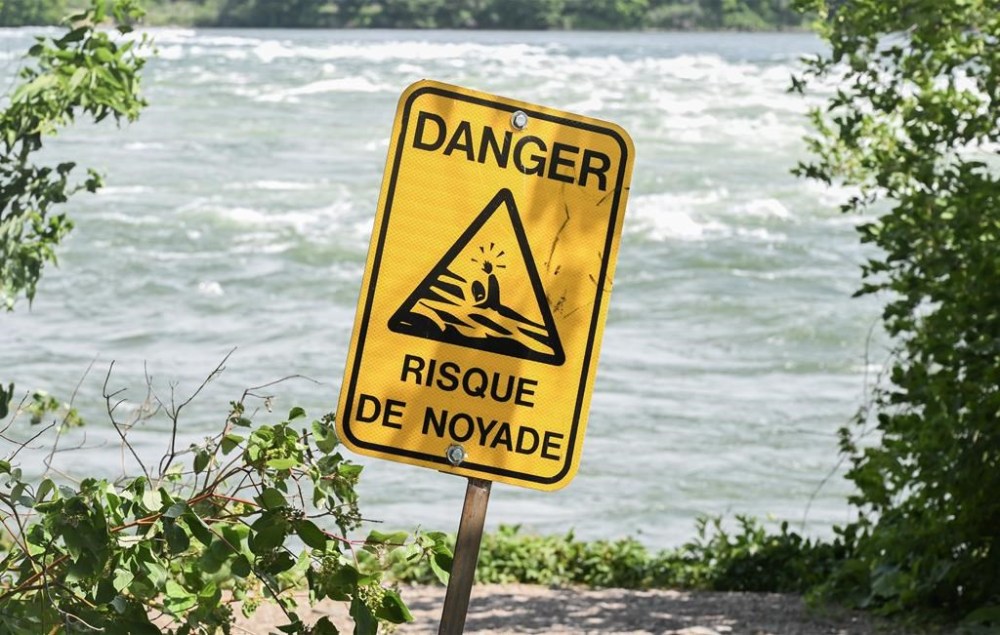
The majority of drownings in Quebec occur in rivers — 41 per cent — and on lakes, about 30 per cent.
In one recent case, a 25-year-old kayaker was reported missing Monday in the province’s Montérégie region. His kayak was found abandoned in Missisquoi Bay, in Philipsburg, Que., near the U.S. border. The search was ongoing Friday.
Hawkins said there are two cardinal rules that need to be respected on the water: don’t go out alone and wear a life vest. People often overestimate their swimming skills or don’t anticipate falling in the water, he said, adding that half of victims in the past five years were alone at the time of a drowning.
“So no one to help them out of the water, no one to call 911, no one to say exactly what happened,” Hawkins said.
This report by The Canadian Press was first published Aug. 5, 2023.