
Minto soldier killed in 1918 finally ID’d
Advertisement
Read this article for free:
or
Already have an account? Log in here »
We need your support!
Local journalism needs your support!
As we navigate through unprecedented times, our journalists are working harder than ever to bring you the latest local updates to keep you safe and informed.
Now, more than ever, we need your support.
Starting at $15.99 plus taxes every four weeks you can access your Brandon Sun online and full access to all content as it appears on our website.
Subscribe Nowor call circulation directly at (204) 727-0527.
Your pledge helps to ensure we provide the news that matters most to your community!
To continue reading, please subscribe:
Add Brandon Sun access to your Free Press subscription for only an additional
$1 for the first 4 weeks*
- Enjoy unlimited reading on brandonsun.com
- Read the Brandon Sun E-Edition, our digital replica newspaper
*Your next Free Press subscription payment will increase by $1.00 and you will be charged $20.95 plus GST for four weeks. After four weeks, your payment will increase to $24.95 plus GST every four weeks.
Read unlimited articles for free today:
or
Already have an account? Log in here »
Hey there, time traveller!
This article was published 07/11/2014 (4217 days ago), so information in it may no longer be current.
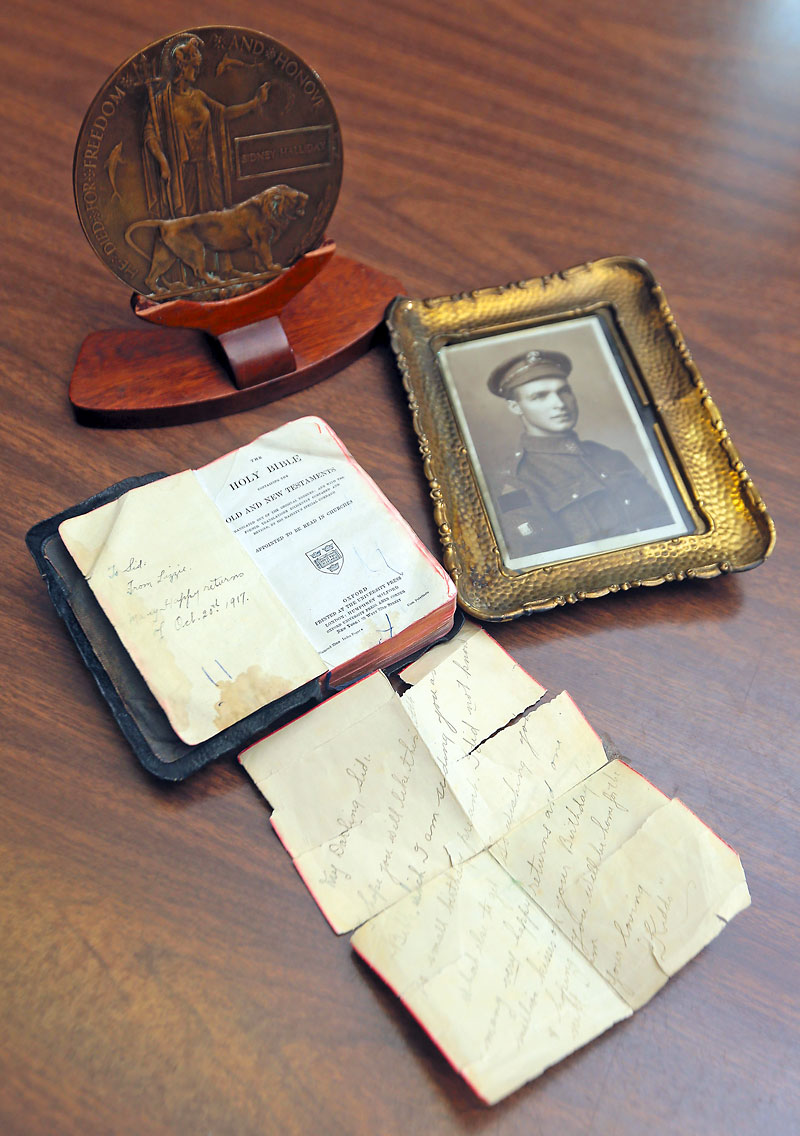
A love note tucked into a small Bible for Pte. Sidney Halliday is one of the few items that remain from the soldier’s time in the First World War.
“Wishing you many very happy returns and one million kisses,” Halliday’s sweetheart, Lizzie Walmsley, wrote back in 1917.
The brittle paper is now falling apart, but it was that young love that eventually led to the successful identification of his remains nearly a century after he was killed.
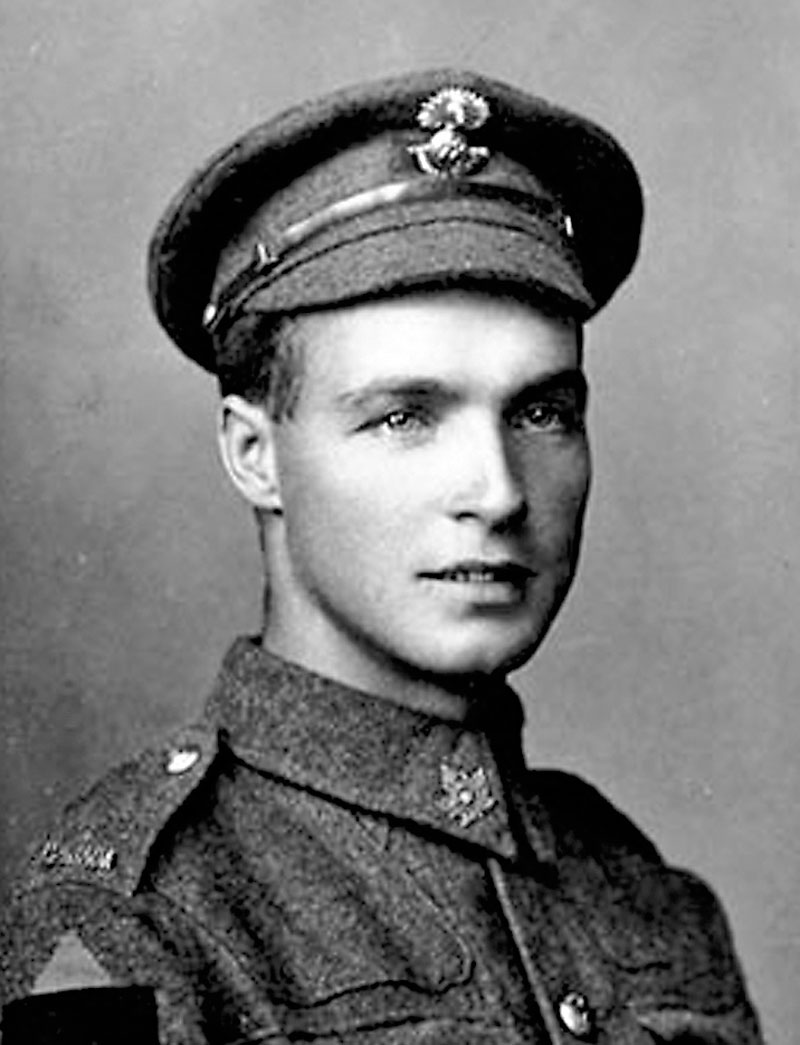
Halliday was a member of Canada’s 78th Battalion, the Winnipeg Grenadiers. He was killed in action at the age of 22 in the Battle of Amiens in 1918.
According to the Department of National Defence, the 78th Battalion received orders on Aug. 8, 1918, to capture the small village of Hallu, located in the Somme region of France. During the advance, the battalion suffered more than 46 fatalities and 54 missing, of whom 30 presently remain missing with no known grave.
Halliday, one of 10 children, moved to Manitoba from England with his brother William in 1913. They found work on a farm in Minto, according to William’s son Jim.
At that time, Halliday met Walmsley, who had come to the Minto area from Winnipeg to work on the farm. The brothers went to enlist in the Canadian army, but only Sidney was accepted.
“Dad (William) tried to join but for some reason there was a health issue, and they wouldn’t take him,” said Vi Burton, William’s daughter, who resides in Brandon. “That’s why he didn’t go, otherwise he would’ve went to the war with Sidney.”
William and his wife Stella had five daughters and two sons, all but one still living. The family has been left wondering what became of Sidney for decades.
“Dad talked about him and Sid a lot,” Burton said. “They delivered milk together up and down the street in the little village where they grew up in England.”
It was in 2006 when the remains of eight Canadian soldiers were located in the village of Hallu in northern France.
Four soldiers were identified earlier this year, and Halliday’s nieces and nephews hoped that he would be identified as well.
Of the nearly 68,000 Canadian fatalities during the First World War, more than 19,000 members have no known grave.
“I was wondering if there’s any chance that one of the remaining soldiers could be Sidney,” said Jim Halliday, who lives in the Minto area. “I asked about jewelry, I knew there could’ve been a ring, because Lizzie and Sidney had exchanged rings before the war.”
What they did find was a locket, with the name L. Walmsley engraved on it.
“I said that was his girlfriend, and that was actually what triggered them to know that they had the right person and put it all together,” he said.
After further investigation, it was found that a lock of Walmsley’s hair was inside the locket. They also discovered that Halliday had changed his will to include his girlfriend — she was to receive $10.
The family received confirmation of Halliday’s remains just recently and the DND released the information across Canada this week.
“Now he’s got a resting place with his own name on it, just not on a plaque with 20,000 other people,” Jim said. “It’s a comfort.”
Burton said it was a bittersweet feeling to know her uncle had been identified.
“I was very happy, but sad too because I would have been happier if they’d have found them before dad and mom died,” she said. “That would have made dad very happy, him and Sid were very close.”
William’s son, Bill Halliday, has a few prized possessions from Sidney — the Bible with Lizzie’s note, along with a special medal that was sent to Sidney’s parents after the war.
Halliday’s great-niece, Barbara Burton Harpe, recalled how her grandfather William would never forget his brother Sidney’s sacrifice.
“I know he dearly missed him as they shared the adventure of ‘Canada’ together,” Harpe said. “Sidney’s memory was always present in my grandfather’s life. As I child I remember hearing about great uncle Sidney fighting in WWI and being ‘missing,’ presumed dead.”
Harpe said Sidney’s memory is kept alive by family members who bear his name.
“I am certain my grandfather would be very pleased to know that the remains of his dear brother Sidney have been found and will be laid to rest with the military honour fallen solders deserve,” she said.
The DND and the Canadian Forces are working with the Commonwealth War Graves Commission, in consultation with the soldiers’ relatives, to plan for an internment ceremony in France to provide Halliday and his comrades with a final honoured and appropriate resting place.
“He lost his life in World War One. At 22, he hadn’t even begun to live,” said great-niece Diane Burton. “He gave a lot, like all the soldiers did at that time.
“So they deserve this military funeral and recognition that they’re going to get in 2015, because who knows how the world would have been if it wasn’t for their sacrifice.”
» jaustin@brandonsun.com
» Twitter: @jillianaustin