
Remembering the dead, in McCrae’s other poetry
Advertisement
Read this article for free:
or
Already have an account? Log in here »
We need your support!
Local journalism needs your support!
As we navigate through unprecedented times, our journalists are working harder than ever to bring you the latest local updates to keep you safe and informed.
Now, more than ever, we need your support.
Starting at $15.99 plus taxes every four weeks you can access your Brandon Sun online and full access to all content as it appears on our website.
Subscribe Nowor call circulation directly at (204) 727-0527.
Your pledge helps to ensure we provide the news that matters most to your community!
To continue reading, please subscribe:
Add Brandon Sun access to your Free Press subscription for only an additional
$1 for the first 4 weeks*
- Enjoy unlimited reading on brandonsun.com
- Read the Brandon Sun E-Edition, our digital replica newspaper
*Your next Free Press subscription payment will increase by $1.00 and you will be charged $20.95 plus GST for four weeks. After four weeks, your payment will increase to $24.95 plus GST every four weeks.
Read unlimited articles for free today:
or
Already have an account? Log in here »
Hey there, time traveller!
This article was published 10/11/2014 (4214 days ago), so information in it may no longer be current.
You’ve heard “In Flanders Fields,” of course. It’s not just one of the best-known Canadian poems, and not just one of the best-known war poems, it might be one of the best-known poems, period, at least in the English-speaking world.
Sure, many people may get tripped up on whether the poppies “blow” or “grow” in between those famous crosses, row on row (they blow in the poem, though they do both in reality, of course), and fewer people know the pro-war third verse than who can recite the funereal first verse.
But it’s still a poem that, nearly a century after it was first printed, continues to ring with contemporary feeling.
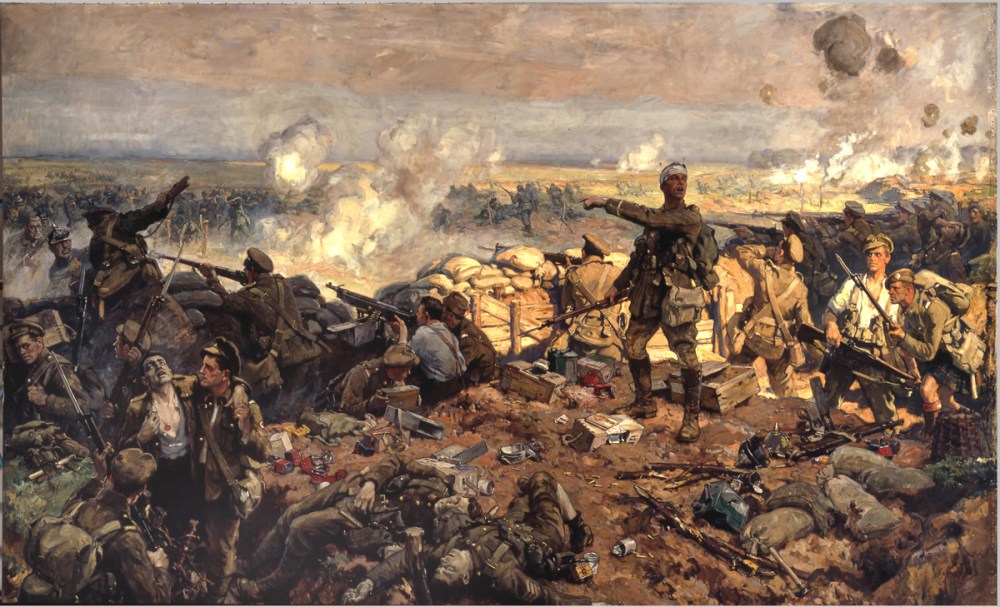
“In Flanders Fields” was first published anonymously in Punch magazine, a British weekly, in late 1915, and immediately became incredibly popular, not just among those in the military but also with civilians back home.
When it eventually came to light that military surgeon John McCrae was the one who had penned the text, he found himself at the centre of attention, with many soldiers requesting handwritten copies of the poem.
But it wasn’t the only verse McCrae penned. He was an accomplished poet, as well as being a doctor and Lieutenant-Colonel.
Although he died of pneumonia in early 1918, a volume of McCrae’s poetry was published posthumously the next year. Included are a number of seldom-read poems with similar themes.
We reprinted one of them on the front of this section, and others below.
“The Anxious Dead,” like its more famous sibling, deals with themes of loss and duty.
It, too, assumes a continuing battle and a world in which the living bear a responsibility to the dead.
Using allusions to classical Rome, McCrae draws a parallel between fighting forces across the ages. There’s no single cause, no specific battle or war, just devotion to those who have lain their lives down for their comrades.
In “In Flanders Fields,” the poem ends with a warning.
“If ye break faith with us who die / We shall not sleep,” McCrae wrote. But in “The Anxious Dead,” he strikes a more hopeful tone.
The entire poem is an appeal for guns to fall silent. Not for the war to end, not yet, but so that the dead can hear, can know that those still marching haven’t forgotten them.
In what’s almost an answer to the challenge and worry of “In Flanders Fields,” in this poem, McCrae’s dead are given a promise.
“Tell them … That we will keep the faith for which they died.”
And in the final stanza, the dead earn their repose — thanks to those living who remember them.
Like “In Flanders Fields,” this lesser-known poem strikes the right tone for Remembrance Day. Sacrifice is honoured, and the living are reminded of their ongoing duty.
This poem, too, deserves to be remembered.
» ghamilton@brandonsun.com
» Twitter: @Gramiq
The Anxious Dead
by John McCrae
O guns, fall silent till the dead men hear
Above their heads the legions pressing on:
(These fought their fight in time of bitter fear,
And died not knowing how the day had gone.)
O flashing muzzles, pause, and let them see
The coming dawn that streaks the sky afar;
Then let your mighty chorus witness be
To them, and Caesar, that we still make war.
Tell them, O guns, that we have heard their call,
That we have sworn, and will not turn aside,
That we will onward till we win or fall,
That we will keep the faith for which they died.
Bid them be patient, and some day, anon,
They shall feel earth enwrapt in silence deep;
Shall greet, in wonderment, the quiet dawn,
And in content may turn them to their sleep.
The Unconquered Dead
“. . . defeated, with great loss.”
Not we the conquered! Not to us the blame
Of them that flee, of them that basely yield;
Nor ours the shout of victory, the fame
Of them that vanquish in a stricken field.
That day of battle in the dusty heat
We lay and heard the bullets swish and sing
Like scythes amid the over-ripened wheat,
And we the harvest of their garnering.
Some yielded, No, not we! Not we, we swear
By these our wounds; this trench upon the hill
Where all the shell-strewn earth is seamed and bare,
Was ours to keep; and lo! we have it still.
We might have yielded, even we, but death
Came for our helper; like a sudden flood
The crashing darkness fell; our painful breath
We drew with gasps amid the choking blood.
The roar fell faint and farther off, and soon
Sank to a foolish humming in our ears,
Like crickets in the long, hot afternoon
Among the wheat fields of the olden years.
Before our eyes a boundless wall of red
Shot through by sudden streaks of jagged pain!
Then a slow-gathering darkness overhead
And rest came on us like a quiet rain.
Not we the conquered! Not to us the shame,
Who hold our earthen ramparts, nor shall cease
To hold them ever; victors we, who came
In that fierce moment to our honoured peace.
The Warrior
He wrought in poverty, the dull grey days,
But with the night his little lamp-lit room
Was bright with battle flame, or through a haze
Of smoke that stung his eyes he heard the boom
Of Bluecher’s guns; he shared Almeida’s scars,
And from the close-packed deck, about to die,
Looked up and saw the “Birkenhead”’s tall spars
Weave wavering lines across the Southern sky:
Or in the stifling ‘tween decks, row on row,
At Aboukir, saw how the dead men lay;
Charged with the fiercest in Busaco’s strife,
Brave dreams are his — the flick’ring lamp burns low —
Yet couraged for the battles of the day
He goes to stand full face to face with life.
The Harvest of the Sea
The earth grows white with harvest; all day long
The sickles gleam, until the darkness weaves
Her web of silence o’er the thankful song
Of reapers bringing home the golden sheaves.
The wave tops whiten on the sea fields drear,
And men go forth at haggard dawn to reap;
But ever ’mid the gleaners’ song we hear
The half-hushed sobbing of the hearts that weep.
Disarmament
One spake amid the nations, “Let us cease
From darkening with strife the fair World’s light,
We who are great in war be great in peace.
No longer let us plead the cause by might.”
But from a million British graves took birth
A silent voice — the million spake as one —
“If ye have righted all the wrongs of earth
Lay by the sword! Its work and ours is done.”
Related Articles
John McCrae’s Brandon connection
Advertisement Advertise With Us
Advertisement Advertise With Us