Province issues urgent plea for ICU help from Ottawa Request for 15-30 nurses made after doctors publicly warn of dire consequences from untreated diseases
Read this article for free:
or
Already have an account? Log in here »
We need your support!
Local journalism needs your support!
As we navigate through unprecedented times, our journalists are working harder than ever to bring you the latest local updates to keep you safe and informed.
Now, more than ever, we need your support.
Starting at $15.99 plus taxes every four weeks you can access your Brandon Sun online and full access to all content as it appears on our website.
Subscribe Nowor call circulation directly at (204) 727-0527.
Your pledge helps to ensure we provide the news that matters most to your community!
To continue reading, please subscribe:
Add Brandon Sun access to your Free Press subscription for only an additional
$1 for the first 4 weeks*
- Enjoy unlimited reading on brandonsun.com
- Read the Brandon Sun E-Edition, our digital replica newspaper
*Your next Free Press subscription payment will increase by $1.00 and you will be charged $20.95 plus GST for four weeks. After four weeks, your payment will increase to $24.95 plus GST every four weeks.
Read unlimited articles for free today:
or
Already have an account? Log in here »
Hey there, time traveller!
This article was published 13/12/2021 (1743 days ago), so information in it may no longer be current.
Manitoba is asking the federal government to immediately send intensive-care unit nurses as the province’s health-care system continues to crumble under the fourth wave of COVID-19.
In a statement issued late Monday, Health Minister Audrey Gordon said the request for 15 to 30 ICU nurses was made on the weekend “due to the continued pressure of the fourth wave and continuing pressures in our major acute care facilities and ICUs.”
News of the request came after an open letter from front-line critical care doctors and other Winnipeg physicians urged the province to ask the military to send ICU nurses to help Manitoba.
The province said it has sent a request to Minister of Emergency Preparedness Bill Blair requesting ICU nurses’ help for six weeks and was waiting Monday for a response. The federal government said in an email its operations centre is looking at the request and will respond “in short order.”
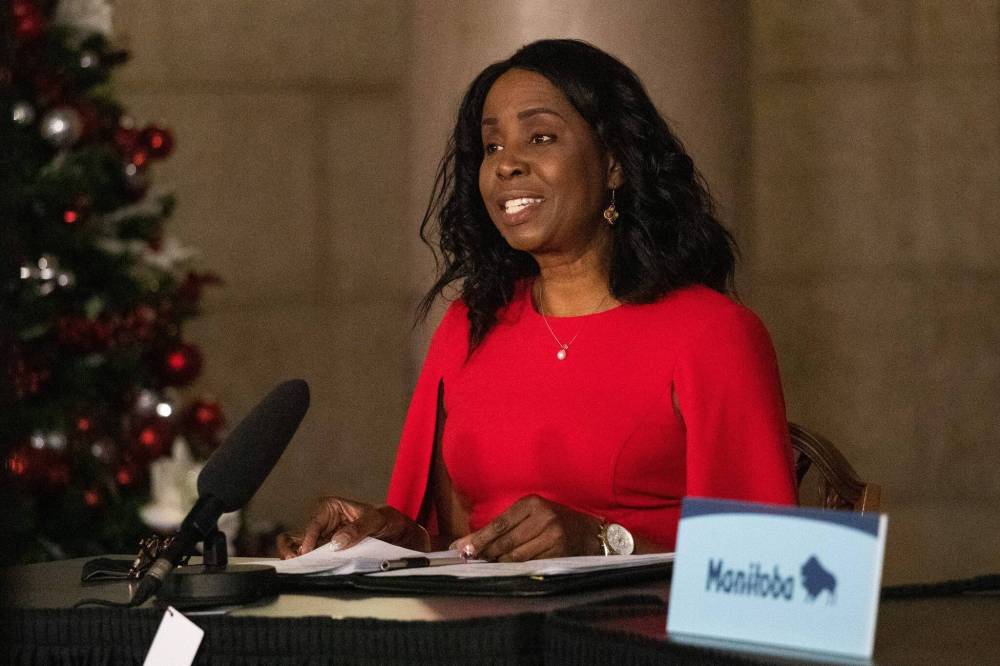
“Assistance from the federal government would increase ICU capacity to address continued pressure in major acute care facilities due to the effects of COVID-19 while allowing our surgical slates to remain open,” read the statement issued on behalf of Gordon and Ron Schuler, the minister responsible for the Emergency Measures Organization.
More Manitobans will die from untreated illnesses than COVID-19, say the doctors whose letter warned of dire consequences if the province doesn’t get help from military ICU nurses and enforce tougher pandemic measures.
“The message of the letter is essentially this — when your house is on fire, turn off the gas and call the fire department,” said critical-care physician Dr. Dan Roberts.
“Turning off the gas means addressing the rate of infection and trying to get it down, particularly in low vax-penetrated communities. That means enforcement of the public health orders that are already in existence, fines and closures if businesses don’t operate the way they should be, insisting on people masking, social distancing, restaurants insisting that you have proof of vaccination — like restaurants all over the city are supposed to be doing right now.”
“Assistance from the federal government would increase ICU capacity to address continued pressure in major acute care facilities due to the effects of COVID-19 while allowing our surgical slates to remain open.”
– Statement from Manitoba Health Minister Audrey Gordon and Ron Schuler, the minister responsible for the Emergency Measures Organization
The province should insist that children who are accessing in-person learning must be vaccinated, Roberts said.
“We’re not mandating vaccinations for children, we’re just saying if you decide your kid is not going to get vaccinated then keep them at home,” he said. “We have to make people understand that there are consequences to their decisions and they have to accept the restrictions that follow from those decisions.”
Calling the fire department means asking the military to send ICU nurses, Roberts said, after receiving reports that the situation in Manitoba’s critical-care units is “dire.”
There were 102 patients in Manitoba ICUs Monday morning, up nearly 17 per cent from one week ago and 42 per cent above normal, pre-COVID baseline capacity, a Shared Health spokesman said late Monday. That includes 35 patients with COVID-19, 34 of whom were not fully vaccinated. In the past week, 22 patients have been admitted to ICUs in Manitoba for treatment of COVID-19, including two Sunday.
“We’re not mandating vaccinations for children, we’re just saying if you decide your kid is not going to get vaccinated then keep them at home. We have to make people understand that there are consequences to their decisions and they have to accept the restrictions that follow from those decisions.”
– Critical-care physician Dr. Dan Roberts
The number of ICU patients fluctuated over the weekend, reaching a high of 106 at one point. In the past 48 hours, a number of short-term staffing moves were made to temporarily increase ICU capacity to 110 beds.
Once again, a call for help inside the province has been made for staff with critical-care training, including rural and recently retired nurses with necessary training or experience.
More inter-regional patient transfers will occur in the weeks to come, Shared Health warned, with stable patients who can be cared for at another facility being moved to places with capacity. In just over two months, 79 stable patients have been moved from Winnipeg and the Interlake-Eastern Regional Health Authority to sites in Prairie Mountain Health, Southern Health and Northern Health regions.
Roberts said the doctors penned the letter to spur the province to act and to make the public aware of the crisis “on several fronts.”
More people will die from pandemic-delayed tests and procedures than from COVID-19, he said, citing a recent Canadian Medical Association report.
“We have to quickly do everything that we can to decrease transmission and, at the same time, we need to allow the nurses who have been redeployed to the intensive-care units back to do their work.”
– Dr. Pam Orr, an infectious-disease specialist at Health Sciences Centre
Manitobans need to know how dire the situation is, said Dr. Pam Orr, an infectious-disease specialist at Health Sciences Centre who signed the letter.
“We have to quickly do everything that we can to decrease transmission and, at the same time, we need to allow the nurses who have been redeployed to the intensive-care units back to do their work,” she said.
“We need military nurses who could go into the (ICU) and allow nurses of other expertise to go out and look after people who are quietly suffering and dying in their homes, including nursing homes.
“These are people with crumbling spines who need surgery to prevent them from becoming paralyzed imminently. I’m talking about people who have a problem suggestive of cancer, but who cannot get an appropriate test.”
The government hasn’t rigorously enforced public-health orders in unvaccinated parts of the province, mainly Progressive Conservative strongholds in southern Manitoba. News reports about clandestine church services breaching gathering limits and members of the public openly violating masking and vaccination requirements without consequence haven’t prompted a crackdown.
The “feeble, ineffectual and negligent” enforcement of public-health regulations, “despite the enormously high stakes” is contributing to “corrosive cynicism,” ethicist Arthur Schafer said.
Protecting the lives of Manitobans is a justifiable rationale for the government imposing coercive regulations that limit some freedoms, said Schafer, director of the Centre for Professional and Applied Ethics at the University of Manitoba.
“The question is, why is the government sabotaging its own public-health regulations by refusing properly to enforce them?” Schafer asked. “The obvious speculation is that we’re talking not about public health, but about politics. A government that would put its own political self-interest — if that is indeed what’s happening — ahead of the health and safety of Manitobans is not worthy of being in office.”
carol.sanders@freepress.mb.ca
History
Updated on Monday, December 13, 2021 8:27 PM CST: Fixes typo.