
Bouquets, for the department
Advertisement
Read this article for free:
or
Already have an account? Log in here »
We need your support!
Local journalism needs your support!
As we navigate through unprecedented times, our journalists are working harder than ever to bring you the latest local updates to keep you safe and informed.
Now, more than ever, we need your support.
Starting at $15.99 plus taxes every four weeks you can access your Brandon Sun online and full access to all content as it appears on our website.
Subscribe Nowor call circulation directly at (204) 727-0527.
Your pledge helps to ensure we provide the news that matters most to your community!
To continue reading, please subscribe:
Add Brandon Sun access to your Free Press subscription for only an additional
$1 for the first 4 weeks*
- Enjoy unlimited reading on brandonsun.com
- Read the Brandon Sun E-Edition, our digital replica newspaper
*Your next Free Press subscription payment will increase by $1.00 and you will be charged $20.95 plus GST for four weeks. After four weeks, your payment will increase to $24.95 plus GST every four weeks.
Read unlimited articles for free today:
or
Already have an account? Log in here »
Hey there, time traveller!
This article was published 30/12/2022 (1353 days ago), so information in it may no longer be current.
Andrew Stobo Sniderman and Douglas Sanderson (Amo Binashii) recently published “Valley of the Birdtail: An Indian Reserve, a White Town, and the Road to Reconciliation,” a book about neighbouring communities in Manitoba and the history of Canada. During their research in national archives and old editions of The Brandon Sun, Sniderman and Sanderson came across an incredible story about a man named Alfred Kirkness, who once lived in Brandon. This is his story.
● ● ●
Students were sent from all across Manitoba to the Brandon Indian Residential School, which loomed on a hill outside town. Many never left. Between 1895 and 1911, an estimated 51 students died there.

A newspaper archive shows Alfred Kirkness feeding a bird. (Submitted)
To a boy named Alfred James Kirkness, the dead had faces, smiles, laughs. They were his classmates and friends.
Alfred was born in 1902 on the Island Lake reserve in northern Manitoba and admitted to the Brandon school in 1908. That year, five students died, including Isiak Biltern on March 4, Janet Moor on Oct. 4 and Edgar McRae on Dec.15.
They were buried with markers or headstones a half-mile south of the school, down the hill near the Assiniboine River.
In 1909, six perished, including Janet Tait and siblings Isaac and Maria Murdoch. In 1910, two others died, and in 1911 at least three more joined them in the makeshift cemetery by the river.
There is no record of many of the names, and causes of death were rarely specified. Heavy farming equipment crushed at least one during field labour, but mostly the killers were scarlet fever, pneumonia, tuberculosis and typhoid, abetted by a crowded building that incubated disease.
In 1912, the school started burying students in a second cemetery, this one a half-mile north of the school. Alfred Kirkness survived. He always remembered those who didn’t.
In his own way, Alfred never really left the school either. After his time as a student, the Department of Agriculture hired him to work on the Brandon Experimental Farm, located immediately next to the school grounds. The school building rarely strayed from the corner of Alfred’s eye.
Alfred married Lillian Esther Deyell and they had two children: Montague and Eileen. The family lived across the road from the school, near a small body of water named Lake Percy, which despite its name was more like a formidable pond.
In 1943, Alfred learned how it felt to lose one of his own children.
On Saturday, Nov. 13, nine-year-old Montague Kirkness came home for lunch around noon. His parents were out running errands in town. When Montague discovered that food was not yet ready, he decided to go for a quick ice skate on Lake Percy, just a short walk away.
Every night that November, the temperature had dropped well below freezing. That Saturday afternoon, the thermometer read minus six degrees Celcius. Montague figured the ice was plenty strong enough.
Alfred and Lillian arrived home shortly thereafter, and Lillian asked her husband to fetch their son for lunch. Alfred went outside and called his son’s name. No answer. Alfred made his way toward the lake but he couldn’t see Montague: just a jagged hole in the ice. No.
Alfred ran. The layer of ice on the surface gave way immediately to the weight of a grown man. The water was so cold Alfred felt like he was on fire.
At its centre, the lake reached a depth of twenty feet. Alfred could not find his son, and before long Alfred himself was trapped amid sheets of ice, his limbs deadened by the cold. He could not make it back to shore.
Fortunately, Alfred’s wife Lillian had come to see what was taking her son and husband so long. She spotted Alfred thrashing in the lake. Lillian saw some sticks nearby and desperately threw them toward her husband, to somehow give him a way to spread his weight on the upper crust of ice. But the sticks did not help at all.
Lillian ran home to get a rope. But that plan failed, too: the rope was too short to reach her husband from the shore. It slithered uselessly beyond Alfred’s reach.
That’s when RCMP Const. Tom Peach arrived on the scene, drawn by the shouts and commotion. He grabbed the rope from Lillian and crashed into the icy water near the shoreline. Without getting too deep, so that he could still maintain his footing, he managed to toss the rope to Alfred.
By now, though, Alfred’s hands were too numb to grasp the lifeline. Instead, he clenched the rope with his teeth. Slowly, steadily, Const. Peach pulled Alfred back to safety.
According to a report that appeared in the Brandon Sun the next day, Alfred emerged from the lake “in a greatly distressed condition.” Still, he survived. As for his son Montague, the boy’s body was recovered from the bottom of the lake. His lips were blue. His skates were laced.
Montague was buried in a four-by-seven-foot plot in the Brandon Municipal Cemetery. His parents selected an elegant grey tombstone with a carving of a hedgehog at its base. The epitaph read: “With a cheery smile, he left us.”
● ● ●
In the late 1950s, the City of Brandon launched a makeover of the area that included the burial ground near the river, which it rebranded “Curran Park,” named after a well-known local alderman. A bulldozer levelled the ground. After that, no sign of buried children remained.
The city completed construction of a massive circular pool, along with a gushing central fountain, in 1961. The pool was located immediately adjacent to where the old cemetery used to be.
It is not clear what compelled Alfred Kirkness to act — perhaps it was the sight of the pool, with its gaily sprouting fountain, or perhaps it was all the new barbecue stands and picnic tables. Maybe it was the thought of a bulldozer heedlessly churning through the burial ground.
Whatever it was, Alfred decided the children who died at the Brandon residential school deserved better. They deserved, at the least, to be remembered.
Alfred penned his first letter to the Department of Indian Affairs on April 20, 1964. “Dear Sir,” he began, before describing the condition of the two student cemeteries as “a disgrace to the school principal, Church, and the department of Indian Affairs.” The cemetery in Curran Park, near the river, was no longer visible. Countless people had “stampeded” over the burial ground, Alfred wrote.
“It saddened my heart to think the White society would keep right on tramping over these graves, when they were told of the cemetery and its location. If this is the culture of some of the white society in discrimination they have succeeded very well.”
Alfred drew a map and suggested the children’s remains should be excavated and respectfully memorialized in a new location nearby.
The principal of the Brandon Residential School at the time was Ford Bond. Alfred noticed Bond had installed a new fence around his home, which was located on the school grounds. “Mr. Bond’s home is very nice to look at with its white picket fence, and all,” Alfred wrote, “but what about his backyard? I can picture the women from the Church, and the officials of Indian Affairs, inspecting the children and buildings, and smiling with approval. But do they pay homage to the students, who are laying at rest, in a disgraceful conditioned cemetery?”
Kirkness’s letter roused a slumbering bureaucracy. The senior regional official for the Department of Indian Affairs, Howard Nield, admitted to a colleague the department’s “records on this property are very sketchy.” It turned out the Methodist church, which had been operating the school in its early days, had not shared records of the deceased. After the department wrote principal Bond asking for further documentation, Bond’s initial inspection yielded only a single name.
Together, Nield, Kirkness and Bond toured Curran Park and the second cemetery north of the school, where there were still visible graves. One week later, Kirkness wrote a followup letter to Nield’s superior, R.F. Davey. “The impression I got,” Kirkness wrote, “was that [Nield and Bond] did not care … the cemeteries are out of sight, and one will never see them.” Kirkness then seized on the fact that Nield and Bond had mentioned the school’s plan to build two additional wings. Kirkness was not impressed.
“We build empires of great buildings of stone, steel and brick, we add wings to buildings we already have,” Kirkness wrote. “Thousands [are] spent for people to see what great things the department can boast about. The glory of these things will pass away, but the one thing that men will remember is a cup of cold water given in love. The little things we do for others, are the big things.”
Surely, Kirkness argued, the department could afford to memorialize the remains of the dead students? He attached pictures of the cemetery north of the school, which was located in a cow pasture. Several fallen crosses were all that marked some of those who had been buried.
“The cow dung around the cemetery,” Alfred concluded, “makes great bouquets, for the department [of Indian Affairs].”
Kirkness’s letter convinced Davey that “something should be done.” Even though Davey didn’t think Indian Affairs was technically responsible for either cemetery, he recognized that “our Branch was in control when the cemeteries were used as such, and members of the public are likely to consider that the Branch has some responsibility for what happens to Indian cemeteries.”
Davey supported a plan to erect a memorial cairn at the former cemetery site near the river and to fence in the second cemetery, but he proposed that the money come from principal Bond’s existing annual budget. Bond promptly rejected this suggestion as “unfair” and recommended that “this work be postponed until funds from the department are available.”
And so it was. Nothing much happened for the next two years.
● ● ●
In the fall of 1966, Alfred Kirkness felt compelled to write the minister of Indian Affairs directly. He summarized the situation: there were two cemeteries for children who died at the Brandon residential school. The first was located near the Assiniboine River, on land subsequently leased to the City of Brandon.

An archive of Alfred Kirkness's letter to the Department of Indian Affairs. "The cow dung around the cemetery makes great bouquets, for the department" he wrote. (Submitted)
“There should have been a clause in the lease,” Alfred observed, “whereby the City of Brandon would keep this cemetery in repair as long as the City if Brandon held the lease, but this was not the case.” Instead, “this cemetery was destroyed little by little each year, until one day, I saw picnic tables, benches and barbecue stands, placed over these students’ graves.”
The second cemetery, Kirkness told the minister, was “shamefully disregarded” and located “in a cow pasture surround by cow dung.”
“Don’t you think,” Kirkness asked, “it’s about time the [department] did something to stop this sort of discrimination? Don’t you think it would be honourable to move the remains of these students away from this dung hill?”
Government officials scrambled to find a solution. “I know the minister is going to insist that definite action be taken,” wrote Davey. As for Nield, he still did not think locating and exhuming remains near the river was feasible. Rather, both burial grounds could be fenced and a memorial cairn erected at each.
At this point, principal Bond intervened to advise against placing a commemorative cairn in Curran Park, “as, no doubt, a cairn in [that] area would be defaced before too long.”
The reasons why a memorial to Indian students was so certain to be defaced were so obvious as to be left unsaid. Better to stick with a single memorial in the cemetery north of the school, Bond believed.
In 1967, the Department of Indians Affairs finally commissioned a memorial cairn and surrounding fence and set about scouring its records for the names of the students who had passed away.
● ● ●
In July 1967, Alfred Kirkness retired after 38 years working on the Experimental Farm.
“It has always seemed to me,” said Kirkness’s supervisor in a speech at the retirement ceremony, “that Alf’s philosophy has been that regardless of who a person is or where he is from, this man is my neighbour and anything that I can do to help him along the way it is my privilege and my duty to see that it is done.” He described Alf as a man of “undiluted goodness.”
Another colleague described Alf as “one of the most unselfish men I have ever known.”
Kirkness and his wife headed to Victoria, B.C., for an extended vacation. During this time, Nield reported to his colleagues that “we have managed to get the cemetery properly fenced, the cairn built, and the plaque installed.” This was actually only two-thirds true.
When Kirkness returned after nearly a year in British Columbia, he went to “see what progress had been made” at the cemetery, as he wrote in another letter to the Department of Indian Affairs.
“The fence is completed, a bit of cement near the entrance, which I presume is a cairn. It has no plaque, to indicate what it’s there for. Inside the fence it looks like a wilderness.”
Within a few months, the department finally installed a plaque. It listed 11 names, even though the total number of deceased students was at least more than 50 and probably closer to 100.
Over time, the cemetery slowly fell into disrepair. In 1970, Kirkness again felt compelled to bring the matter directly to the attention of then-minister of Indian Affairs, Jean Chrétien.
In a letter, Alfred described a memorial service featuring “MPs from every constituency,” “a speech from the mayor of Brandon,” “dignitaries from every walk of life”— all to unveil a memorial cairn and “pay tribute” to early white settlers to Manitoba.
By contrast, Alfred described a service that took place “not many miles west in a cow pasture … in memory of students that attended [the Brandon] Residential School. It was a quiet service, a number of cows, one-two field gophers … some crows flew over head, in the distance a meadow lark sang its evening song.”
The grass, Alfred noted, had grown almost as high as the five-foot memorial cairn. “[I]t’s a disgrace in the manner this cemetery is kept.”
Kirkness was assured that steps were being taken to improve the site’s appearance: grass would be cut, the fence would be repaired and the site would be properly maintained.
Yet, within a year, Kirkness contacted Minister Chrétien one final time.
“You can’t imagine the shock I received when I saw the hideous conditions they left the cemetery,” Kirkness wrote. “Common gravel was hauled straight from the pit which is close by and dumped over the graves, to smother the grass from growing. In this way the problem of mowing grass and continued maintenance would be eliminated. Sir, it looks like a barn yard, no doubt the architect had this in mind, seeing the cattle share the same pasture. I have read and seen pictures of cemeteries for dogs and cats, where the rich bury their pets, which is second to none. This is the first I have seen where gravel is dumped over graves deliberately.”
At long last, officials identified a durable solution: the Department of Agriculture would regularly maintain the cemetery.
The children buried by the river also received a memorial, though with no help from the Department of Indian Affairs. The Brandon Girl Guides, whose mainstay duty involved the sale of delicious cookies, took the initiative themselves. They held a ceremony on June 5, 1972, to unveil a memorial plaque, which read: “Indian Children Burial Ground.” Alas, the dead were not named. Nearby, the Girl Guides installed a colourful totem pole, despite the cultural irrelevance of totem poles to Indigenous peoples in the area.
The Brandon Rotary Club contributed a fence around the cemetery grounds. Later that summer, the Girl Guides mounted the plaque on a cairn.
There is no evidence that Alfred Kirkness attended the Girl Guides ceremony in 1972.
If he did, though, perhaps he allowed himself a measure of satisfaction at the sight of dozens of little girls, standing in solemn silence to remember other children they had never met.
A few years later, the Brandon Sun published a captioned photo of Alfred, who had taken up bird feeding in retirement.
Alfred Kirkness died in 1980, at age 78. He is buried next to his wife in the Brandon Municipal Cemetery, near their son Montague.
● ● ●
The Brandon Residential School was demolished in 2000. At the top of the hill where the school used to loom, there is now a vacant lot. All that remains of the old building are a few broken bricks and bits of concrete, half buried in the ground. Summer air smells of sage. Yellow butterflies flutter, applauding with their wings. Someone who isn’t familiar with the sordid history might call the setting serene.
In recent years, former students have held annual gatherings at the old school site to share stories, to help them come to terms with their experiences. There is talk of building a healing centre on the vacant lot at the top of the hill.
In 2001, the City of Brandon sold Curran Park to a businessman. The park has changed hands twice more since, and it seems flooding destroyed the memorial site years ago. The new owner renamed the site Turtle Crossing Campground and rents fully serviced lots to RVs.
“History is what we choose to remember,” the historian Joseph Ellis has written.
Inspired by the memory of Alfred Kirkness, it is time for Canada to choose differently.
Related Articles
Book looks at history of Rossburn, Waywayseecappo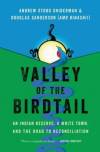
Advertisement Advertise With Us
Advertisement Advertise With Us