
Book looks at history of Rossburn, Waywayseecappo
Advertisement
Read this article for free:
or
Already have an account? Log in here »
We need your support!
Local journalism needs your support!
As we navigate through unprecedented times, our journalists are working harder than ever to bring you the latest local updates to keep you safe and informed.
Now, more than ever, we need your support.
Starting at $15.99 plus taxes every four weeks you can access your Brandon Sun online and full access to all content as it appears on our website.
Subscribe Nowor call circulation directly at (204) 727-0527.
Your pledge helps to ensure we provide the news that matters most to your community!
To continue reading, please subscribe:
Add Brandon Sun access to your Free Press subscription for only an additional
$1 for the first 4 weeks*
- Enjoy unlimited reading on brandonsun.com
- Read the Brandon Sun E-Edition, our digital replica newspaper
*Your next Free Press subscription payment will increase by $1.00 and you will be charged $20.95 plus GST for four weeks. After four weeks, your payment will increase to $24.95 plus GST every four weeks.
Read unlimited articles for free today:
or
Already have an account? Log in here »
Hey there, time traveller!
This article was published 20/10/2022 (1424 days ago), so information in it may no longer be current.
The story of two neighbouring communities in Westman that, despite facing similar hardships of discrimination, classism and poverty, were never able to find common ground, is the focus of a book that was released in August.
In “Valley of the Birdtail: An Indian Reserve, a White Town and the Road to Reconciliation,” authors Andrew Stobo Sniderman and Douglas Sanderson (Amo Binashii) examine the communities of Rossburn and Waywayseecappo First Nation, located about 150 kilometres northwest of Brandon.
Despite facing similar socio-economic conditions, Rossburn, once settled by Ukrainians who fled poverty and persecution in their home country, and Waywayseecappo have seen very different outcomes.
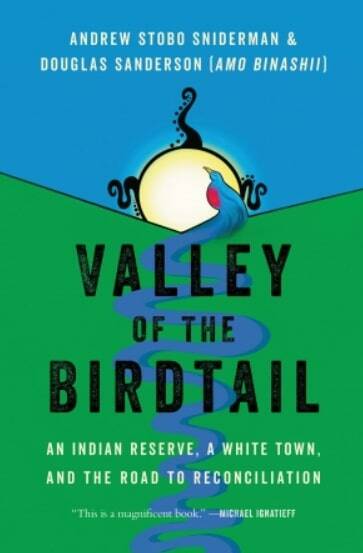
“Valley of the Birdtail,” by Andrew Stobo Sniderman and Douglas Sanderson (Amo Binashii) tells the story of Rossburn and Waywayseecappo First Nation — one made up of Ukrainian immigrants and one of Indigenous people. (Submitted)
In the book, the authors cite how family income in Rossburn is near the national average, with more than one-third of adults having graduated from university. By contrast, in Waywayseecappo, the average family lives below the national poverty line and less than one-third of adults have graduated from high school.
Sanderson and Sniderman’s book traces the tale of two families in stories that span generations — one white and one Indigenous — and examines how their experiences hold up a mirror to the experiences of other white communities and First Nations in Canada.
Sniderman first became interested in the stories of life in Waywayseecappo and Rossburn 10 years ago, when the two communities reached an agreement to “equalize” funding between the reserve school and the Rossburn school so that each student who attended the reserve school would receive the same education as those who attended the Rossburn one.
“The reason this was so exciting and interesting is because this was not happening almost anywhere in the country. There was this dramatic experiment in treating Indigenous children more fairly.”
When Sniderman, who wrote an article about the situation for Maclean’s magazine, went to write a followup article a few years ago, he noticed that outcomes for students on reserve were getting much better.
“The success of the experiment haunted me. That may sound like a funny way to put it, but it was haunting because it was so unusual and the problem was still so stark all across the country,” Sniderman said.
In 2017, when Sniderman decided to visit the two communities he’d written about again to “dig deeper” into the story, two important things happened.
“The story became … a much larger one, about how these two communities became unequal,” Sniderman said.
The other important realization Sniderman made was the fact that he “wasn’t equipped” to do justice to telling the complete story of the two communities, as a non-Indigenous Canadian. That’s when he decided to reach out to Sanderson, his former law professor.
“Douglas is a brilliant person who had been thinking about this stuff for a very long time,” Sniderman said.
Together, the pair set a goal to reflect the point of view of both Rossburn and Waywayseecappo accurately, and to present a vision for what a “better future” might look like, Sniderman said.
Sanderson had been thinking about Indigenous-settler relations as part of his job when Sniderman invited him to collaborate on the project.
“I realized that this was an opportunity for me to … [show] how our policy choices might be able to bring about different results in relations between Indigenous and settler peoples.”
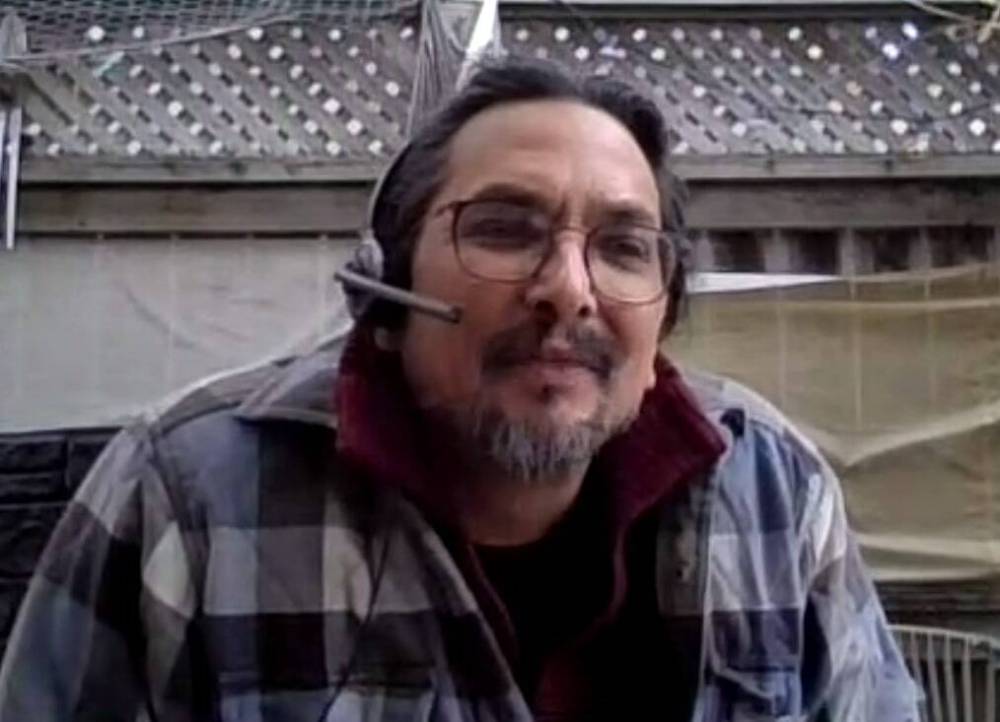
LEFT: Pictured taking part in a Zoom meeting with the Sun, Douglas Sanderson said that in many ways, Ukrainian immigrants and First Nations people endured similar treatment when it came to discrimination, but that Rossburn and Waywayseecappo residents did not come together despite their shared experiences. RIGHT: Andrew Stobo Sniderman, pictured here in a Zoom meeting with the Sun, said that despite living “parallel” experiences, the Ukrainian immigrants of Rossburn and the residents of Waywayseecappo First Nation did not find common ground. (Screenshots)
But Indigenous-settler relations are just one part of the book, Sanderson is quick to point out, and it focuses on one group of settlers in particular — Ukrainian immigrants.
“Canada is home to more Ukrainian refugees than any other country, except probably Russia itself,” Sanderson said. “The Birdtail [area] charts the course of Ukrainian immigration in Canada.”
In some ways, the Ukrainian migrants who settled in Canada ended up living “very parallel experiences” of discrimination that Indigenous people also faced, Sanderson said. But despite living in what he calls “parallel communities,” neither group ever truly observed the difficulties of the other.
The irony of the fact that the two communities’ shared difficulties never brought them together is a big theme in the book, Sniderman said. From the stories gathered from the people the authors talked to, many Ukrainian immigrants did notice the parallels, but drew different conclusions from them than ones that would foster a sense of kinship with Waywayseecappo.
“There’s this inference in what we heard that immigrants were drawing, which is, ‘Well, we came to Canada poor, illiterate, unable to speak the language, and yet we’ve done pretty well.”
When looking at Waywayseecappo, Sniderman said, the inference was made that members of the reserve had not done well, which led to the formation of prejudicial stereotypes.
“Ukrainian Canadians looked at Rossburn and looked at Waywayseecappo. They were trying to explain why they were doing well and the people on the reserve were doing less well,” Sniderman said.
What wasn’t obvious, he said, is that the government was fundamentally shaping the opportunities available to each community, creating a “huge difference” in outcomes through policy and funding.
“As a farmer living in Rossburn, you end up explaining things in terms of hard work and good character and on the other side, laziness and vice, and we don’t really think that’s what’s going on.”
The inference that Indigenous people don’t work as hard as other Canadians is something that still echoes loudly today, Sanderson said, with many Canadians not understanding the history of difficulties Indigenous peoples have faced.
There has also been a “pattern of action and reaction” that keeps generating negative government policies such as the residential school system, Sanderson said.
“One policy leads to the development of another policy. And I think this is one of the first times that co-authors have managed to pull all those stories together so you can see them from beginning to end,” Sanderson said. Once people are able to form those connections, it’s easier to understand the plight of Indigenous people in Canada.
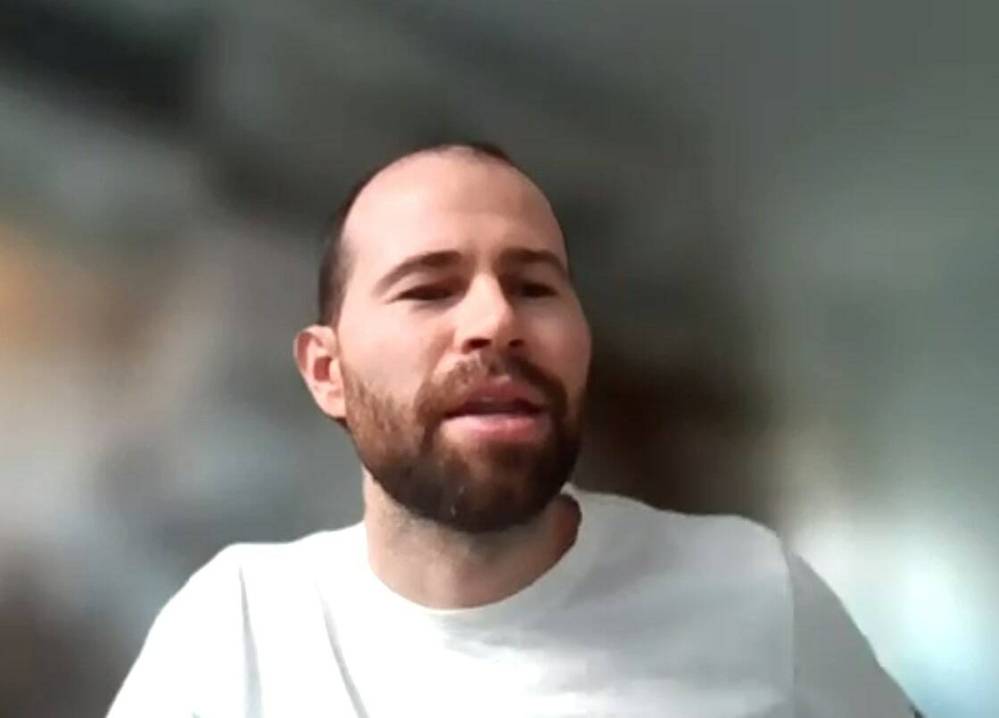
Andrew Stobo Sniderman, pictured here in a Zoom meeting with the Sun, said that despite living “parallel” experiences, the Ukrainian immigrants of Rossburn, Man. and the residents of Waywayseecappo First Nation did not find common ground. (Miranda Leybourne/The Brandon Sun)
While stereotypes and prejudices are still “alive and well” in Canada, Sniderman said that now, more than ever, people are open to learning and are listening.
“That is hopeful, and that’s the story we’re telling … about the remarkable extent to which neighbours can misunderstand each other for a very long time, but in recent times, we’re showing the capacity … to learn and grow and to recognize each other’s humanity.”
Waywayseecappo Chief Murray Clearsky was interviewed by Sniderman and Sanderson for the book, and told the Sun he encourages people to read it.
Four weeks ago, Rossburn held a meet-and-greet with Sniderman and Sanderson, which Mayor Kerry Lawless said was very well attended and well received.
The book, he said, has proven to be another building block in creating better relations between Rossburn and Waywayseecappo.
“Our council has worked hard to work with and build a better relationship with Waywayseecappo First Nation, and I think we’ve come a long way,” Lawless said.
“Valley of the Birdtail” is available in bookstores and online.
» mleybourne@brandonsun.com
» Twitter: @miraleybourne
Related Articles
Bouquets, for the department
Advertisement Advertise With Us
Advertisement Advertise With Us