Former senator Murray Sinclair dies at 73

WINNIPEG - Murray Sinclair, who was born when Indigenous people did not yet have the right to vote, grew up to become one of the most decorated and influential people to work in Indigenous justice and advocacy.

Read this article for free:

or

Already have an account? Log in here »

We need your support!
Local journalism needs your support!

As we navigate through unprecedented times, our journalists are working harder than ever to bring you the latest local updates to keep you safe and informed.

Now, more than ever, we need your support.

Starting at $15.99 plus taxes every four weeks you can access your Brandon Sun online and full access to all content as it appears on our website.

Subscribe Now

or call circulation directly at (204) 727-0527.

Your pledge helps to ensure we provide the news that matters most to your community!

To continue reading, please subscribe:

Add Brandon Sun access to your Free Press subscription for only an additional

$1 for the first 4 weeks*

  • Enjoy unlimited reading on brandonsun.com
  • Read the Brandon Sun E-Edition, our digital replica newspaper
Start now

*Your next Free Press subscription payment will increase by $1.00 and you will be charged $20.95 plus GST for four weeks. After four weeks, your payment will increase to $24.95 plus GST every four weeks.

Hey there, time traveller!
This article was published 04/11/2024 (641 days ago), so information in it may no longer be current.

WINNIPEG – Murray Sinclair, who was born when Indigenous people did not yet have the right to vote, grew up to become one of the most decorated and influential people to work in Indigenous justice and advocacy.

A former judge and senator, one of Sinclair’s biggest roles was chair of the Truth and Reconciliation Commission into residential schools.

The father of five died peacefully Monday morning in a Winnipeg hospital, said a statement from his family.
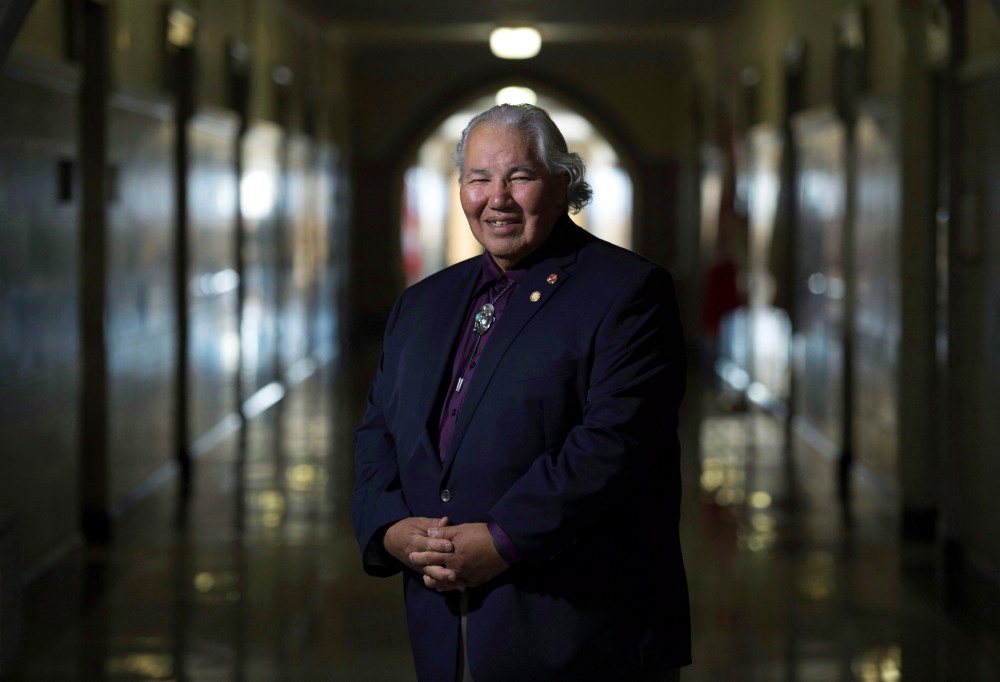
Sen. Murray Sinclair poses for a photo outside his Senate office on Parliament Hill in Ottawa on September 20, 2016. Sinclair, who chaired the Truth and Reconciliation Commission on residential schools, has died at the age of 73. THE CANADIAN PRESS/Adrian Wyld

He was 73.

“Mazina Giizhik (the One Who Speaks of Pictures in the Sky) committed his life in service to the people: creating change, revealing truth, and leading with fairness throughout his career,” said the statement, noting his traditional Anishinaabe name.

Tributes came in from across the country, including from Prime Minister Justin Trudeau.

“He challenged us to confront the darkest parts of our history — because he believed we could learn from them, and be better for it,” read a post by Trudeau on X, the social media platform formerly called Twitter.

“We are deeply saddened by the loss of a friend and prominent leader in Canada who championed human rights, justice and truth,” Governor General Mary Simon said.

The Assembly of Manitoba Chiefs said Sinclair “broke barriers and inspired countless individuals to pursue reform and justice with courage and determination.”

Winnipeg Mayor Scott Gillingham called Sinclair a leader in justice, education and reconciliation.

“His passing feels especially sad because the journey he started is still ongoing, with much work ahead.”

A sacred fire to help guide his spirit home has been lit outside the Manitoba legislature, said the family.

Born in 1951, Sinclair was raised on the former St. Peter’s Indian Reserve north of Winnipeg. He was a member of Peguis First Nation.

He was raised by his grandparents and graduated from a high school in Selkirk, Man., where he excelled in athletics.

Some of his earliest childhood memories were published earlier this year in his memoir, “Who We Are: Four Questions for a Life and a Nation.”

In it, Sinclair described discrimination he experienced being Anishinaabe in a non-Indigenous school.

“While I and others succeeded in that system, it was not without cost to our own humanity and our sense of self-respect. These are the legacies all of us find ourselves in today.”

In 1979, Sinclair graduated law school at the University of Manitoba and later became the first Indigenous judge in Manitoba — the second in Canada.

He served as co-chair of the Aboriginal Justice Inquiry of Manitoba to examine whether the justice system was failing Indigenous people after the murder of Helen Betty Osborne and the police shooting death of J.J. Harper.

In leading the Truth and Reconciliation Commission, he participated in hundreds of hearings across Canada and heard testimony from thousands of residential school survivors.

The commissioners released their widely influential final report in 2015, which described what took place at the institutions as cultural genocide and included 94 calls to action.

“Education is the key to reconciliation,” Sinclair said. “Education got us into this mess and education will get us out of it.”

Two years later, he and the other commissioners received the Meritorious Service Cross for their work.

It was one of many recognitions Sinclair received over his career.

He was given a National Aboriginal Achievement Award, now the Indspire Awards, in the field of justice in 1994. In 2017, he received a lifetime achievement award from the organization.

In 2016, Sinclair was appointed to the Senate. He retired from that role in 2021.

The following year, he received the Order of Canada for dedicating his life to championing Indigenous Peoples’ rights and freedoms.

In accepting that honour, Sinclair said he wanted to show the country that working on Indigenous issues requires a national effort.

“When I speak to young people, I always tell them that we all have a responsibility to do the best that we can and to be the best that we can be,” he said.

Sinclair limited his public engagements in recent years due to declining health.

In his memoir, Sinclair described living with congestive heart failure. Nerve damage led to him relying on a wheelchair.

Sinclair’s memoir was released in September. In it, he continued to challenge Canadians to take action.

“We know that making things better will not happen overnight. It will take generations. That’s how the damage was created and that’s how the damage will be fixed,” Sinclair wrote.

“But if we agree on the objective of reconciliation, and agree to work together, the work we do today will immeasurably strengthen the social fabric of Canada tomorrow.”

This report by The Canadian Press was first published Nov. 4, 2024.
Report Error Submit a Tip

More Stories

Province to fog for mosquitoes in Boissevain

2 minute read Preview

Province to fog for mosquitoes in Boissevain

2 minute read Yesterday at 10:14 PM CDT

The province has announced another round of mosquito fogging due to West Nile virus concerns — and one western Manitoba municipality will be included this time.

Boissevain and two other communities will be sprayed with the insecticide DeltaGard 20EW after surveillance data from last week show high counts of adult culex tarsalis mosquitoes and evidence of infection with West Nile virus, the province said in a bulletin Thursday.

The bulletin said the Municipality of Boissevain-Morton will be fogged within an approximate 3.5-kilometre radius of the intersection of Highway 10 and North Railway Street in the community of Boissevain. Morden and part of the Rural Municipality of Stanley will also be sprayed.

Confirmed dates will be communicated through the affected municipalities and posted on the 2026 schedule of adult mosquito control across southern Manitoba at gov.mb.ca, the bulletin said.

Read
Yesterday at 10:14 PM CDT

New severe storm alert system on tap

By Connor McDowellLocal Journalism Initiative 3 minute read Preview

New severe storm alert system on tap

By Connor McDowellLocal Journalism Initiative 3 minute read Yesterday at 10:11 PM CDT

Environment and Climate Change Canada is launching a modernized weather service next Tuesday that will make severe storm alerts more timely and targeted.

The upgrade, called Convective Alert Modernization, will allow forecasters to define areas most likely to be affected by severe thunderstorms and tornadoes, and then warn the people inside them, ECCC spokesperson Samantha Bayard said Thursday.

“This will give everyone the information they need to act quickly and stay safe,” Bayard said in an email. “People in Canada will receive more precise severe thunderstorm and tornado warnings faster.”

The upgrade will allow forecasters to send alerts out only to people in defined areas — compared to regions or zones. All other weather alerts will continue to be issued in zone-based areas, Bayard said.

Read
Yesterday at 10:11 PM CDT

U17 Heat confident ahead of provincials

Rowan McCarthy 6 minute read Preview

U17 Heat confident ahead of provincials

Rowan McCarthy 6 minute read Yesterday at 9:28 PM CDT

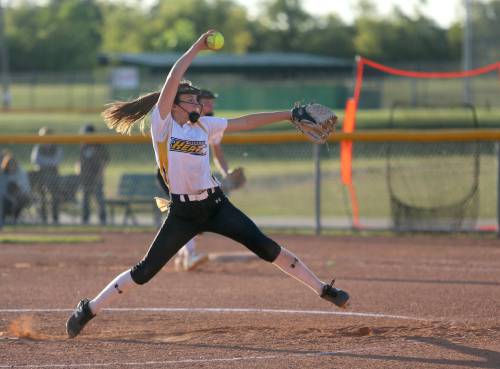
A happy locker room produces happy players, and happy players usually win more games than unhappy ones. If this stands up to scrutiny, then the under-17 Westman Heat have a great chance to make some noise at provincials starting today in Portage la Prairie.

“We are really good at lifting each other up because there are lots of friendships on this team,” said Heat pitcher Ella Kulchyski.

That much is clear to anyone who attends a Heat game.

During a doubleheader against the Westman Storm on Tuesday night, not a single play went by without multiple voices from the Heat bench calling out encouragement to their teammates on the field.

Read
Yesterday at 9:28 PM CDT

Dupuis named NDP candidate for Brandon West

By Alex Lambert 4 minute read Preview

Dupuis named NDP candidate for Brandon West

By Alex Lambert 4 minute read Yesterday at 10:06 PM CDT

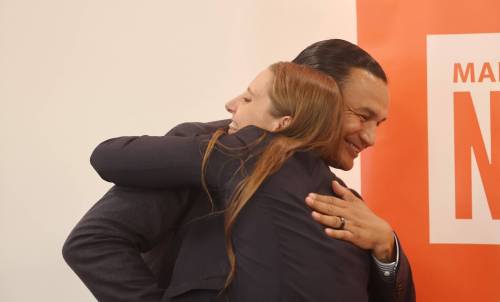
The Manitoba NDP has officially named a Brandon University program co-ordinator as its candidate for Brandon West in the next provincial election.

Cora Dupuis said she’s ready to flip the riding to NDP orange from Tory blue and has a responsibility to help people realize their potential.

“What we’ve demonstrated here tonight is that people are interested and people are here and excited, and I think people are ready to make a change,” the 44-year-old said after she was acclaimed as the party’s nominee.

The party formally nominated Dupuis Thursday evening at Brandon University’s Harvest Hall, where a crowd of about 185 people showed their support for Dupuis.

Read
Yesterday at 10:06 PM CDT

Where is Carney going with Senate changes?

By Paul G. Thomas 6 minute read Preview

Where is Carney going with Senate changes?

By Paul G. Thomas 6 minute read Yesterday at 9:45 PM CDT

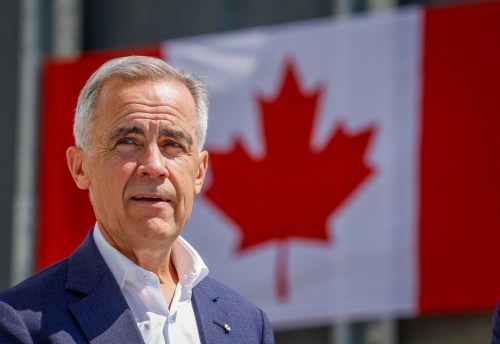
A decade after Justin Trudeau dropped Liberal senators from the party’s national parliamentary caucus and introduced a new appointment process based on non-partisan criteria, his successor, Prime Minister Mark Carney, has recently reintroduced partisanship as a possible basis for appointment to the 205-member Senate.

Commentators were quick to offer immediate, mostly negative assessments of the Carney move. My view is that before rushing to judgment, we need to know more about what Carney has planned for the future partisan makeup of the Senate and its independence from government control.

In law, the Governor General appoints senators, but in practice they are selected by the prime minister.

Historically, appointment was mostly based on past or anticipated future service to the governing party. Trudeau broke with this tradition by making non-partisanship a criteria for appointment. He also created independent advisory committees to identify potential nominees.

Read
Yesterday at 9:45 PM CDT

Mother who killed toddler denied day parole

By Alex Lambert 4 minute read Preview

Mother who killed toddler denied day parole

By Alex Lambert 4 minute read Yesterday at 10:08 PM CDT

A Waywayseecappo First Nation woman who killed her two-year-old son more than 11 years ago has been denied day parole, nearly a year after having her full parole revoked.

In a decision released Thursday, the Parole Board of Canada denied Jessica Melissa Brandon’s application over her “moderate” risk to reoffend and history of substance use.

“In summary, the Board has determined that you will present an undue risk to society if released on day parole and that your release will not contribute to the protection of society by facilitating your reintegration into society as a law-abiding citizen,” said the decision, dated July 27.

Brandon, 46, pleaded guilty to manslaughter and was sentenced to eight years in prison in Brandon Court of Queen’s Bench in July 2019 for the killing of Draze Brandon-Catcheway.

Read
Yesterday at 10:08 PM CDT